
India Infrastructure Finance Company Ltd (IIFCL) plans to dilute up to 25% of its government stake ahead of a proposed IPO in FY 2027. This strategy aims to raise funds for infrastructure development and promote private-sector participation.
IIFCL Prepares for Stake Dilution and IPO
India Infrastructure Finance Company Ltd (IIFCL) is preparing to dilute up to 25% of its government stake as part of its next phase of evolution, ahead of the proposed Initial Public Offering (IPO) in the Financial year 2027.
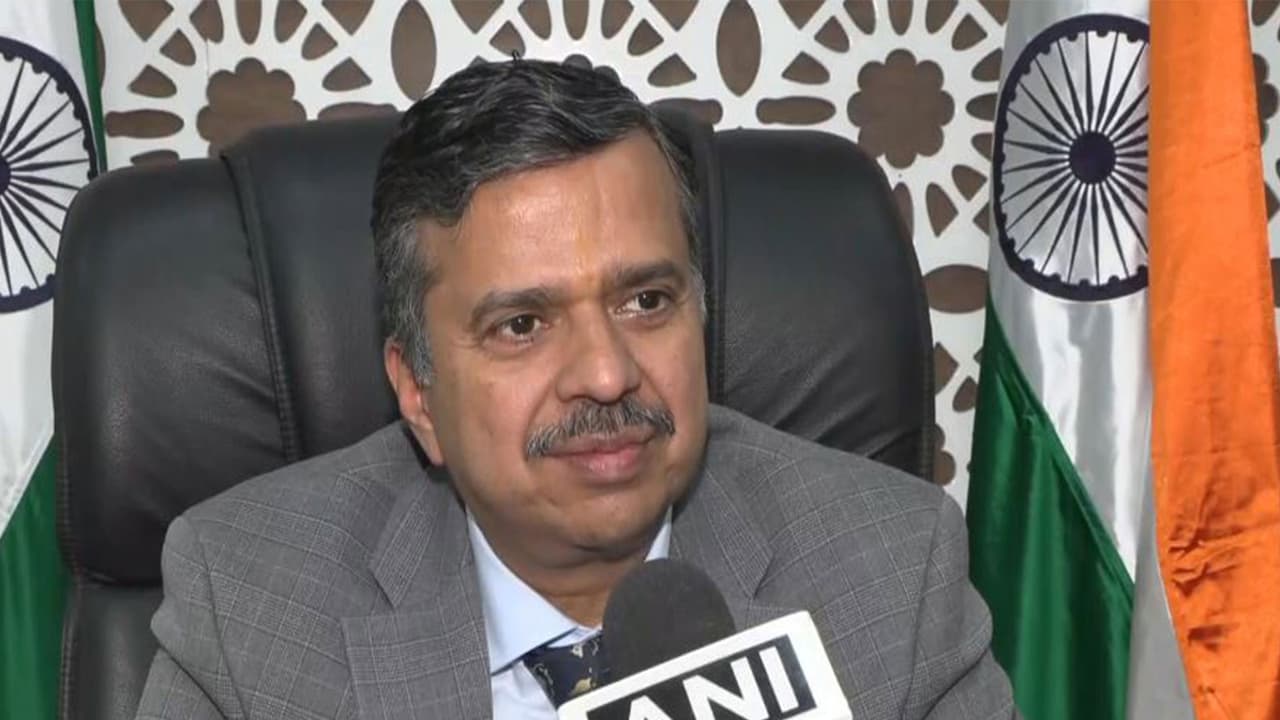
Speaking with ANI, Deputy Managing Director Palash Srivastava on Saturday, said that this move is likely part of the government's strategy to raise funds for infrastructure development and to promote private-sector participation. "There is a lot of preparation to do, and we are on course for this to happen," Srivastava told ANI, adding that the timing of the proposed divestment aligns with a period when IIFCL's funding strategy is increasingly integrated with global capital markets.
IIFCL DMD's remarks came in the backdrop of reports that the government is considering selling stakes in IIFCL, its long-term infrastructure lending arm, and that the ministerial panel is expected to finalise the IPO structure, which may combine fresh equity issuance and a partial government stake sale to meet public shareholding norms.
IIFCL is a wholly owned Government of India company that provides long-term financing and advisory services for viable infrastructure projects in India, covering sectors such as energy, transport, water, and digital infrastructure, with the aim of boosting national development.
Impact of Global Interest Rates
Talking on how global interest rate cycles affect infrastructure financing, Srivastava said IIFCL is "very much linked to the global financing system" and regularly borrows internationally on the strength of its own balance sheet. "We have found that international market rate cuts also help our rates go down," he said.
He said IIFCL's borrowing rates are flexible and benchmark-linked. "When the benchmark rates are cut, our rates also come down," Srivastava said, noting that this improves margins on infrastructure projects and makes IIFCL's participation in direct lending and takeout finance more competitive.
Highlighting the importance of floating-rate structures, he said, "The floating rate regime is helping us tide over," adding that close to 55 per cent of IIFCL's portfolio is currently on a floating-rate basis. He said institutions funded through amortising and floating-rate loans or bonds benefit more from rate cuts, while those relying largely on fixed-rate bonds may see less impact.
Driving India's Green Transition
On India's green transition, he said development finance institutions are "actually the main influencers" in making infrastructure projects green. He said the transition covers multiple dimensions, starting with renewables, where India has already made significant progress. "About 500 gigawatt of solar and wind capacity is already in place," he said, adding that further expansion will not only help meet national targets but also promote manufacturing through green energy.
Srivastava said DFIs are also enabling the transition of hard-to-abate sectors. Referring to sustainable aviation fuel, he said, "We have actually financed the sustainable aviation fuel export from India into the UK," demonstrating how financial institutions can provide enabling finance and effective support mechanisms for green transition.
Supporting Green MSMEs
On MSMEs, Srivastava said green transition must also extend to small enterprises. "Our MSMEs also have to turn green," he said, adding that IIFCL is working with NITI Aayog on a programme to aggregate MSMEs in industrial clusters or estates.
"Aggregation is going to help," he said, noting that green energy can be supplied through rooftop solar or open access, while overcoming RESCOs' reluctance to take individual MSME credit exposure.
He said DFIs are also contributing through blended finance and guarantee mechanisms. "There are certain conversations about green guarantees and green insurance," he said, describing them as part of the broader toolkit to help the Indian industry transition to green.
Navigating Geopolitical Risks and Supply Chains
On geopolitical risks, Srivastava said geopolitics is "a very important contributor" to long-term infrastructure outcomes, especially in maritime infrastructure. "Geopolitics affects trade first and foremost," he said, adding that trade dynamics shape the infrastructure ecosystem supporting export and import activity.
He said recent disturbances have shown how trade corridors and connectivity plans can be disrupted, underscoring the need for resilience in long-term infrastructure planning.
Turning to global supply chains, Srivastava said diversification trends have accelerated in recent years. "Most economies don't want to put all their manufacturing in one country," he said, adding that manufacturing and secondary economic activities are increasingly shifting from the Global North to the Global South.
He said this presents opportunities for India, particularly in electronics manufacturing. "We have been in conversations with bilateral partners like JBIC," Srivastava said, noting that long-term blended finance can help develop clusters, create value chains and strengthen shipping and logistics linkages.
Srivastava also said IIFCL has been in touch with the Sagarmala Development Finance Corporation and may partner with it under the proposed Maritime Development Fund.
Embracing Technology: AI and Blockchain
Further on technology, he said artificial intelligence should be seen as "a smart support system" rather than a replacement for human judgment. "I don't see it as anything more than an iteration over the decision support systems we already have," he said.
He said IIFCL has begun planning a transition to AI and machine learning to flag regulatory, compliance, international mandate-specific, and technology risks when a case is uploaded. "This will enable an appraiser to get a broad brush reference immediately," he said.
Srivastava also discussed blockchain and smart contracts, noting that IIFCL would like to move toward smart financing. "This will enable just-in-time financing to flow to projects and bring down the overall cost of financing," he said.
Addressing Market Perceptions and Demand
On global slowdown concerns, Srivastava said the key challenge to infrastructure growth is perception. "The risk perception definitely affects investments," he said, stressing that policy continuity, consistent stress asset resolution and predictability in awards are critical to sustaining private sector capital expenditure.
On infrastructure demand, he said India's requirements remain structurally strong. "As a country of 1.45 billion people, we definitely have a lot of infrastructure to build," Srivastava said, adding that domestic infrastructure demand is not materially affected by international impulses.
Integrating Climate and Disaster Resilience
On climate risk, Srivastava said infrastructure projects typically span 20 to 25 years, making climate considerations unavoidable. "These days, we are designing for climate events," he said, citing floods, droughts, cyclones and high-speed winds.
He said design parameters increasingly account for 1.5-degree and 2-degree temperature-rise scenarios, even though this entails additional costs. "Together with CDRI, we have evolved a framework whereby financing for disaster-resilient infrastructure could be taken up," he said.
Evolving Funding and Hedging Strategies
On funding strategy, he said external commercial borrowings are becoming a structural necessity. "If I am trying to borrow money for 15 years or 20 years, I am not getting it in the commercial market in India," he said.
He added that IIFCL recently raised a 15-year amortising overseas loan at a very competitive cost using structured finance and hedging. "Hedging is not such an issue," he said, noting that international banks can provide all-in hedging solutions.
On currency markets, Srivastava said improved rupee-dollar hedging frameworks could support deeper and more stable derivative markets. "If DFIs collaborate, we could create economies of scale and get better hedging solutions," he said.
Internal Reinvention and New Offerings
Highlighting internal developments, he said IIFCL has constituted 11 task forces to reinvent the institution. "We are looking at a batch of new product offerings," he said, including bridge finance to address the 6 to 18 month delay in financial closure and subordinated debt products to support state governments in projects such as hybrid annuity models.
He said IIFCL is also standardising monitoring, reporting and verification protocols for green finance. "We want a common MRV protocol," he said, so that international green capital does not impose additional conditionalities on Indian institutions.
Srivastava added that IIFCL is strengthening engagement with India-based multilaterals such as the International Solar Alliance, the Coalition for Disaster Resilient Infrastructure and the Global Bioenergy Alliance as it prepares for the next phase of growth. (ANI)
(Except for the headline, this story has not been edited by Asianet Newsable English staff and is published from a syndicated feed.)