
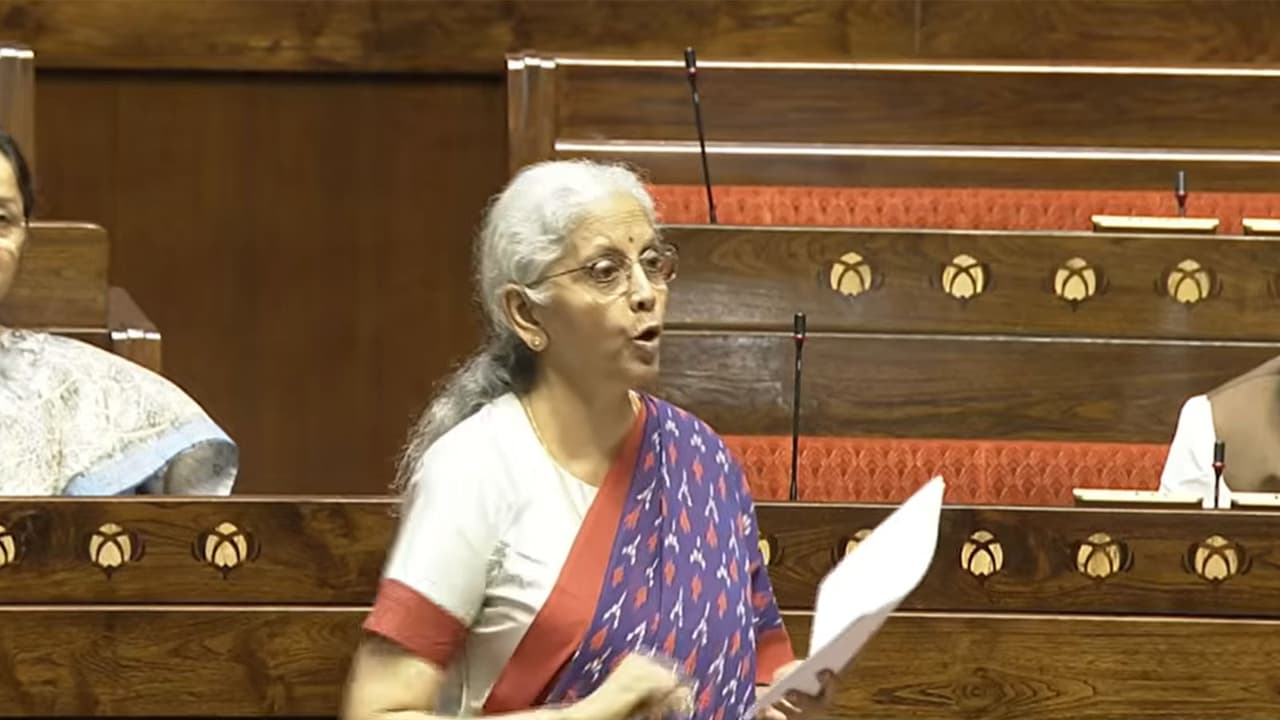
FM Nirmala Sitharaman says the govt is ramping up LPG supplies amid the West Asia crisis. Domestic LPG production has increased by 25%, a result of the 'Atmanirbhar Bharat' initiative, ensuring steady supplies for domestic consumers.
The Rajya Sabha on Tuesday returned the Appropriation Bill, 2026, to the Lok Sabha after a reply to the debate by Finance Minister Nirmala Sitharaman, who said the government is making all necessary efforts to ramp up LPG supplies in the wake of the West Asia crisis.
Ramping Up Domestic LPG Production
She said despite global "turbulent times....domestic LPG production has gone up by 25%, and the entire output of this ramped-up production is going to domestic consumers."
"In the LPG sector, we have been building capacity, and even in these times, the way in which we have ramped up domestic capacity in LPG is also proving helpful," she said.
The Minister noted that while nearly 65 per cent of India's LPG is imported, and "overwhelmingly majority of it, 90% of the 65% comes from the Strait of Hormuz" and the government is taking proactive steps to avoid shortages.
"But we are not just depending on getting the steady flow even in troubled waters," Sitharaman stated, highlighting the shift toward self-reliance. She informed the House that the government has directed refineries and petrochemical complexes to "maximize LPG production by diverting propane, butane and propylene and butane streams to the LPG pool."
A Decade-Long 'Atmanirbhar Bharat' Strategy
The Finance Minister linked these developments to the broader 'Atmanirbhar Bharat' initiative, noting that the ability to "ramp up domestic LPG production by 25% literally overnight" is the "outcome of a deliberate, decade-long energy transition strategy launched" by the Prime Minister Narendra Modi.
She stressed that "nothing is a standalone" and that "everything in this policy seems to come together in the name of Atmanirbhar" to meet emergency situations.
Success in the Power Sector
Sitharaman also drew parallels with the power sector, which she said, "today stands as a very big support for us."
She reported that by January 2026, the total installed capacity more than doubled to 520.5 gigawatts.
"Non fossil sources now stand at 271.97 gigawatts, accounting for more than 52% of total capacity and surpassing fossil fuel capacity," she said, adding that "for the first time in India's history, non-fossil sources exceed fossil fuel capacity."
The Minister also highlighted that India reached this "remarkable position" five years ahead of the scheduled deadline.
She reiterated that the steady policy-backed approach ensures that "any situation which requires that additional support can happen," ensuring that "domestic supplies will be adequately streamlined and the supplies will remain steady."
"We are not just depending on a steady flow even in troubled waters. The way in which we have built our power sector, in today's times, stands as a very big support for us, because Atmanirbhar Bharat and sufficiency in energy through our power sector are actually playing out in many different ways in supporting this," Sitharaman stated.
(ANI)
(Except for the headline, this story has not been edited by Asianet Newsable English staff and is published from a syndicated feed.)