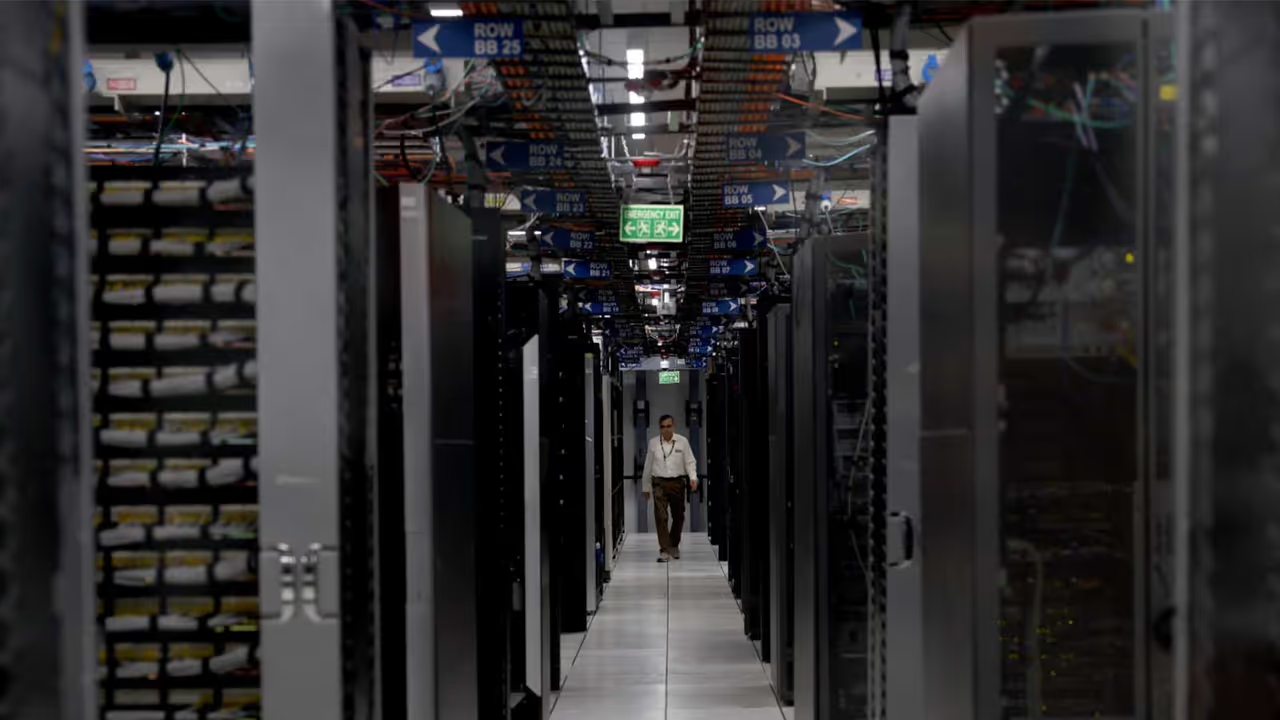
Goldman Sachs identifies the recent semiconductor stock correction as an attractive buying opportunity, noting the sector is oversold despite uncertainties in AI infrastructure spending and capital expenditure funding gaps.
Semiconductor Market Outlook
The recent decline in semiconductor stocks may be excessive, with current market levels offering an attractive buying opportunity for investors, according to a report by Goldman Sachs, which expects the sector to recover despite near-term uncertainties over artificial intelligence (AI) infrastructure spending. Goldman Sachs said the semiconductor index, or SOX, has recorded its sharpest relative decline against the S&P 500 in the last 10 years, with the current drawdown approaching 30 points. This is significantly higher than previous instances when the relative decline crossed 20 points.
Historically, such periods of sharp underperformance have generally been followed by phases of outperformance, suggesting the recent correction could offer an opportunity for investors. It stated, “We believe stocks are now clearly in oversold territory. In this note, we mark to market for the current situation and sensitize relative valuations to downside scenarios relative to our current estimates across large-cap AI compute, Memory, and Semi Cap stocks. Although we recognize there may be few catalysts for stocks to move higher before year-end”
Investment Risks and AI Growth
Goldman Sachs believes the recent correction could therefore present a good entry point at the index level, although a recovery may take time as broader market de-risking, particularly around the year-end, continues. The report identified two major uncertainties weighing on semiconductor stocks: the funding gap between capital expenditure and free cash flows among hyperscalers and AI model developers, and whether sufficient land, power and data centre construction capacity will be available to support the expected expansion.
AI Infrastructure Projections
Despite these concerns, Goldman Sachs expects AI infrastructure spending to remain strong. It estimates that investment in AI infrastructure could reach around USD 1.3 trillion in 2027, representing a 60 per cent year-on-year increase, before rising to USD 2 trillion in 2028, up 42 per cent. Data centre deployments dedicated to AI are projected to increase from around 20 GW in 2026 to 35 GW in 2027 and 57 GW in 2028.
The investment estimates also include spending by AI laboratories, sovereign AI enterprises and corporate customers, beyond traditional capital expenditure by large technology companies. Goldman Sachs considers the planned 35 GW of data centre additions in 2027 relatively low-risk. For 2028, it sees at least another 35 GW of global additions as having low execution risk, with deployments potentially reaching 55-60 GW if projects proceed.
Valuation Sensitivities
However, the availability of land, electricity and construction capacity remains a key factor that could affect the pace of data centre expansion and semiconductor demand. The investment bank said there may be limited triggers for semiconductor stocks to rise before the end of the year, but maintained that the risk-reward balance looks compelling for selected stocks at current levels. It also highlighted the possibility that valuations across large-cap AI computing, memory and semiconductor capital-equipment companies could remain sensitive to downside scenarios as investors assess the pace and funding of future infrastructure projects.
(Except for the headline, this story has not been edited by Asianetnews Editorial staff and is published from a syndicated feed.)