
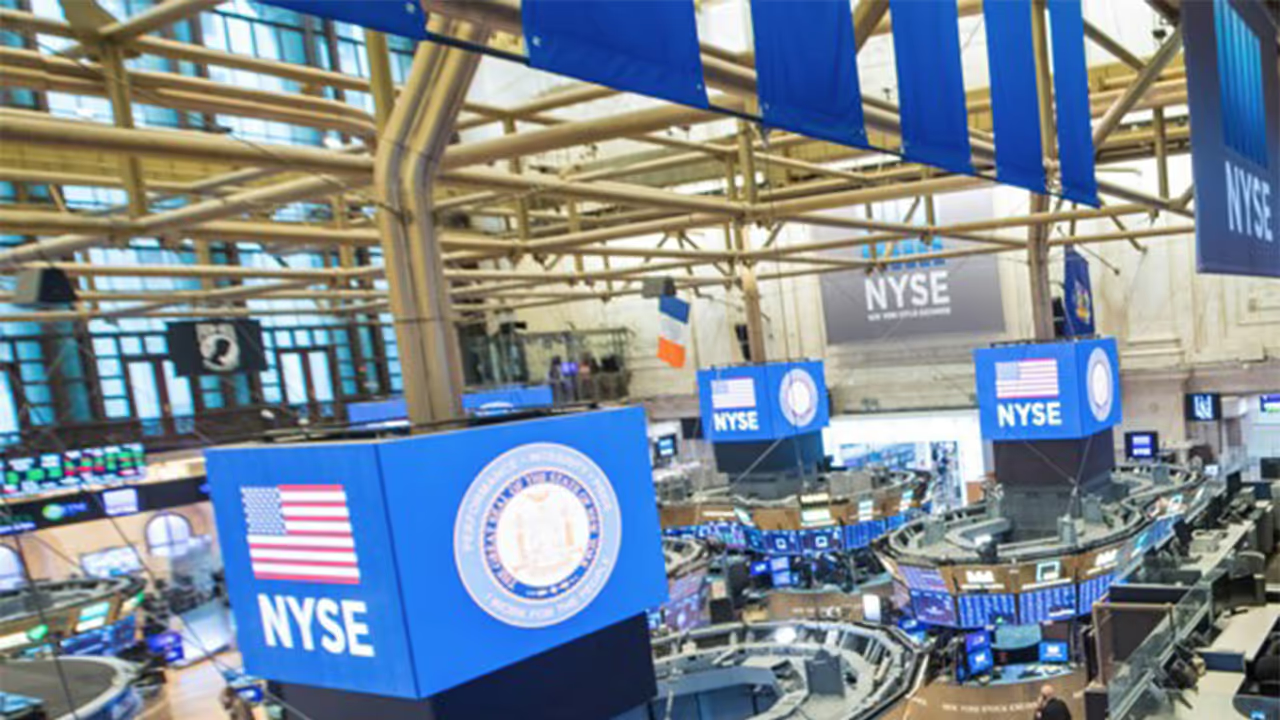
Global markets tumbled as a sharp US tech sell-off erased post-election gains, driven by fears of slowing data centre investments. Major indices globally faced significant declines amid heightened investor caution over AI-linked companies.
Global Markets Tumble as Tech Stocks Erase Election Rally
Global stock markets witnessed heavy selling as a sharp sell-off in US technology stocks wiped out Wall Street's post-election rally, with concerns over a possible slowdown in artificial intelligence-related data centre investments triggering losses across global markets. The selling pressure intensified after all three major US indices recorded their worst single-day losses since April 2025 on Thursday.
The Nasdaq Composite plunged 5.52 per cent to close at 24,315.00, entering correction territory after falling more than 10 per cent below the record level it had reached last month. The S&P 500 declined 4.36 per cent to settle at 7,353.73, while the Dow Jones Industrial Average shed 1,833.06 points, or 3.44 per cent, to close at 51,523.06. The sharp decline erased the gains recorded during Wednesday's post-election rally, when the Dow had jumped more than 1,500 points, marking its best trading day since April 2025. The S&P 500 and Nasdaq Composite had also gained more than 1 per cent each during that session.
Drivers Behind the Market Decline
The latest sell-off was largely driven by concerns that the Democratic Party's victory in both chambers of Congress, along with wins in key gubernatorial races, could slow the expansion of data centres in the United States. Investors have become increasingly cautious about companies linked to artificial intelligence, particularly semiconductor manufacturers and data centre operators, amid fears that the pace of infrastructure development could face pressure.
Impact on Tech and Chipmakers
Chipmakers witnessed sharp losses during Thursday's session. Broadcom shares fell 10 per cent, while Nvidia declined 9 per cent. Software company Oracle also dropped almost 7 per cent. Qualcomm shares declined 9 per cent despite the company reporting earnings that beat estimates, as its outlook for the coming period was weaker than expected. The iShares Semiconductor ETF (SOXX) fell more than 12 per cent, marking its worst trading day since the Covid-19 outbreak in March 2020. Shares of companies operating in the neocloud segment also came under pressure. CoreWeave lost almost 10 per cent, while Nebius and Iren declined about 15 per cent and almost 17 per cent, respectively.
Wider Market Impact
The selling was not limited to technology stocks, as losses spread across other sectors. Industrial major Caterpillar declined 6 per cent, while financial company JPMorgan fell 4 per cent. Boeing and Nike shares also pulled back 2 per cent each.
The weakness in US markets extended to Asia on Friday's opening session, where major indices opened sharply lower. South Korea's KOSPI index fell more than 7 per cent to 5,035, while Taiwan's weighted index declined 8 per cent to 38,300. Japan's Nikkei 225 dropped 5.95 per cent to 57,445. Singapore's Straits Times index was down 2.20 per cent at 5,180, while Hong Kong's Hang Seng index also traded lower during early trading. Meanwhile, Brent crude oil prices started rising again and were trading with a gain of 1.37 per cent at the time of reporting. Dow Jones futures were also down 0.59 per cent, indicating continued weakness in market sentiment.
The sharp reversal in global markets came just a day after investors had welcomed the Democratic Party's midterm election victory with a strong rally on Wall Street. However, concerns about the potential impact of election results on the US data centre industry have now shifted investor attention towards the risks facing technology and semiconductor companies.
(Except for the headline, this story has not been edited by Asianetnews Editorial staff and is published from a syndicated feed.)



