
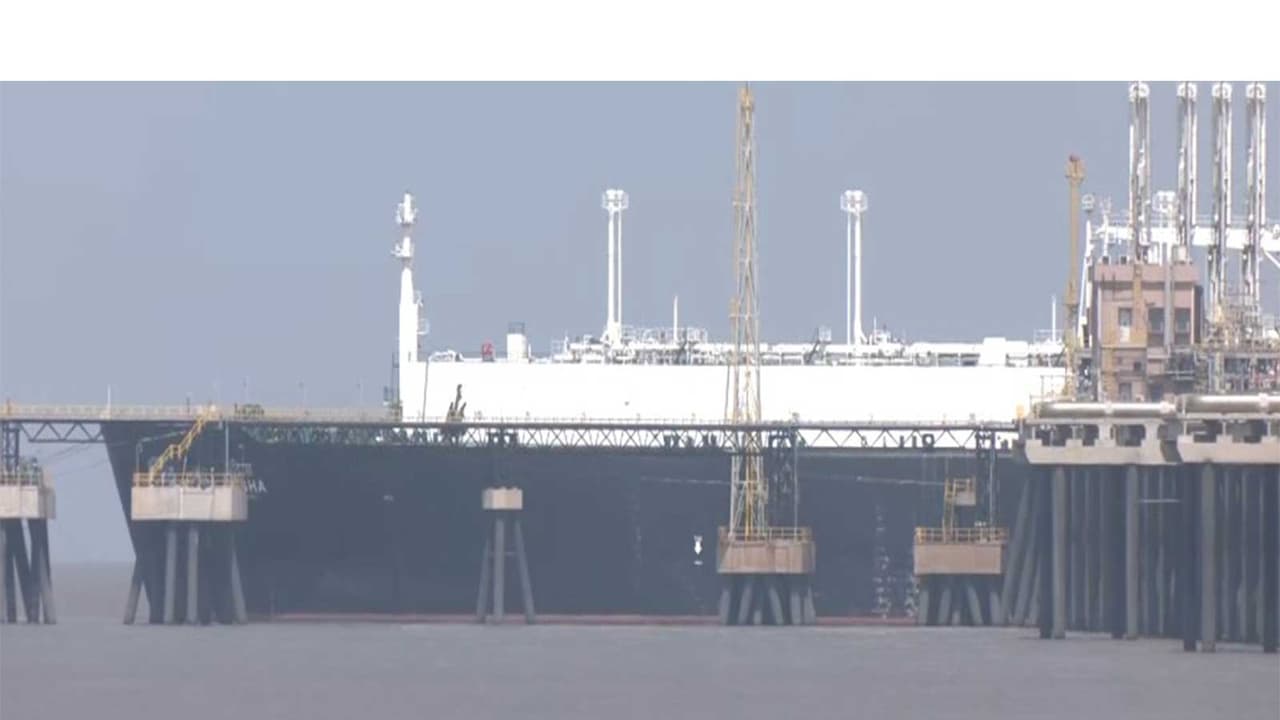
Global LNG trade volumes hit a record high in 2025, rising 5.4% to 56.3 Bcf/d, says the US EIA. The growth was driven by a 26% surge in US LNG exports to meet rising global demand, with further increases forecast for 2026 and 2027.
Global liquefied natural gas (LNG) trade volumes touched a record high in 2025, rising 5.4 per cent to 56.3 billion cubic feet per day driven largely by an expansion in United States LNG export capacity to meet growing global demand, according to the US Energy Information Administration (EIA).
The report said LNG exports from the US increased 26 per cent to 15.1 Bcf/d in 2025, marking the largest increase by any exporting country during the year. ".... We forecast U.S. LNG exports will increase further, to 17.4 Bcf/d of LNG in 2026 and 18.6 Bcf/d in 2027," as per the EIA statement.
Top LNG Exporters in 2025
The report said the United States, Qatar and Australia remained the world's three largest LNG exporters in 2025, together accounting for 63 per cent of global LNG exports, compared with 60 per cent in 2024. Canada also entered the list of LNG exporters, shipping 0.3 Bcf/d after LNG Canada began operations in June 2025.
Exporter Updates and Market Challenges
Qatar recorded the second-largest increase in LNG exports, with shipments rising 3 per cent to 10.6 Bcf/d during 2025. However, the report noted that Qatari exports have declined in 2026 following the closure of the Strait of Hormuz since February 28, which has cut off approximately 20 per cent of global LNG supplies.
The EIA said that until LNG flows through the Strait of Hormuz return to normal levels, Asian buyers, who imported more than 80 per cent of Qatar's LNG exports in 2025, are competing with European buyers in the global spot market as Europe seeks to replenish storage inventories, which remain below the five-year average.
Among other exporters, Malaysia, Australia and Norway reported lower LNG exports compared with 2024 due to maintenance at export facilities. Russian LNG exports declined 8 per cent, or 0.4 Bcf/d, the largest volumetric decline among exporting countries, following European Union sanctions related to the conflict in Ukraine.
Shifts in Global LNG Demand
On the demand side, Europe recorded the strongest growth in LNG imports. European countries increased imports by 29 per cent, or 3.8 Bcf/d, in 2025, the highest increase among all regions.
The report said Europe's seven largest LNG importers each increased imports by between 0.4 Bcf/d and 0.6 Bcf/d. It attributed the rise mainly to the expiry of the Ukraine-Russia gas transit agreement at the end of 2024, which reduced pipeline gas supplies into Europe and increased the region's dependence on LNG imports.
Contrasting Trends in Asia and Other Regions
In contrast, LNG imports into Asian countries declined 4 per cent to 35.7 Bcf/d, largely due to a 15 per cent, or 1.5 Bcf/d, decline in imports by China as it increased pipeline gas imports and expanded domestic natural gas production.
Elsewhere, Egypt raised LNG imports to 1.2 Bcf/d in 2025 from 0.3 Bcf/d in 2024 because of domestic supply shortages. Bahrain and Senegal imported their first LNG cargoes during 2025, with each importing less than 0.1 Bcf/d. Outside these countries, LNG imports across the Middle East and Africa remained broadly unchanged, while LNG imports in the Americas declined by 0.3 Bcf/d, the report added. (ANI)
(Except for the headline, this story has not been edited by Asianet Newsable English staff and is published from a syndicated feed.)