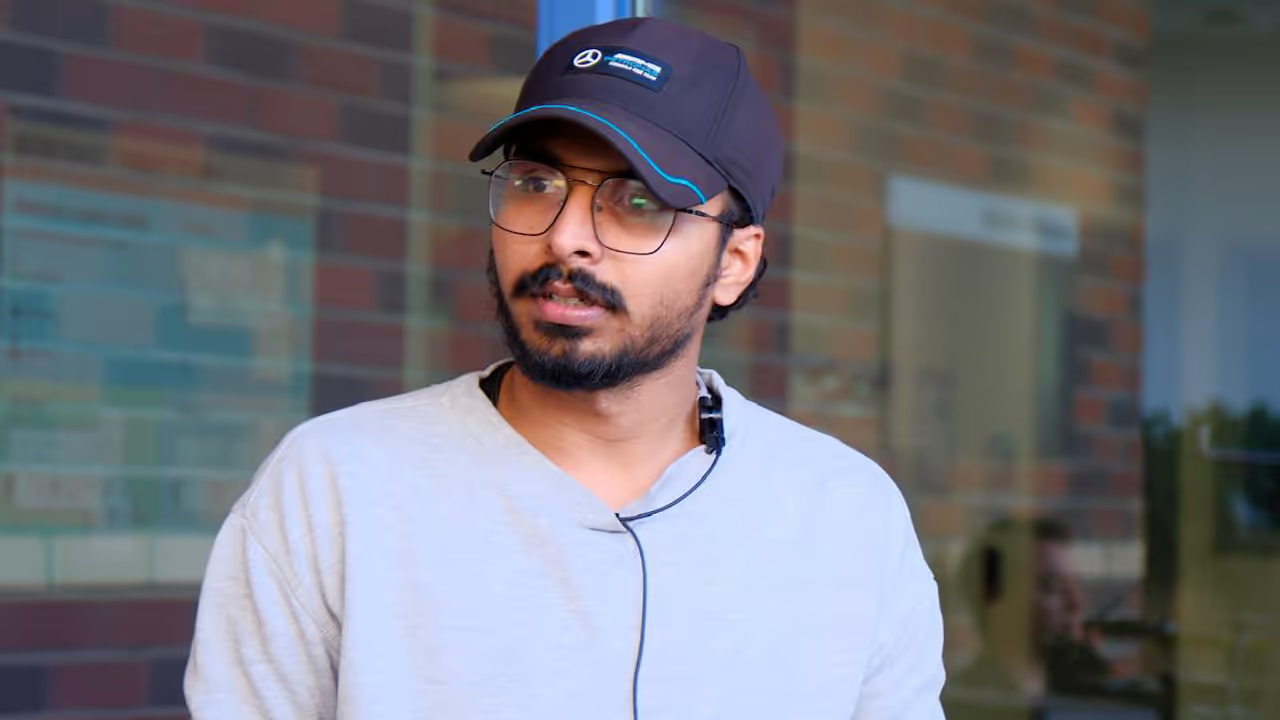
There is a strong conviction in the way Deep Barot speaks about filmmaking — not as spectacle or industry, but as a calling.
“To me,” he says, “cinema is language. But more than that, it’s diplomacy. When you get it right, it doesn’t just entertain. It connects.”
Barot, a U.S.-based production manager and filmmaker with roots in India, has built a career on stories that thrive at the intersection of continents, cultures, and communities. With a résumé that stretches from high-energy global music videos to intimate, award-winning short films and international film festivals, he has become a driving force in the growing movement of diasporic and cross-cultural storytelling.
His portfolio spans countries and formats: VIBE, a visually kinetic collaboration between Guru Randhawa and French Montana; Tell Me, which brought Karan Aujla and OneRepublic together with Disha Patani in a polished, genre-blending narrative; and Silent Cycle, a meditative short film that traveled through more than a dozen film festivals — including Beverly Hills, Boston, and the BAFTA student circuit — with Barot leading production from start to finish.
Related Articles

Now, as he gears up to manage multiple feature films in the coming year, including one slated to begin shooting this August, Barot’s name is increasingly associated with a distinct style of filmmaking: work that honors nuance, embraces diversity, and seamlessly blends global aesthetics with cultural depth.
“I’ve never been drawn to stories that could belong to anywhere and no one at the same time,” Barot says. “What pulls me in are stories that are rooted — stories that come from a voice and a place. My job is to help those voices travel farther without losing their core.”
Production managers — the operational anchors of most film sets — often work behind the curtain, unseen but indispensable. Barot thrives in this space. His job is to keep productions on schedule, within budget, and aligned — but those who’ve worked with him say his contribution goes far beyond logistics.
“Deep isn’t just efficient — he’s intentional,” said Rina Mahadevan, a director he collaborated with at a recent international co-production lab. “He understands how small cultural details — a gesture, a dialect, even the pacing of a scene — shape how stories resonate with audiences who see themselves in them.”
That cultural awareness has served him well in festival settings, too. As production manager for the World Culture Film Festival, Barot helped program and execute a lineup that showcased filmmakers from over 20 countries. His leadership ensured the event ran smoothly — but it was his thoughtful approach, colleagues said, that turned a functional schedule into a meaningful experience.
He remains discerning about the projects he takes on, especially in a time when the idea of “diversity” is often diluted into buzzwords and surface-level representation.
“Representation doesn’t mean replication,” he says. “You can’t just swap names and settings and call it inclusion. True cross-cultural storytelling demands understanding, not just access.”
Barot is currently in pre-production for a feature film that intertwines South Asian and American narratives into a single, emotionally resonant arc — a story he believes is universal in feeling but needs careful, authentic execution.
“We’re not building a bridge just for show,” he says. “It has to hold the weight of truth on both sides.”
Even as his reputation grows, Barot remains focused on process over spotlight. He is, by design, the person who ensures others shine. But there’s no mistaking his impact on the future of global cinema — not by commanding the frame, but by giving the story its spine.
“In the end,” he says, “the most powerful thing we can do with film is make someone across the world feel seen.”
And for Deep Barot, that isn’t just the goal. It’s the purpose