
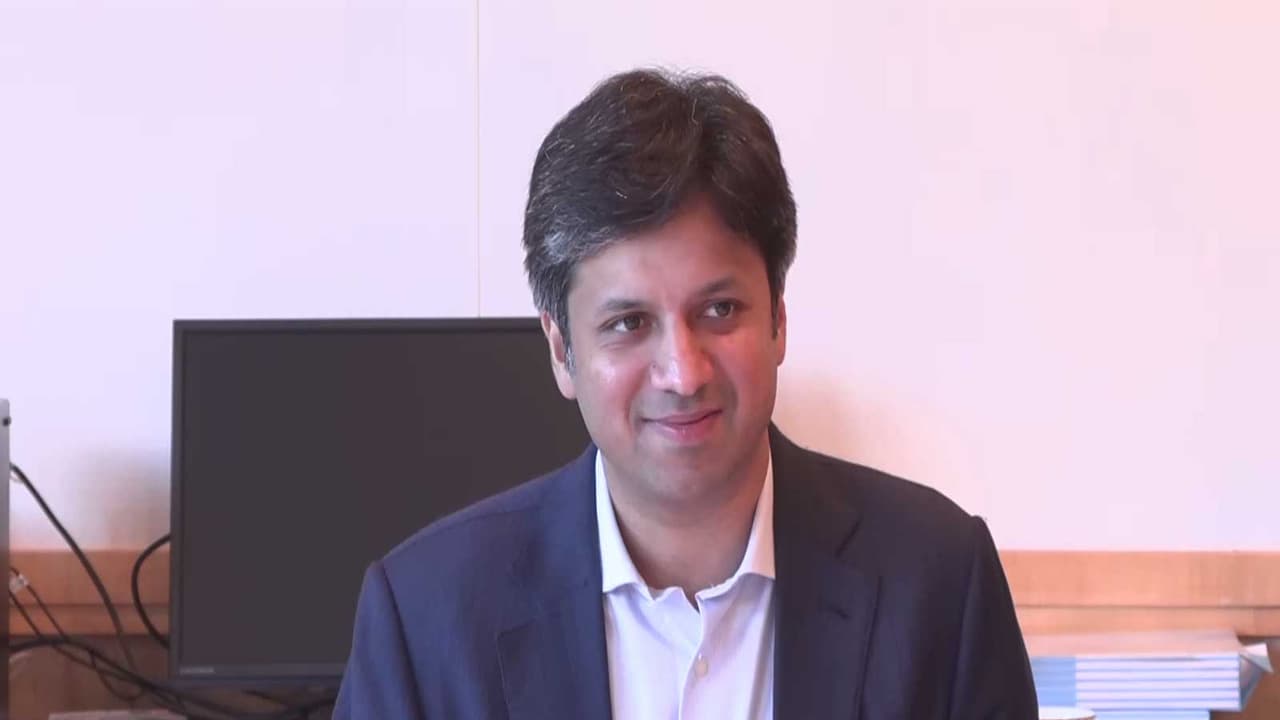
FICCI President Anant Goenka said India's data centre and semiconductor sectors offer significant opportunities for India-Japan cooperation, citing access to renewable power, land availability, and potential for power redundancy as key advantages.
India's data centre and semiconductor sectors offer significant opportunities for growth and deeper India-Japan cooperation, given the country's access to renewable power, land availability and potential for power redundancy, FICCI President Anant Goenka said.
In an exclusive interview with ANI on India-Japan partnership, Goenka said data centres are expected to see significant growth and could offer scope for greater India-Japan collaboration. "We are looking at data centres as a very large space where there is anyway going to be a lot of growth coming in," Goenka said, highlighting India's access to renewable power, availability of multiple power sources for redundancy and land availability.
His remarks come as Commerce and Industry Minister Piyush Goyal leads a 200-member Indian business delegation in Japan to strengthen economic and commercial ties between the two countries.
Goenka said the high-tech and semiconductor sectors were also being looked at as areas of potential cooperation. "...the high-tech and semiconductor space was another area that we looked at," he said, adding that some segments already have a high level of maturity while there remains scope for further growth.
The four-day visit, currently underway and set to conclude in Osaka, covers Tokyo, Nagoya and Osaka, with representatives from key sectors including manufacturing, semiconductors, clean energy, steel, automobiles, financial services, healthcare and start-ups.
India-Japan Bilateral Trade and History
India and Japan share a Special Strategic and Global Partnership, with commercial and business ties dating back to 1972, when Panasonic established its manufacturing facility in India. Japanese companies such as Suzuki and Denso followed, setting up operations in the country in the early 1980s.
According to government data, bilateral trade between India and Japan stood at USD 27.47 billion in FY 2025-26. India's exports to Japan were valued at USD 6.04 billion, while imports from Japan stood at USD 21.43 billion. India's key exports to Japan include organic chemicals, vehicles other than railway and tramway equipment, nuclear reactors, aluminium and related products, and fish and other aquatic invertebrates. Major imports from Japan include nuclear reactors, copper and related products, electrical machinery and equipment, inorganic chemicals, and iron and steel. (ANI)
(Except for the headline, this story has not been edited by Asianetnews Editorial staff and is published from a syndicated feed.)