
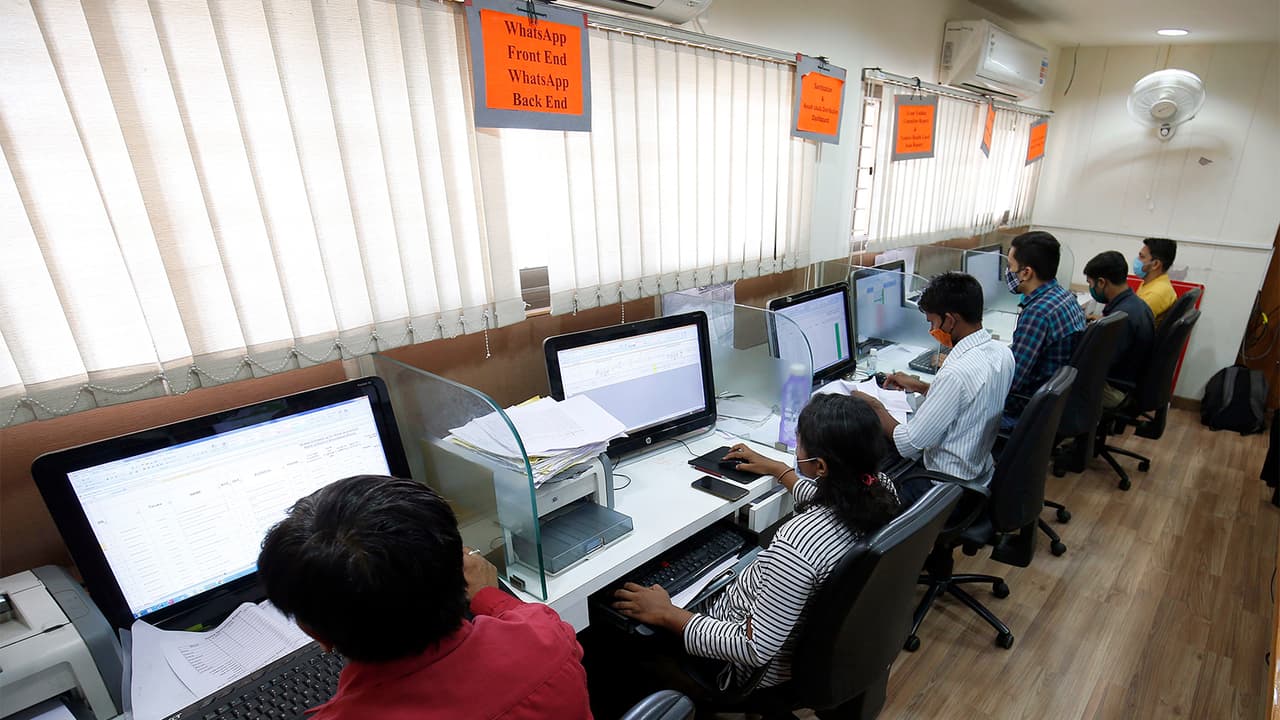
A new Cushman & Wakefield study suggests AI will reshape, not reduce, India's office space demand. The office workforce is projected to reach 48 million by 2030, with GCCs remaining a primary driver for high-quality, adaptable workspaces.
AI Transforming India's Office Landscape
Artificial intelligence (AI) is expected to change the nature of India's office space demand rather than reduce it, with the country's office-using workforce projected to grow from around 38 million in 2025 to 48 million by 2030, according to a study by Cushman & Wakefield. The study said continued expansion of office-based services and Global Capability Centres (GCCs), along with their shift towards higher-value activities, would support demand for commercial office space even as AI automates routine tasks.
Under its baseline scenario, which carries a 50 per cent probability, office-using employment is projected to increase by nearly 9 million between 2025 and 2030, adding around 1.8 million workers annually. The report said GCCs would remain a key driver of office demand as their operations increasingly move towards research and development, product engineering and analytics. This shift is also expected to increase demand for high-quality, well-located and adaptable office spaces.
Workforce Trends and Future Outlook
"AI will undoubtedly change the nature of work and the skills businesses require, but that does not necessarily translate into lower office demand," said Anshul Jain, Chief Executive – India, SEA, MEA and APAC Office and Retail at Cushman & Wakefield.
However, the expected increase in office employment may coincide with higher vacancy levels due to continued additions to office supply. The study projects the vacancy rate to rise from 14.3 per cent in 2025 to a peak of 16.2 per cent in 2029, before easing to 15.5 per cent in 2030 as new supply normalises.
Productivity and Economic Projections
The study also said India's relative labour cost advantage could limit the immediate business case for adopting AI, with productivity gains expected to become more visible later in the decade, largely through IT services and GCCs. Under the baseline scenario, real GDP growth is projected to moderate from 7 per cent in 2026 to 6 per cent by 2030.
Jain further said occupiers would increasingly favour quality and flexibility in their office requirements, while developers and investors would need to respond to changing workplace needs. The report recommended that developers align new projects with committed leasing demand and focus on adaptable properties. Investors, meanwhile, should prioritise prime office assets and take a more selective approach towards conventional office spaces as occupier preferences evolve.
(Except for the headline, this story has not been edited by Asianetnews Editorial staff and is published from a syndicated feed.)



