
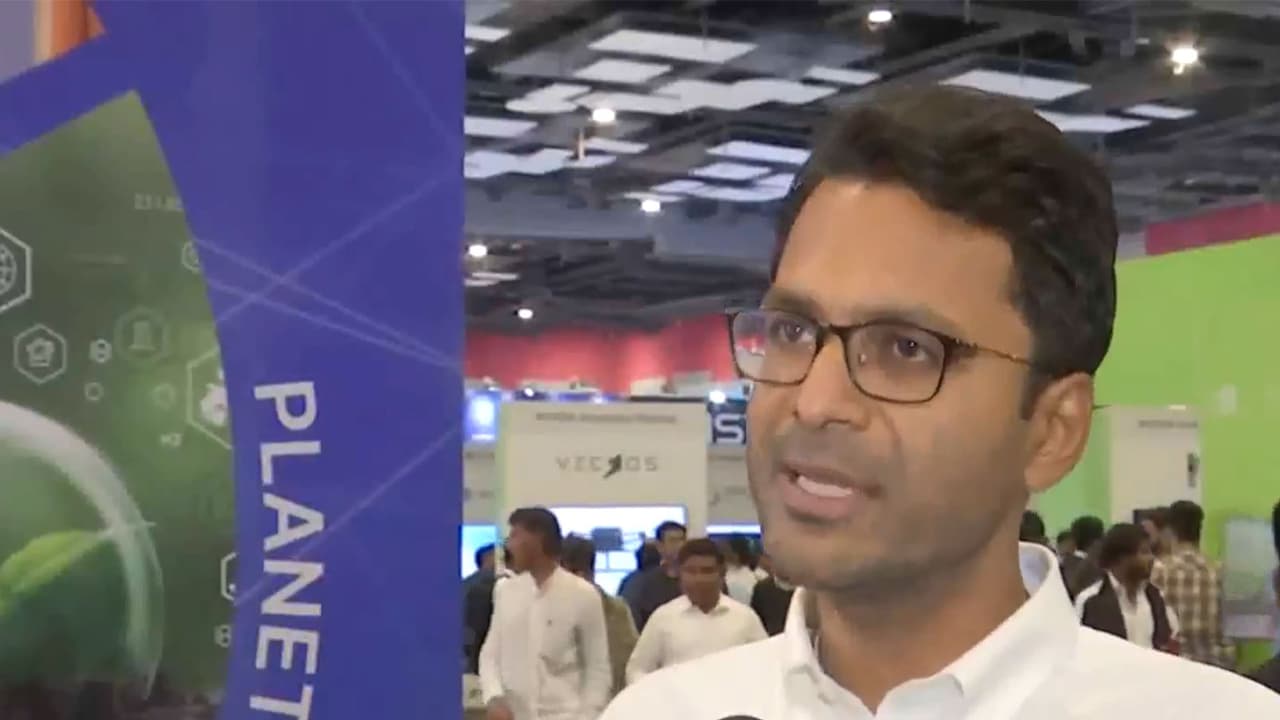
Shiprocket CEO Saahil Goel highlights AI's role in scaling India's e-commerce by providing digital access to 60 million MSMEs. He emphasizes using AI for seamless connectivity and creating enterprise-grade tech for rising Indian brands.
AI to Power MSME Integration into E-commerce
Artificial Intelligence is set to play a pivotal role in scaling India's e-commerce sector by creating digital access for millions of micro, small, and medium enterprises (MSMEs) and reducing operational friction, Saahil Goel, MD & CEO of Shiprocket, stated that while the platform has enabled over four lakh businesses to go online, there are still 60 million MSMEs in India that remain to be integrated into the digital economy.
Speaking to ANI at the sidelines of the India AI Impact Summit 2026, Goel emphasised that the real power of AI lies in creating seamless access across the country. "Shiprocket has powered over four lakh businesses to go online so far, and there are still 60 million MSMEs in India that remain. So I think the real power is in creating access. So if a person in Guwahati wants to sell to a person in Kashmir, they should be able do it in a matter of minutes. How do we kind of get that access available through AI? By using voice as a medium, by using unstructured business models that can get supported now with AI," Goel said.
Developing India-Specific AI Solutions
"And I think overall, kind of bringing enterprise-grade technology to the rising brands of India and then making access possible for the next 20 million MSMEs, let's say, in the next 10 years. I think that's kind of how I think AI can play a huge role in India," Shiprocket CEO explained.
Goel noted the importance of India-specific AI development to ensure national sovereignty in technology execution. He suggested that large data sets from marketplaces, logistics companies, payment firms, and e-commerce players should be combined into a shared data pool. Goel stated, "One thing is to adopt AI, which is what we're doing right now, but really we need to create AI for Indian use cases and Indian businesses and Indian consumers." He advocated for interoperable API stacks and data signals to address common issues, such as blacklisting customers with poor return behaviour, to protect businesses from the brunt of such problems.
Socio-Economic Impact: Job Creation and Productivity
Regarding the socio-economic impact of the technology, Goel described AI as a net positive for job creation and productivity. He stated that Shiprocket's vision is to democratize access to digital commerce by lowering the cost of entrepreneurship to near zero. He observed that this accessibility allows more entrepreneurs to enter the fold, leading to direct and indirect job creation in logistics and warehousing.
Goel noted that while AI may fully augment certain mechanical tasks over time, it will free up the workforce to focus on more creative and human-centric roles, ultimately leading to significant productivity gains for companies. "I don't think AI is yet there to completely replace their jobs, but they are going to be able to free them up 50%, so they can focus on the more creative stuff, or the more human stuff that is now needed. And I think that will create more productivity gains for most companies and for most workforces," Goel noted.
Future Outlook: Collaboration and Digital Infrastructure
The summit, organised with government support, served as a platform for startups, policymakers, and global enterprises to align on AI strategies. Goel expressed optimism that such collaborations would lead to responsible and innovative consumer policies tailored to India's unique needs. He also highlighted that integrating digital public infrastructure, similar to ONDC or UPI, with the ongoing AI transformation will be essential for the country's digital future. (ANI)
(Except for the headline, this story has not been edited by Asianet Newsable English staff and is published from a syndicated feed.)