
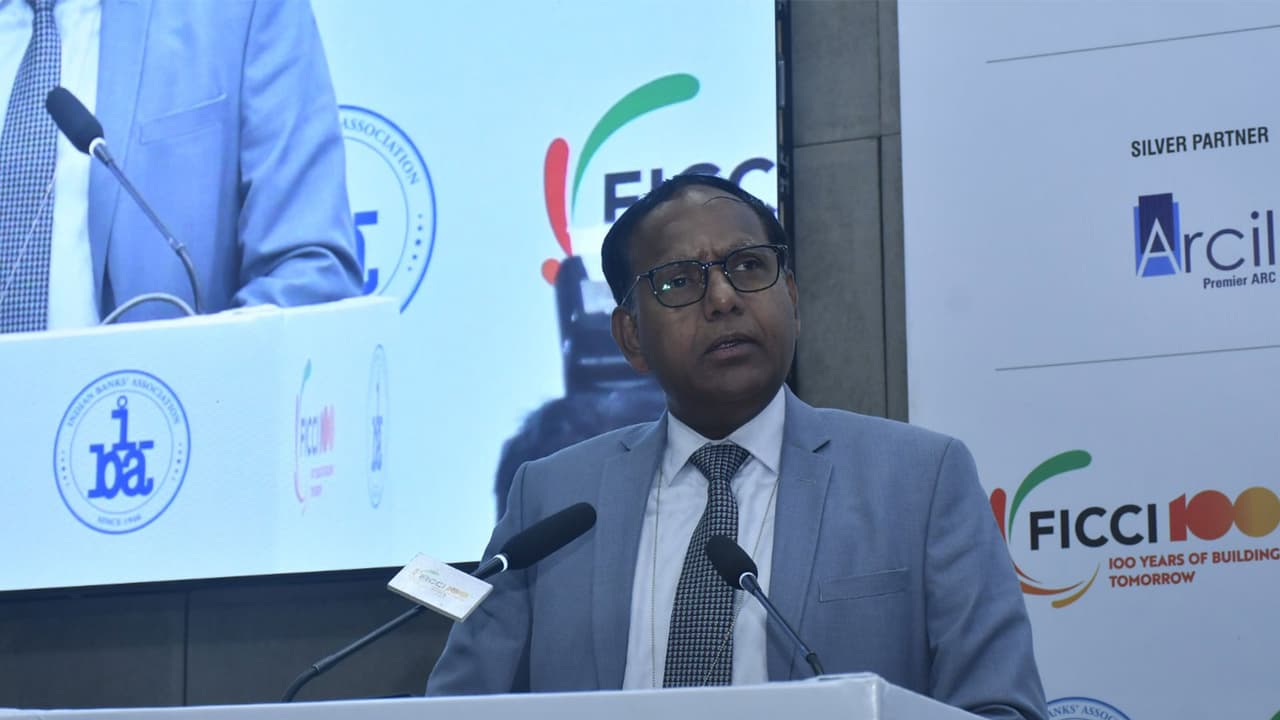
DFS Secretary M Nagaraju says India's fintech is moving 'from scale to complexity,' urging responsible AI use. He calls AI a critical enabler for financial inclusion and highlights the robust health of India's banking sector and economy.
Flagging a new frontier in financial technology, Department of Financial Services (DFS) Secretary M Nagaraju said India's fintech sector is moving "from scale to complexity", where expectations are higher, risks are sharper, and systems will be tested far more rigorously.
Addressing the PICUP Fintech Conference and Awards organised by FICCI in Delhi on Thursday, Nagaraju pointed to the rising discourse around artificial intelligence -- referring to what he called the "anthropic mythos" that "everybody is talking about" -- describing it as both a threat and an opportunity for the fintech industry to experiment and find solutions. He urged the sector to actively explore what can be done to harness this emerging technology responsibly.
AI: An Enabler for Responsible Financial Inclusion
Looking ahead to Vision 2030, Nagaraju called artificial intelligence a critical enabler -- not a disruptor -- of responsible financial inclusion. AI-driven underwriting, he said, can assess creditworthiness using alternative data sources such as digital transaction histories, GST records, telecom data, and information shared through the account aggregator framework, making it possible to lend to first-time borrowers and small enterprises with better risk management. "AI has the potential to make financial inclusion not just socially desirable, but commercially sustainable," he said.
India's Economy: A Bright Spot
India's financial sector is in robust health and poised for a transformational decade ahead, DFS Secretary M Nagaraju said, painting an optimistic picture of a nation that continues to stand out as a bright spot in an uncertain global economy. Real GDP growth for 2025-26 is estimated at 7.6 per cent, up from 7.1 per cent recorded in 2024-25. Private final consumption expenditure grew by 7 per cent, while gross fixed capital formation expanded by 7.8 per cent, and its share remained steady at 30 per cent of the GDP, signalling that both consumption and investment remain on a strong trajectory.
Banking Sector's Robust Health
The Secretary pointed to landmark improvements in the banking sector's health. Gross Non-Performing Assets (NPA) of scheduled commercial banks stood at just 2.2 per cent in September 2025, with net NPA at a record low of 0.5 per cent. Outstanding credit growth surged to 14.5 per cent as of December 2025, up sharply from 11.2 per cent in December 2024 -- a pace Nagaraju described as "unprecedented."
Sweeping Progress in Financial Inclusion
At the heart of India's financial story, Nagaraju said, is the sweeping progress on financial inclusion. Under the Pradhan Mantri Jan Dhan Yojana, nearly 58 crore bank accounts have been opened, with more than half held by women. Deposits in these accounts now exceed Rs 3 lakh crore, and over 40 crore RuPay cards have been issued to account holders. Under the Mudra scheme, over 50 crore loans worth Rs 39 lakh crore have been sanctioned, empowering micro and small entrepreneurs. Notably, 54 per cent of Mudra loans went to women. Under Stand Up India, banks have disbursed more than Rs 41,000 crore to promote grassroots entrepreneurship. The PM SVANidhi scheme, providing affordable credit to street vendors, has helped a large number of small vendors graduate into permanent micro enterprises. The Atal Pension Yojana now covers more than 8.8 crore subscribers, while the PM Vishwakarma scheme continues to support traditional artisans through skill training, credit access, and digital tools.
Digital Public Infrastructure Sets Global Template
India's digital public infrastructure has emerged as a global template, Nagaraju said. UPI processed over 22 billion transactions last month, with the total value surpassing Rs 29 trillion. UPI alone accounts for 81 per cent of all retail digital payment transactions in India and has become the largest real-time retail payment system in the world. The system is now operational in multiple countries, with several more in the pipeline. (ANI)
(Except for the headline, this story has not been edited by Asianet Newsable English staff and is published from a syndicated feed.)