
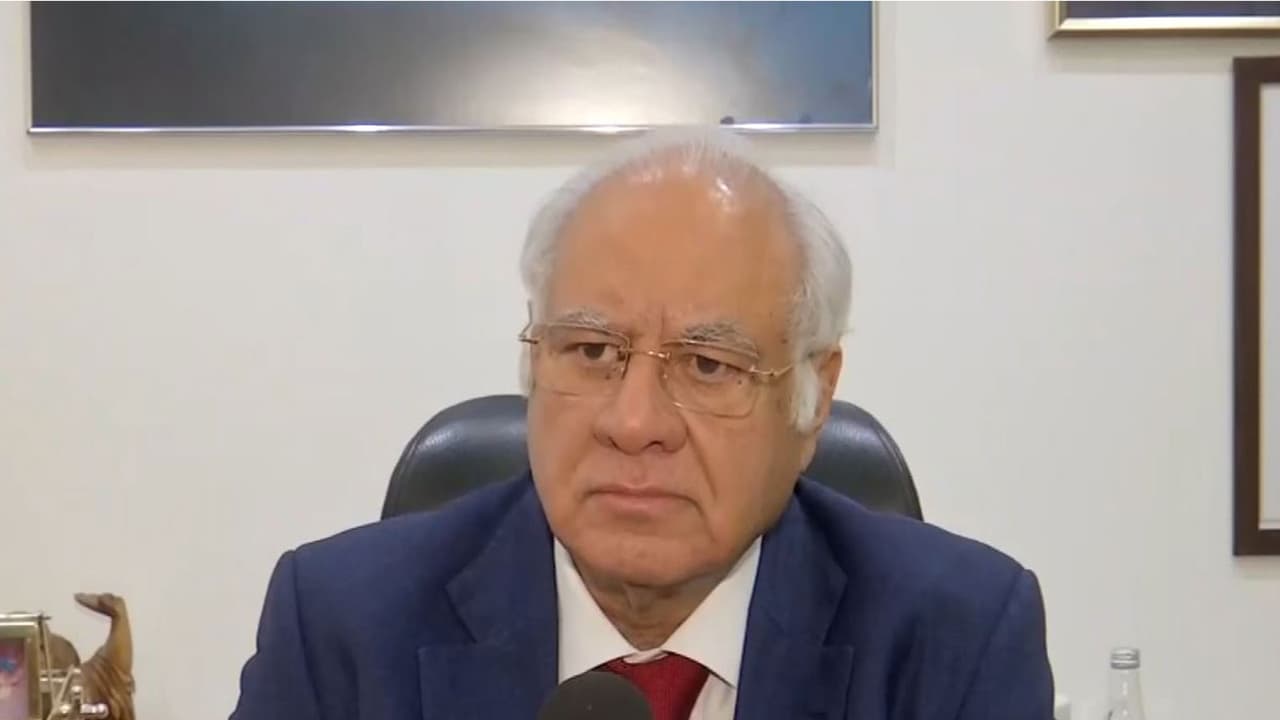
The proposed settlement between the Adani Group and the US SEC could be a turning point for the conglomerate, clearing the legal overhang in the US and restoring investor confidence, said legal expert Raian N. Karanjawala.
Adani-SEC Settlement: A 'Turning Point'
The proposed settlement between the Adani Group and the US Securities and Exchange Commission (SEC) could mark a turning point for the conglomerate, effectively clearing the legal overhang in the US and restoring investor confidence, said Raian N. Karanjawala, Managing Partner, Karanjawala & Company.
Speaking on the development, Karanjawala disclosed his personal and professional connection with the group while noting that he had "nothing to do with this particular litigation" and was "not involved in any way."
The issue dates back to November 2024, when the US Department of Justice (DOJ) filed a criminal indictment against Gautam Adani, followed by a parallel civil proceeding by the SEC related to the Adani Green bond offering.
"From what we are given to understand, two things are going to happen," Karanjawala said. "The civil proceedings filed by the SEC are going to be settled by way of a fine, they say, approximately $18 million." Once the settlement is paid and accepted by the US federal court in New York, he explained, "this part will become final."
The US Securities and Exchange Commission on Thursday (local time) settled a civil lawsuit against Adani Group Chairman Gautam Adani, subject to court approval, reported Reuters citing court records. According to media reports, Court documents show that Gautam Adani agreed to pay civil penalties of $6 million, while his nephew Sagar Adani, agreed to pay $12 million. The proposed settlement doesn't include an admission of guilt, said news reports.
'Clean Slate' for Gautam Adani
"Once that happens, what it basically means is that as far as America is concerned, Gautam Adani has no case pending against him. He has a clean slate. He's free to do business as usual and also free to travel all across the world, which to some extent he had curtailed," Karanjawala said.
For the Adani Group, he described the outcome as "very, very big." He noted that the resolution would provide "a huge financial impetus," allow the chairman to resume global travel, and help rebuild confidence in the group.
"One of the things that the Adani must have been suffering from when they were raising foreign capital is to be told but you got a case pending in America against you, why should we do business with you? Now you suddenly find that there is no case. So obviously then you are judged on your own merit outside the view of the case and obviously it will help them."
India's 'Industrial Army'
Karanjawala also framed the development within a broader geopolitical and industrial context. Drawing a parallel with US President Donald Trump's approach in China, he said, "When Donald Trump went, who did he take to China? He took all the top industrialists of America, and he pointed out that this is my industrial army."
He suggested that Prime Minister Narendra Modi could similarly leverage India's top industrialists as an economic force abroad.
"Just take, you like and count together, you start with Noel Tata, heading the Tata Group... then the second group is Adanis, which is now come across as the richest man in South Asia. The third group is Ambani, the second richest man in South Asia. Then you have Lakshmi Mittal... Sunil Mittal... Adar Poonawala... Sajjan Jindal," he said, adding that these leaders "constitute the industrial army that India possesses."
According to him, the time may have come for the Prime Minister to "utilize that strength that he can call quickly at his command, as quickly as he can call the Indian army, to come forward and take India's message to the rest of the trading world." He argued that such a move "could have in fact a far greater impact than just on the Adani group."
Karanjawala concluded that a settlement would shift the focus back to business rather than litigation. "Two people have decided, we will agree on this and the matter closes. So the litigation ends, things come to a quietness, and you can get back to your own business, which is the business of business, rather than sitting in court, helping lawyers." (ANI)
(Except for the headline, this story has not been edited by Asianet Newsable English staff and is published from a syndicated feed.)