What Happens During Epileptic Seizure? Know Symptoms, First Aid, When To Call It Emergency
Synopsis
Epilepsy is a treatable neurological condition, but myths about seizures can cause harm. Know the common misconceptions, essential first aid steps, emergency warning signs and modern treatment options.
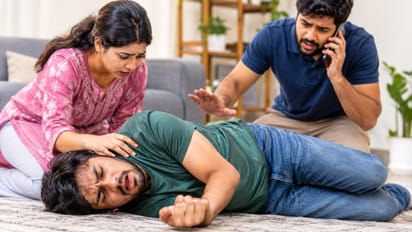
Epilepsy is a treatable neurological condition. Awareness, timely medical care and the right first aid can make a life-changing difference. Seizure management revolves around debunking outdated reflex reactions, protecting the individual during an active episode, medical or surgical management. A person suddenly collapses, becomes unconscious, stiffens and develops jerky movements of the arms and legs and may froth from the mouth, rolling the eyes or even loss of bladder/ bowel control. For some it can be a frightening experience, Unfortunately, fear and misconceptions often lead to responses that can be inappropriate, sometimes even causing more harm than the seizure itself.
What is a seizure? Is it the same as epilepsy?
A seizure is a temporary disturbance of brain function caused by abnormal, excessive electrical activity in the brain. It can produce a wide range of symptoms, ranging from brief staring episodes, unusual sensations, loss of awareness, involuntary movements and convulsions. Epilepsy is a neurological disorder characterised by an enduring tendency to have recurrent unprovoked seizures. Not every person who experiences a seizure has epilepsy. A seizure can also happen due to low blood sugar, electrolyte disturbances, infections, stroke, head injury, sleep deprivation or alcohol withdrawal.
Common Myths vs. Facts
Myth 1: Seizures are caused by evil spirits or supernatural forces.
Fact: Seizures are caused by abnormal electrical activity in the brain. They are medical conditions that require appropriate neurological evaluation and the right treatment. Religious or cultural beliefs should no way delay medical management.
Myth 2: Put something in their mouth so they don’t swallow their tongue.
Fact: It is physically impossible to swallow one’s tongue due to the lingual frenulum. Inserting a spoon, or fingers can break tthe eeth, cause severe oral lacerations, or even block the airway. Never force anything between the teeth.
Myth 3: You should physically hold someone down or restrain them to stop the shaking.
Fact: Holding someone down or restraining when having a convulsive seizure will not stop the electrical activity in the brain. It increases the risk of bone fractures, torn muscles, joint dislocations, and agitation.
Myth 4: Every seizure requires calling an emergency ambulance
Fact: For individuals diagnosed with epilepsy , a standard brief seizure (under 2–3 minutes) usually does not require emergency transport unless injury occurs, breathing is compromised, or recovery is delayed.
Myth 5: Splash cold water on their face or slap them to bring them out of it.
Fact: External sensory shocks will not interrupt an abnormal cerebral electrical discharge.
Myth 6: All seizures involve violent convulsions or falling to the ground.
Fact: Many seizures present subtly, such as absence seizures (blank staring for several seconds) or focal seizures (sudden sensory shifts, automatic lip-smacking, or mild confusion).
Myth 7: Epilepsy is a lifelong disease that cannot be cured or controlled.
Fact: A large number of people with epilepsy can achieve complete seizure freedom with the right medications. Some may eventually be considered for withdrawal of medication under medical supervision. Even patients whose seizures do not respond to medicines have many additional treatment options.
Myth 8: People with epilepsy cannot lead normal lives.
Fact: Most people with well-controlled epilepsy can pursue education, employment, marriage, parenthood, sports and any other normal activities. Epilepsy should not be a reason for social exclusion or discrimination.
Seizure First Aid Protocol
1) Time the episode and stay calm----Check your watch or phone immediately. Tracking duration is the single most critical information one can provide to responders or physicians.
2) Clear hazards and cushion the head---Do not restrain limbs or force movement. Remove sharp objects, furniture, and hard surfaces out of reach. Place a soft cushion, folded jacket, or pillow beneath their head to prevent blunt trauma. Loosen tight collars, ties, or necklaces around the neck.
3) Turn them onto their side into the recovery position---As soon as safely feasible (or immediately once shaking subsides), roll the person onto one side. This keeps the tongue from falling back against the throat and allows saliva, blood, or vomit to drain freely, preventing airway obstruction and aspiration.
4) Stay with them through the post-ictal phase-Remain with the person till they are fully awake and alert. Most people wake up disoriented, exhausted, or confused. Do not provide food, liquids, or oral pills until their are fully alert.
When to call emergency services immediately:
- A seizure lasts five minutes or longer.
- Another seizure occurs before the person regains consciousness.
- It is the person's first seizure.
- The person has difficulty breathing or does not regain consciousness.
- The seizure occurs in water or is associated with a significant injury.
- The person is pregnant or has diabetes or another serious medical condition.
Modern Clinical Treatments----Modern medical management aims for complete seizure freedom while minimizing cognitive and systemic side effects.
A) First-line therapy: Around 70% of individuals achieve seizure control with proper ASM regimens.
Modern options: Newer agents (such as levetiracetam, lamotrigine, brivaracetam, and cenobamate) offer broader therapeutic windows, predictable pharmacokinetics, and fewer drug-drug interactions compared to legacy drugs like phenytoin or phenobarbital,valproate .
B) Rescue Medications:
Fast-acting benzodiazepines formulated for non-oral emergency administration to abort cluster seizures or prolonged episodes: intranasal midazolam , intranasal diazepam or rectal diazepam gel.
Neuromodulation Devices (for Drug-Resistant Epilepsy):
1) Vagus Nerve Stimulation (VNS)
2) Responsive Neurostimulation (RNS)
3) Deep Brain Stimulation (DBS)
Surgical Interventions:
. Epilepsy surgery--One of the major advances is that epilepsy surgery can provide a cure or long-term seizure freedom in appropriately selected patients. Approximately one-third of people with epilepsy may continue to experience seizures despite medication,known as drug-resistant epilepsy.
Patients with drug-resistant epilepsy should be evaluated at a specialised epilepsy centre. Detailed assessment may include prolonged video EEG monitoring, high-resolution MRI, PET imaging, neuropsychological evaluation and, in selected cases, invasive EEG monitoring.
Surgery, particularly for certain forms of temporal lobe epilepsy, offer good outcome. Early referral is essential because prolonged uncontrolled seizures can adversely affect memory, cognition, education, employment and quality of life.
Laser Interstitial Thermal Therapy (LITT)
Dietary Therapies:
Medically supervised ketogenic diets or modified Atkins diets (MAD), particularly effective in specific pediatric epilepsies (e.g., Dravet syndrome, GLUT1 deficiency
Living with epilepsy: Beyond seizure control
Treatment does not end with prescribing medicines. Adequate sleep, regular medication, stress management and avoiding of individual seizure triggers are important.
Education, employment and various social activities, should be encouraged for epilepsy patients for women with epilepsy episodes, require pre-pregnancy counselling, medication review and folic acid supplementation. With proper planning and medication, most women with epilepsy can have healthy pregnancies.
Driving regulations, swimming precautions, working at heights and operating heavy machinery should be discussed with the treating neurologist. Most importantly, epilepsy should not be hidden out of fear or embarrassment. Social acceptance and family support are as important as medical treatment itself.
The message: Awareness can save lives.
-This article is authored by Dr. Ajith M, Consultant, Department of Neurology, KIMSHEALTH, Thiruvananthapuram
Explore the latest Lifestyle NewsFood and RecipesHealth NewsAsianet News Official App