Creative Risk Must Be Thoughtful, Not Reckless: Brinda Miller
Synopsis
The Kala Ghoda Arts Festival (FGAF) has transformed Mumbai's creative ecosystem from heritage lanes to shared cultural memory. Festival Director Brinda Miller explores creative risk, cultural access, and digital-first festivals in its 26th edition.
For decades, art festivals have played a vital role in nurturing diverse artistic and cultural expressions, enriching society by opening new avenues for creative exchange and discovery. With its founding in 1999, the Kala Ghoda Arts Festival (KGAF) in Mumbai has grown into one of the country’s most anticipated cultural celebrations and is widely regarded as Asia’s largest multidisciplinary street arts festival. Now in its 26th edition, KGAF serves as a vibrant and inclusive space that empowers emerging talent and enables meaningful interaction with established artists. By bringing together diverse art forms, the festival strengthens Mumbai’s artistic identity and transforms public spaces into sites of creative expression and shared cultural memory. With the theme ‘Ahead of the Curve,’ the 2026 festival takes place from January 31 to February 8.
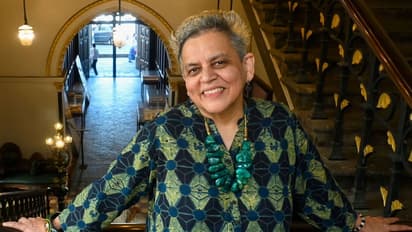
Festival Director Brinda Miller, a key force behind this dynamic cultural movement, believes that creative risk is central to a festival’s success. She maintains that without risk, a festival loses its vitality, while underscoring that such risk must be thoughtful rather than reckless. In this conversation with JAIDEEP PANDEY, she reflects on the festival’s journey, its democratic spirit, and how KGAF continues to push creative boundaries while remaining deeply connected to the city it calls home.
Q: What in your view has been KGAF’s most enduring contribution to Mumbai’s cultural identity?
A: I think KGAF has helped Mumbai see itself as a living cultural canvas. It has transformed heritage streets into spaces of dialogue, expression, and shared memory. Over the years, the festival has woven art into the city’s everyday rhythm, making culture not an elite experience but a collective one. That sense of belonging fostered through creativity is, I believe, KGAF’s most enduring contribution.
Q: How vital are open, free public art festivals in democratising access to culture through art?
A: They are absolutely vital. When art is free and open, it removes hesitation, hierarchy and barriers. A child, a corporate professional, and a street vendor all stand on equal ground before a performance or an installation. That shared access nurtures curiosity and confidence, and this is how cultural democratisation truly begins.
Q: As KGAF enters its 26th edition with the theme ‘Ahead of the Curve,’ what shifts have you witnessed in Mumbai’s arts audiences, and how has the festival responded?
A: I can say that audiences today are far more aware, experimental, and globally exposed. They are willing to engage with complex themes, new formats, and interdisciplinary work. KGAF has responded by embracing innovation through digital art, immersive storytelling, and contemporary conversations, while still holding on to the soul of tradition. We grow with our audience, not ahead of them and not behind them.
Q: Art, lit, and film festivals are often seen as platforms that nurture emerging talent while showcasing established artists. How do you maintain this balance?
A: It is a conscious curatorial choice. Established names draw attention and lend credibility, while emerging voices bring freshness and urgency. We place them side by side, sometimes even on the same stage, so there is dialogue across generations. That exchange keeps the festival alive and relevant. It also creates a space where learning flows in both directions.
Q: KGAF brings together art, lit, theatre, music, and performance. How do these different disciplines interact and enrich one another within the festival?
A: At KGAF, disciplines do not exist in silos. A poetry reading might inspire a visual artist, a theatre performance may spark a panel discussion, and a music act might echo the theme of a nearby exhibition. This proximity of forms creates unexpected connections, and those intersections often become the most memorable experiences for audiences.
Q: As festival director, how important is creative risk-taking in KGAF’s programming, and how do you balance experimentation with audience expectations?
A: I strongly believe that creative risk is essential. Without it, a festival becomes predictable. However, risk must be thoughtful rather than reckless. We balance experimentation by grounding new ideas in strong storytelling, relevance, and accessibility. When audiences feel invited rather than alienated, they are more willing to venture into unfamiliar territory with us. That sense of trust between the festival and its audience is what allows innovation to truly thrive.
Q: What in your view has been the USP behind KGAF remaining relevant in today’s fast-paced, digital-first world?
A: Our USP is authenticity. In a digital-first world, people crave real experiences such as live music, shared laughter, and meaningful conversations in physical spaces. KGAF offers that sense of human connection while still engaging with contemporary themes and technology. We do not compete with the digital world; we complement it. By grounding innovation in lived, collective experiences, the festival continues to remain relevant and resonant.
Q: With KGAF being Asia’s largest art festival, how does it ensure inclusion of diverse languages, regions, and underrepresented voices?
A: Inclusion begins at the curatorial table. We actively seek out artists and thinkers from different regions, languages, and backgrounds. We also encourage programming in multiple Indian languages and place folk, regional and grassroots traditions alongside contemporary urban art. Diversity is not a segment for us. It is the foundation. This approach allows a wider range of audiences to see themselves reflected in the festival.
Q: Since KGAF is a free public event, how challenging is it to secure sustained corporate sponsorships to cover operational costs and artist fees?
A: It is always a challenge, but it is also a shared responsibility. We work with partners who understand that they are not just sponsoring an event, but investing in the city’s cultural life. Over time, many sponsors have become long-term supporters because they see the social and emotional value the festival creates. That alignment of values is what helps sustain the festival year after year.
Q: In an increasingly digital and fragmented world, how will arts festivals shape cultural and public dialogue in the future?
A: Arts festivals will undoubtedly become even more important as spaces for real dialogue. They allow people to listen, question, feel, and reflect together, something that rarely happens in fragmented digital spaces. Festivals like KGAF will continue to serve as cultural commons where society can come together to imagine its future with empathy and creativity.
Explore the latest Lifestyle NewsFood and RecipesHealth NewsAsianet News Official App