Not Their Final Goodbye: Why Nepal Is Burying Flood Victims and Preserving Their DNA for Years
Nepal is burying unidentified flood victims instead of cremating them because hundreds of bodies have overwhelmed morgues and many are too decomposed for identification. Before burial, authorities collect DNA, details and record each grave location.
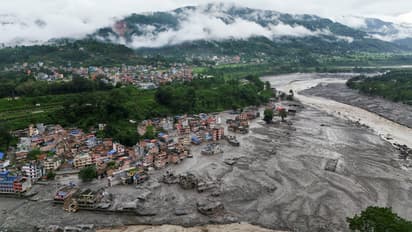
The mass burial of hundreds of flood victims in Nepal has raised an emotional and difficult question: why are authorities burying bodies instead of cremating them according to traditional funeral practices?
The answer lies in identification.
Nepal is not treating the emergency burial of unidentified flood victims as their final religious last rites. Instead, authorities are using burial as a temporary and carefully documented way to preserve the possibility that families may identify and claim their relatives later.
Before each unidentified body is buried, forensic teams are collecting DNA samples and recording other details. If a future DNA match establishes the identity of a victim, the remains can be exhumed and handed over to the family for final rites according to their religious and cultural traditions.
The decision comes after the devastating Bhotekoshi-Trishuli flood disaster overwhelmed morgues and hospitals with hundreds of decomposing and unidentified bodies.
The flash floods struck Nepal's Rasuwa region near the Tibet border after a glacial collapse, sending a destructive surge of water, mud, rocks and debris downstream.
Bodies were swept far from the original disaster zone. Many were recovered days later from riverbanks and debris fields in districts downstream, making the identification process extremely difficult.
Some bodies had been submerged in water and buried under mud for several days. Others were badly damaged, mutilated or recovered only as partial remains.
As a result, visual identification became impossible in many cases.
The sheer number of bodies also created a major logistical crisis. In Chitwan alone, authorities recovered hundreds of remains, while hospitals and temporary holding centres had limited mortuary space.
As reported by local media outlets in Nepal, public and private hospitals in Chitwan could store only around 50 bodies, far below the number recovered after the disaster.
Normally, unidentified bodies can be kept in mortuaries while police and forensic teams attempt to establish their identity.
But this disaster created numbers far beyond the available storage capacity.
Mortuaries and temporary holding centres quickly became overcrowded. Authorities in some districts had to transfer bodies to hospitals in other parts of Nepal because local facilities were already full.
At the same time, many bodies were decomposing rapidly because they had spent days in floodwater, mud and debris before being recovered.
Keeping hundreds of decomposing bodies in overcrowded facilities for a prolonged period was becoming increasingly difficult. Officials also faced concerns about sanitation and the health risks associated with managing large numbers of badly decomposed remains.
Authorities therefore needed a solution that could safely manage the dead without destroying the possibility of identifying them later.
This is the most important part of Nepal's emergency response.
Cremation permanently destroys most of the physical remains that could later be used for identification or returned to families.
Burial, however, preserves the body or remains underground and allows authorities to exhume them later if forensic evidence establishes the person's identity.
This means the burial is not necessarily the final stage of the funeral process.
Authorities are effectively creating a documented system of temporary burial for unidentified victims. Once a body is identified through DNA or other evidence, officials can locate the exact burial site, exhume the remains and hand them over to the family.
The family can then conduct the final rites according to their religious beliefs and customs.
Nepal's government has stressed that bodies already identified by relatives are being handed over to their families. The emergency burial procedure applies to victims whose identities cannot currently be established.
The burial process is not simply about placing unidentified bodies in a mass grave and closing the case.
Before burial, forensic teams collect DNA samples from the remains. Each body is assigned a unique and permanent identification number.
Officials also record as much information as possible, including:
- Photographs of the body and visible features
- Physical descriptions
- Clothing and footwear
- Jewellery and other personal belongings
- Identity documents, if found
- Tattoos or distinctive marks
- Forensic and post-mortem records
- DNA samples
- The date and location of burial
The exact plot where each body is buried is also recorded.
This documentation is crucial because many families are still searching for relatives who remain missing.
If a family later provides a DNA sample and it matches one of the preserved profiles, authorities can establish the identity of the victim and locate the burial site.
Nepal's forensic system is relying on a combination of scientific and physical evidence.
Families searching for missing relatives can provide DNA samples. These can later be compared with samples collected from unidentified bodies.
Authorities may also use photographs, dental records, fingerprints where available, distinctive marks and personal belongings to help establish identity.
In some cases, bodies cannot be identified visually because of severe decomposition or injuries caused by the flood. This is where DNA testing becomes particularly important.
However, the process may take months because hundreds of samples need to be processed and compared.
For grieving families, this means the search for a missing relative may continue even after the emergency recovery operation ends.
The purpose of preserving DNA and burial records is to ensure that families do not permanently lose the chance to know what happened to their loved ones.
One of the main emergency burial sites is in the Devghat area of Bharatpur Metropolitan City in Chitwan.
Authorities selected an open site where unidentified bodies could be buried in a documented manner after forensic evidence had been collected.
By August 31, Nepal's state broadcaster reported that 199 unidentified flood victims recovered in Chitwan had been buried after their DNA samples and identifying details were preserved.
Officials said that if relatives later establish a DNA match, the corresponding remains can be exhumed and handed over to the family for final rites.
Technically, the emergency burial should not be viewed in the same way as a traditional final funeral.
For families whose relatives have been identified, authorities are handing over the bodies so that the families can conduct cremation, burial or other rituals according to their faith.
For unidentified victims, the government is taking responsibility for the immediate management of the remains.
The priority is to handle the bodies with dignity while keeping open the possibility of future identification.
This approach attempts to balance two urgent needs: preventing a public health and storage crisis caused by hundreds of decomposing bodies, while ensuring that families are not permanently deprived of the opportunity to identify and claim their relatives.
A difficult balance between science, dignity and tradition
The disaster has placed Nepal in an extremely difficult situation.
Authorities cannot keep an unlimited number of bodies indefinitely when morgues are full and remains are decomposing. But cremating unidentified victims would make future identification and the return of remains far more difficult.
Burial provides a practical middle path.
By preserving DNA samples, assigning identification numbers and recording the precise burial location, authorities are trying to ensure that the emergency does not erase the identity of those who died.
The images of mass burials are deeply disturbing, particularly in a country where funeral traditions carry enormous cultural and religious importance.
But the decision is not about denying victims their final rites.
It is about buying time.
The bodies are being buried because Nepal's overwhelmed authorities need to manage the immediate humanitarian crisis. At the same time, forensic evidence is being preserved so that months or even years later, a family may still receive an answer, identify a loved one and perform the final rites they were unable to give during the disaster.