In the early stages of Earths formation, the oceans were not as salty as they are today. As the planet cooled, rainfall began to play a significant role in shaping the oceans. Rainwater absorbed carbon dioxide from the atmosphere, making it mildly acidic. Over time, this water gradually weathered rocks and dissolved minerals on land. Rivers and streams then carried these dissolved minerals and salts into the oceans. Underwater volcanic activity and hydrothermal vents on the ocean floor also contributed minerals to seawater. This process continued over millions of years, gradually contributing to the accumulation of dissolved salts in the oceans. Today, approximately 97% of the Earth's water is saline, with most of it found in the oceans. The sheer quantity of dissolved salt is enormous, highlighting just how much the chemical composition of seawater differs from that of freshwater.
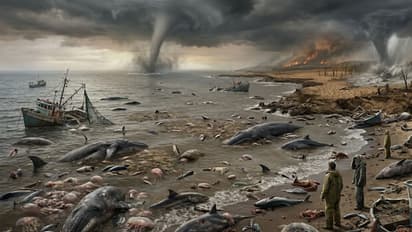
Marine organisms would be among the first to suffer if the oceans suddenly became freshwater. Fish, crabs, shrimp, marine plants and countless microorganisms have adapted to specific levels of salinity. A sudden and drastic change would disrupt their ability to regulate the balance of water and salts within their bodies, potentially causing widespread mortality. Some species, including salmon, eels and certain sturgeon, can tolerate both freshwater and saltwater during different stages of their lives. However, such adaptability is limited to particular species and cannot be generalised to marine life as a whole.
The consequences could be particularly severe for phytoplankton, microscopic organisms that form the foundation of many marine food webs. If their populations collapsed, the effects would spread throughout the ecosystem, threatening smaller organisms, fish and larger marine predators. The resulting disruption could destabilise entire ocean ecosystems and severely affect fisheries that millions of people depend on for food and livelihoods. Climate, Oxygen Production and Agriculture Could Be Affected
The oceans are not merely vast reservoirs of water. They play a crucial role in regulating the Earth's climate and supporting global ecosystems. Marine phytoplankton and algae absorb carbon dioxide through photosynthesis and release oxygen. Marine photosynthesis accounts for a substantial share of the oxygen produced globally. If these organisms suffered widespread losses, the consequences could extend far beyond the oceans, affecting carbon cycling and the long-term balance of atmospheric gases. A sudden change in ocean salinity would also alter the density and circulation of seawater, potentially disrupting established climate patterns. Changes in ocean circulation could influence rainfall, wind patterns and regional temperatures. Agriculture could be affected as well. Shifts in rainfall and temperature could disrupt growing seasons, reduce crop yields and intensify water stress in some regions. In turn, these changes could contribute to food shortages and place additional pressure on already vulnerable communities.
One of the most important systems influencing the Earth's climate is thermohaline circulation, a global network of ocean currents driven by differences in water temperature and salinity. It can be compared to a vast conveyor belt that transports heat around the planet. Warm surface water moves from lower latitudes towards colder regions. As the water cools, its density increases, and in certain areas, it sinks into the deep ocean. Salinity also contributes to this process because saltier water is generally denser than freshwater at the same temperature. If the oceans suddenly became freshwater, these density differences would change significantly. This could disrupt parts of the global circulation system, altering how heat is transported between regions.
The resulting changes could affect regional temperatures, rainfall and storm patterns. Some areas might experience unusual warming, while others could face colder conditions or shifts in seasonal weather. However, the precise consequences would depend on how ocean circulation responded to such an extreme hypothetical event, and the severity of individual regional impacts cannot be predicted with certainty.
In principle, removing dissolved salts from seawater would produce freshwater. This process, known as desalination, is already used around the world to supply drinking water to coastal cities and water-stressed regions. One of the most widely used methods is reverse osmosis, in which seawater is forced through specialised membranes that separate much of the dissolved salt from the water.
However, desalinating the entire ocean would be practically impossible with current technology. The oceans contain an immense volume of water, and every litre of seawater contains approximately 35 grams of dissolved salts on average. Removing that quantity of salt would require extraordinary amounts of energy, infrastructure and time.
It would also create another enormous challenge disposing of or managing the concentrated brine left behind by the desalination process. If discharged improperly, this highly saline waste can harm nearby marine ecosystems. While desalination can help meet the water needs of cities and coastal communities, scaling it up to transform the entire ocean is not a realistic solution to the global water crisis.
At first glance, turning the oceans into freshwater might seem like an ideal solution to the world's drinking water shortage. In reality, ocean salinity is an essential part of the Earth's interconnected environmental systems. A sudden disappearance of salt could threaten marine biodiversity, disrupt food webs, alter ocean circulation and affect climate patterns. The scale and severity of these consequences would depend on how the Earth's physical and biological systems responded, but the potential risks would be enormous. Ultimately, the oceans salt content is not simply an obstacle to obtaining drinking water. It is a fundamental part of the natural balance that sustains life on Earth.
Explore the latest Lifestyle NewsFood and RecipesHealth NewsAsianet News Official App