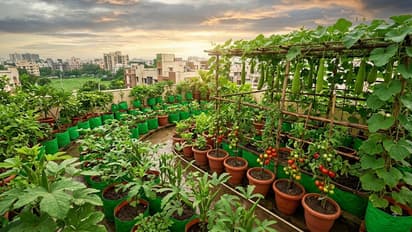
The monsoon can make gardening a little easier in many parts of India. Warm temperatures, regular moisture and longer growing days can give several vegetables a good start. But there is one important catch: a terrace garden during the rainy season needs drainage, not just water.
August is not automatically the right month for every vegetable in every part of the country. Local temperature, rainfall, sunlight and the variety being grown all matter. Still, several vegetables are suitable for warm, rainy conditions and can be grown in pots or grow bags.
Indian Council of Agricultural Research (ICAR) advisories list crops such as okra, brinjal, tomato, beans and several gourds among vegetables that can be cultivated in kharif conditions.
If you have a sunny balcony, terrace or even a small outdoor corner, these 10 vegetables are worth considering.
Okra or Bhindi is one of the easiest choices for a beginner's terrace garden. It enjoys warmth and can be grown in a suitably sized container.
Sow the seeds directly in well-drained potting soil and place the container where the plant gets several hours of sunlight. Keep the soil lightly moist but never waterlogged.
ICAR records varieties of okra that are specifically suitable for rainy-season cultivation, with some varieties producing their first harvest roughly 45 days after sowing under suitable conditions.
Radish does not need a huge amount of space, making it useful for balcony gardeners. Choose a reasonably deep pot or grow bag so the root has room to develop.
Use loose soil that drains quickly and avoid compacting it. Sow the seeds directly rather than moving young seedlings unnecessarily.
The exact harvest time depends on the variety and growing conditions, so the seed packet is a better guide than assuming every August-sown radish will be ready in exactly 30 days.
French beans can be grown in containers, provided the soil is fertile and drains well. Bush varieties are particularly convenient when space is limited.
Sow the seeds directly and give the plants plenty of sunlight. If you choose a climbing variety, provide a simple support structure before the vines become heavy.
ICAR lists French bean varieties among crops that can be grown in suitable Indian conditions, with some varieties capable of producing pods in around 70 days.
Brinjal is another practical choice for an Indian home garden. It needs warmth, sunlight and a reasonably large container.
Instead of planting too many plants together, give each one enough space for air movement. This becomes particularly important during humid weather, when poor ventilation and excess moisture can encourage disease.
ICAR lists brinjal among vegetables cultivated in kharif conditions and recommends varieties suited to different regions.
Tomatoes can be grown at home, but August needs a little more care than a dry season. Continuous rain can leave foliage wet and soil saturated, creating problems for the plant.
If you are starting from seed, use a small container or seed tray initially. Once the seedlings are established, move them into a larger pot. Place the plant where it receives good sunlight and use a stake or support as it grows.
Tomato is cultivated during kharif conditions in India, although the best planting window varies by region and variety.
Lauki or bottle gourd is an excellent option if you have a terrace with room for a vine. The plant needs space to spread, so a strong trellis or similar support is important.
Use a large container with fertile, well-drained soil. Avoid allowing rainwater to collect around the roots.
Bottle gourd is recognised as a kharif crop, and ICAR lists varieties suitable for kharif and rabi cultivation.
Karela can also make good use of vertical terrace space. Instead of allowing the vine to crawl across the floor, train it upwards on a sturdy support.
Good drainage is particularly important during the monsoon. Waterlogged soil can damage roots, so make sure the container has unobstructed drainage holes.
Bitter gourd is among the cucurbit vegetables grown during the kharif season.
Ridge gourd is another vine that can be trained vertically. This makes it more suitable for a terrace than its size might initially suggest.
Give it a large enough container, sunlight and a strong trellis. ICAR lists ridge gourd varieties with early first picking in suitable growing conditions, although home-garden results will vary.
Pumpkin needs considerably more room than radish or beans, but it can still be grown on a terrace if you have space and a strong support system.
Its vines can spread widely, so plan where they will go before sowing. Keep the container away from areas where excess rainwater collects.
Pumpkin is among the cucurbit crops associated with kharif cultivation in India.
Cucumber can be another useful addition to a monsoon kitchen garden, particularly where temperatures remain warm.
Give the plant a large enough container, good drainage and a trellis. Training the vines upwards saves floor space and also improves air circulation around the plant.
ICAR includes cucumber among cucurbit vegetables suitable for kharif cultivation, while also stressing the importance of drainage during periods of heavy rain.
The biggest mistake during the monsoon is assuming that plants need extra watering simply because they are growing.
They don't. Check the soil first. If rain has already kept it damp, do not add more water. Make sure every pot has drainage holes and that excess water can escape freely.
Terrace gardeners should also watch for cloudy spells that reduce sunlight, remove damaged leaves and avoid overcrowding plants. For vegetables such as gourds and beans, provide support early rather than waiting until the vines become difficult to manage.
August can therefore be a rewarding month for a kitchen garden, but success depends less on planting a long list of vegetables and more on choosing crops suited to your local conditions. Start with a few containers, give them sunlight and drainage, and let the monsoon work for you rather than against you.
Explore the latest Lifestyle News covering fashion, wellness, travel, Food and Recipes, and more. Stay updated with trending Health News, fitness tips, and expert insights to inspire your daily living. Discover personalized lifestyle trends that keep you stylish and informed. Download the Asianet News Official App from the Android Play Store and iPhone App Store for everything that adds value to your everyday life.