Mount Everest Facts: Climbing Costs, the Death Zone, and Peak That’s Still Rising

Published : Jan 02, 2026, 03:55 PM IST

The 'Death Zone' above 8,000 meters poses severe challenges to the human body. Additionally, it's a fact that the peak is still growing.
PREV
16
Cost to climb mount everest

Many people dream of conquering Mount Everest. Climbing the world's highest peak is the ultimate adventure. However, when we hear, read, and see pictures of Mount Everest, we are often not aware of the effort required. Moreover, many people don't know how much it costs to climb Everest.

The Everest journey is very expensive. The financial challenge is as tough as the challenge of conquering Everest. A standard guided trip costs approximately 35,000 to 75,000 US dollars (about 30 - 70 lakh rupees). Sometimes the cost is even higher. This price includes climbing permits from Nepal, all expenses for Sherpa support (like tips and bonuses), oxygen cylinders, food, tents, ropes, insurance, logistics, and weeks, sometimes months, of preparation.

26
The Growing Mount Everest

The permit from the Nepal government alone costs a mountaineer 11,000 US dollars (about 10 lakh rupees). It's important to note that this is just for the permission to climb. When you add the costs of special equipment, international travel, acclimatisation rotations, and emergencies, the amount becomes as massive as Everest itself. Everest is not just a test of endurance, but also of financial capacity. Let's look at three incredible facts about Everest.

One of the scientific facts about Everest is that it is still getting taller. This is because the mountain is located on the border where the Indian tectonic plate is pushing into the Eurasian plate. This type of collision created the Himalayas millions of years ago. This process continues today. Because of this, Everest grows by a few millimetres every year. After years of debate and research with the help of modern satellites, Nepal and China jointly confirmed in 2020 that the height of Everest is 8,848.86 meters.

36
The Human Body's Different Behavior

The "Death Zone" is said to be located above 8,000 meters. This is because the oxygen level there is only one-third of that at sea level. At this altitude, it doesn't matter how healthy or experienced the mountaineer is. The human body cannot fully adapt to such conditions. Simply put, it is difficult for the human body to survive at such a high altitude. Even simple actions like eating, sleeping, and thinking become difficult for a person.

46
Death Zone

Upon entering the Death Zone, the body slowly begins to weaken. Muscle strength is lost. Staying in this climate and environment for a long time can lead to life-threatening situations. That's why most mountaineers spend only a few hours near the summit and descend as quickly as possible.

56
'Traffic Jams' on Everest Too

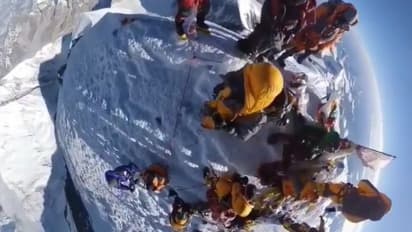
You can't always climb Mount Everest. During the peak season, it gets very crowded. This rush usually occurs in May. This is the time that offers the safest opportunity to climb the peak. Mountaineers often have to wait in line on narrow ridges and steep icefalls near the summit. This is also dangerous. Surviving in extreme cold and low oxygen conditions is difficult.

66
Some Painful Realities

Many people have lost their lives while climbing Mount Everest. Some signs of past expeditions can be seen here. Recovering mountaineers who have had accidents or lost their lives is very difficult and equivalent to inviting extreme danger. 

Therefore, those who die near the summit often cannot be brought down. Bodies, abandoned oxygen bottles, torn tents, and other waste have accumulated on Everest for decades. As part of cleanup efforts, many tons of waste have been removed from the mountain.

Explore the latest Lifestyle News covering fashion, wellness, travel, Food and Recipes, and more. Stay updated with trending Health News, fitness tips, and expert insights to inspire your daily living. Discover personalized lifestyle trends that keep you stylish and informed. Download the Asianet News Official App from the Android Play Store and iPhone App Store for everything that adds value to your everyday life.


Read more Photos on

Recommended Stories