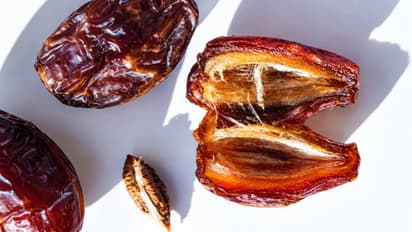
Should you wash dates before eating them? Do you need to pay attention to labels like 'Washed' on the packet? Let's see what FSSAI's food safety guidelines say about this
Many of us just pop dates straight from the packet into our mouths. We rarely think about washing them. But now, a viral video is making everyone ask: should we be washing dates? According to FSSAI rules, dates are a type of dried fruit. However, not all dates you buy are the same. Some packets mention 'Washed,' some are 'Pitted' (seedless), and others are 'Unpitted' (with seeds). This means you can't have one rule for all. It's super important to check the information on the packet you buy.
23
What does the information on the packet say?
You should always check a few key things when you buy a packet of dates. Look for labels like 'Washed,' 'Ready to Eat,' or 'Pitted/Unpitted.' Also, check the processing method, packing date, and expiry/best before date. Make sure the packet isn't torn, punctured, or damaged. FSSAI's Food Products Standards and Food Additives Regulations clearly state what good quality dates should be. They must not have any foreign matter, live insects, mould, dead insects, insect fragments, or any rodent contamination. So, don't just go by how the dates look; always read the information on the packet first.
33
So, was it wrong to eat them without washing?
This is the most important part. You can't just say, 'Oh no, I've been eating unwashed dates, it must have been dangerous!' That's not correct. You have to decide based on how the product was processed and what the label says. At the same time, washing dates that are not clearly marked 'Washed' or 'Ready to Eat' is a good extra safety step. In fact, FSSAI's general food safety guidelines advise washing all fruits and vegetables under clean, running water before use. This topic is trending again because small food safety issues can spread like wildfire through social media videos, making us question our old habits. So, instead of having a strict 'must wash' or 'never wash' rule, the best practice is to check the label and see how the dates were prepared.