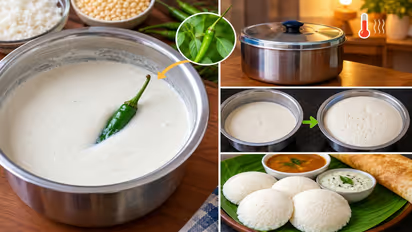
Idli batter often struggles to ferment during the rainy season, leaving you with hard idlis. A simple green chilli trick is believed to help the batter rise better. Discover how it works.
Is your idli hard? Drop a green chilli in the batter
Idli and dosa always hold a special place on the Tamil Nadu breakfast menu. You need well-fermented batter to get soft and spongy idlis. The temperature drops significantly during the rainy and winter seasons. The batter takes much longer to ferment during this time. This delay turns your idlis hard like stones.
You can use a simple secret to ferment the batter quickly in such situations. You just drop a green chilli with its stalk into the freshly ground idli batter. You must bury the chilli completely without removing the stalk. You then close the vessel tightly and keep it in a warm spot inside the house. You can follow this method on cold days when the batter takes too long to ferment. The stalk of the green chilli plays a very important role in this process.
24
What is the science behind this?
Idli and dosa batter fermentation is a completely natural process. The microorganisms naturally present in the rice and urad dal mixture create many changes in the batter. Lactic Acid Bacteria (LAB) play a very important role in this fermentation process.
The 'Applied and Environmental Microbiology' journal published a research paper in 2019. This paper clearly explained the contribution of these bacteria in idli batter fermentation. The acidity increases and the overall volume rises when the batter ferments. This process helps the batter rise and gives the idlis a soft texture.
34
Ways to store batter during winter
The 2019 study did not directly prove that microorganisms in the green chilli stalk make the batter ferment quickly. We must note this point clearly. We can only consider this a home remedy because it lacks scientific evidence. The batter fermentation speed depends entirely on the temperature, the ingredient ratio, and the surrounding environment.
The fermentation process happens very slowly during winter due to low temperatures. You can keep the batter vessel in a warm place that does not get direct heat. The batter volume increases during fermentation. You must leave enough space at the top instead of filling the vessel to the brim.
You must avoid opening the lid frequently to check the fermentation. This practice helps you prevent temperature changes inside the vessel. You must use rice and urad dal in the exact correct ratio. You must also ensure the batter does not become too watery while grinding.
The batter shows clear signs when it ferments properly. The volume increases, small bubbles appear on the surface, and a mild sour smell comes out. You must immediately place the batter in the refrigerator once you notice these signs. You should not leave it outside for a long time. Adding a green chilli is a simple trick. However, the correct temperature and ingredient ratio remain the basic factors for perfect batter fermentation.