Eggs are a regular part of breakfast in many households. Whether you enjoy boiled eggs, omelettes or egg bhurji, there is one thing most people do after preparing them: throw the eggshells straight into the dustbin. But these seemingly useless shells can actually be put to several practical uses around the house and garden.
Eggshells are rich in calcium carbonate, which makes them useful as a natural source of calcium for soil. They can also be reused for certain household cleaning tasks and even as small containers for growing seeds. Instead of throwing them away every morning, you can collect, dry and reuse them in simple ways.
Here are five useful ways to make the most of eggshells at home.
One of the most useful ways to reuse eggshells is in gardening. Eggshells contain more than 90 per cent calcium carbonate, along with small amounts of other minerals. Calcium is an important nutrient that helps plants develop healthy cell walls and supports their growth.
Instead of buying additional products immediately, you can turn leftover eggshells into a calcium-rich soil amendment.
First, clean the shells to remove any remaining egg white or yolk. Let them dry completely in the sun. Once dry, crush them into very small pieces or grind them into a fine powder using a mixer or grinder.
You can then mix a small quantity into the soil around your plants or add it to your compost. This can be useful for plants such as tomatoes, chillies and roses, particularly when the soil needs additional calcium.
However, remember that eggshells break down slowly. Finely ground shells release their calcium faster than large pieces, and they will not immediately solve every plant growth problem. It is also better to check the soil's nutrient levels before adding extra calcium.
Eggshells can also be useful when you are dealing with stubborn food stains on kitchen utensils.
If a steel pan or kadai has burnt food stuck to its surface, finely crushed eggshells can work as an abrasive cleaning material. Their rough texture can help loosen food residue when combined with dishwashing liquid.
To try this method, take clean, completely dry eggshells and crush them into small pieces. Add a little dishwashing liquid and use the mixture to scrub a suitable stainless steel utensil. Rinse it thoroughly with water after cleaning.
However, avoid using eggshells on non-stick cookware, delicate surfaces or utensils with coatings that can get scratched. Always check the manufacturer's cleaning instructions before trying an abrasive method.
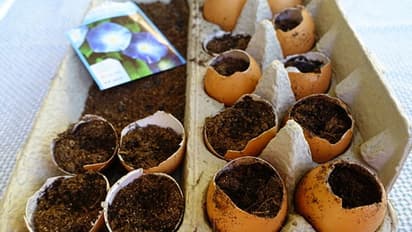
If you enjoy growing plants at home, eggshells can also be turned into small seed-starting containers.
Instead of buying separate seedling trays for every small plant, you can use empty eggshell halves to start growing seeds.
Carefully break only the upper part of an egg and empty its contents. Clean the shell, dry it and make a tiny drainage hole at the bottom. Fill it with a little potting soil and place a small seed, such as coriander, tomato or chilli, inside.
Keep the eggshell containers in a suitable place and water them carefully. Once the seeds begin to grow and the seedlings become strong enough for transplantation, place the shell along with the seedling into a larger pot.
Crush the shell slightly before planting it so that the growing roots can move through it easily. The shell will gradually break down in the soil.
Eggshells are also commonly used in home gardens as a natural barrier against certain crawling pests, including slugs and snails.
The method is simple. Break clean, dry eggshells into small, rough pieces and spread them around the base of plants or along the edges of garden beds.
The idea is that the rough edges may discourage some crawling pests from moving towards the plants. However, this method is not a scientifically reliable way to control slugs and snails. It should not replace proper pest management if your plants are being damaged.
You can still reuse the shells in this way, but do not expect them to provide complete protection for your garden.
Another practical way to avoid wasting eggshells is to add them to your compost bin.
Composting allows kitchen waste to be reused rather than simply thrown away. Eggshells can contribute calcium to the finished compost, making them a useful addition to a home composting routine.
For better results, clean and dry the shells before crushing them into a fine powder. Add the powder to your compost along with suitable vegetable and fruit scraps, dry leaves and other compostable materials.
Remember that eggshells take a long time to break down, particularly when they are added in large pieces. Grinding them finely helps speed up the process.
Eggshells are useful, but they should be handled carefully. Raw eggs can carry bacteria, including Salmonella, on their surfaces. Wash your hands after handling them and clean any utensils or kitchen surfaces that come into contact with raw eggs.
For gardening and composting, dry the shells properly before storing or crushing them. Keep them in a clean, dry container until you need them.
Also, avoid using eggshells as a supposed mixer-blade sharpening solution. There is no reliable evidence that running crushed shells through a mixer restores blunt blades, and doing so is not a substitute for proper blade maintenance.
With a little effort, something that normally goes straight into the dustbin can become a useful addition to your gardening and household routine. The next time you prepare eggs, think twice before throwing away their shells.
Explore the latest Lifestyle NewsFood and RecipesHealth NewsAsianet News Official App