Ebola Emergency In Africa: Why Kerala Keeps Becoming India's Virus Watchpoint

Published : May 18, 2026, 02:24 PM IST

WHO has raised alarm over a growing Ebola outbreak linked to rare Bundibugyo strain in Congo and Uganda. India currently has no Ebola case, but the outbreak has renewed debate over why Kerala often becomes India’s first virus detection point.
PREV
16
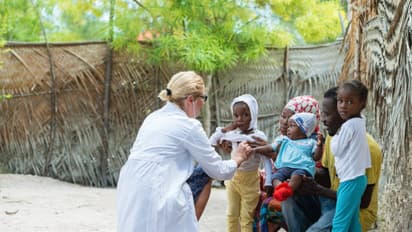
Ebola outbreak in Africa

The latest Ebola outbreak in Africa has once again pushed global health systems on alert. The World Health Organization (WHO) has warned that the outbreak linked to the rare Bundibugyo strain of Ebola could spread further after confirmed cases appeared in both the Democratic Republic of the Congo (DRC) and neighbouring Uganda.

As of May 16, 2026, authorities in Congo had reported eight laboratory-confirmed Ebola cases, 246 suspected cases and 80 suspected deaths across parts of Ituri Province. At least three health zones, Bunia, Rwampara and Mongbwalu, have been affected.

Uganda also confirmed two Ebola infections, including one death, in Kampala on May 15 and 16. Both infected people had travelled from Congo. The patients were admitted to intensive care units.

The outbreak has now triggered international concern because the Bundibugyo strain currently has no approved vaccine or specific treatment.

Soon after WHO raised the alarm, many Indians began asking a familiar question: if a dangerous virus reaches India, will Kerala be the first state affected again?

The answer is more complicated than social media claims suggest.

India has never recorded an Ebola case

Despite fears online, India has never confirmed a single Ebola case.

During previous Ebola outbreaks in Africa, Indian authorities carried out airport screening, thermal checks and emergency preparedness drills, especially for passengers arriving from affected countries. However, no Ebola infection has ever been detected in India.

Health experts say the immediate risk to India remains low because Ebola spreads differently from Covid-19 or flu viruses.

Ebola is not known to spread easily through the air during casual contact. It mainly spreads through direct contact with bodily fluids such as blood, vomit, sweat or saliva of an infected person.

Still, global health agencies are watching the current outbreak carefully because the situation in Congo appears serious and may be much larger than current official numbers suggest.

26
Why WHO is worried about the Congo outbreak

WHO says there are major gaps in understanding the true scale of the outbreak.

The first warning sign came from unusual clusters of community deaths in Ituri Province that showed symptoms linked to Bundibugyo virus disease (BVD), a form of Ebola.

Authorities are also worried because at least four healthcare workers reportedly died after treating suspected patients, raising fears of hospital-based transmission.

Initial testing also showed a very high positivity rate. Eight out of 13 samples collected from different areas tested positive for Bundibugyo virus.

WHO says this suggests many more infections may still be undetected.

The situation is especially concerning because the affected areas face insecurity, conflict, humanitarian problems and weak healthcare systems. Population movement between Congo and neighbouring countries is also high.

The virus has already crossed borders into Uganda, proving international spread has begun.

WHO believes the combination of urban spread, informal healthcare centres and poor infection control could allow the outbreak to grow quickly if not contained early.

36
What makes the Bundibugyo strain different

The Bundibugyo strain is one of several Ebola virus species.

Unlike the Zaire strain, which caused major Ebola outbreaks in West Africa, Bundibugyo has no approved vaccine or targeted treatment available right now.

That makes containment even more important.

Symptoms of Ebola can include fever, weakness, muscle pain, vomiting, diarrhoea and bleeding in severe cases.

The disease can become deadly if patients do not receive supportive medical care quickly.

WHO Director-General Tedros Adhanom Ghebreyesus is expected to convene an Emergency Committee under International Health Regulations to guide global response efforts and possible temporary recommendations for countries.

Why people in India keep mentioning Kerala

Every time a new virus appears globally, Kerala’s name quickly enters public discussion.

That is because several major disease outbreaks in India were first detected there, especially in recent years.

But experts say this does not mean Kerala is 'unluckier' or more unsafe than the rest of India.

There are three major reasons Kerala often becomes the first state where outbreaks are identified.

46
Kerala’s huge international travel network

Kerala has one of the largest overseas populations among Indian states.

An estimated 2.5 million Keralites work in Gulf countries, while many others live across Africa, Europe, Southeast Asia and the United States.

People travel back to Kerala frequently, creating one of India’s busiest international passenger networks relative to population size.

This makes Kerala an important entry point for infections carried by travellers.

Covid-19 is the clearest example.

India’s first confirmed Covid-19 case was detected in Kerala on January 27, 2020, when a student returned from Wuhan University in China.

The state’s strong overseas links that help its economy also increase its exposure to imported diseases.

Kerala’s environment increases spillover risks

Not every disease enters through airports.

Nipah virus, for example, is linked to fruit bats found in Kerala’s forests.

Several Nipah outbreaks in Kerala occurred in northern districts such as Kozhikode and Malappuram, where human settlements increasingly overlap with forest areas.

As forests shrink and farming expands, contact between humans and bats becomes more common.

Experts say this raises the risk of “spillover” events, where viruses jump from animals to humans.

This is one reason Kerala has faced repeated Nipah outbreaks while many other Indian states have not.

Kerala detects diseases faster

Public health experts say this is perhaps the most important reason of all.

Kerala has one of India’s strongest disease surveillance and public health systems.

The state carries out aggressive testing, contact tracing and monitoring whenever unusual infections appear.

This means diseases are often detected earlier there than in many other states.

Experts argue that some infections entering less-prepared states could spread silently for weeks before authorities realise what is happening.

In such cases, outbreaks may later appear “local” rather than imported.

Kerala’s health system usually catches infections closer to the entry point.

That creates the impression that Kerala always gets viruses first, when in reality it may simply be better at identifying them.

56
Not every virus entered India through Kerala

The history of disease outbreaks in India clearly shows that Kerala is not always the first entry point.

Swine Flu (H1N1)

India’s first swine flu case was detected in Hyderabad airport on May 13, 2009, after a traveller returned from the United States.

The virus later spread widely to cities including Pune, Mumbai, Delhi, Chennai and Bengaluru.

Pune eventually became one of the worst-hit cities during the outbreak.

SARS outbreak in 2003

India saw only a small number of suspected SARS cases in 2003.

Cases were mainly handled in Kolkata, Pune and Vellore.

At that time, travel links with China were centred more around business hubs such as Delhi and Kolkata, not Kerala.

Chikungunya

Chikungunya first appeared in India in Kolkata in 1963.

After decades, it re-emerged strongly in Kerala’s Alappuzha district in 2006.

Its return was linked more to mosquito breeding and monsoon conditions than international travel.

Surat plague outbreak

The major plague outbreak in 1994 happened in Surat, Gujarat.

Poor sanitation, overcrowding and rat infestations were key reasons behind the spread.

Kerala had no connection to that outbreak.

66
Kerala’s earlier outbreaks helped during Covid-19

Ironically, Kerala’s repeated experience with outbreaks made it better prepared for Covid-19.

After Nipah outbreaks in 2018 and 2019, the state improved hospital preparedness, stored protective equipment, trained healthcare workers and strengthened emergency coordination systems.

These systems became extremely useful when Covid-19 reached India in early 2020.

Kerala’s early response during the pandemic was widely studied by public health experts.

Why the real concern is larger than Kerala

Experts say India should not focus only on Kerala whenever a global outbreak appears.

The more important question is whether other Indian states are equally prepared to detect and control dangerous infections quickly.

Swine flu may have entered through Hyderabad, but Pune suffered some of the deadliest effects later.

That shows the entry point of a virus and the place where maximum damage happens are not always the same.

Public health experts warn that a future outbreak entering through a state with weaker surveillance systems could spread quietly before authorities react.

For now, there is no confirmed Ebola case in India. Health authorities continue monitoring international developments closely.

WHO says international cooperation is critical because the outbreak has already spread across borders.

Neighbouring African countries remain at high risk because of travel, trade and population movement linked to Congo.

The coming weeks will likely determine whether the outbreak can be contained early or develops into a much larger regional health emergency.

For India, the Ebola outbreak has become another reminder that strong public health systems, fast testing and early surveillance matter far more than fear or rumours online.

Stay updated with the Breaking News Today and Latest News from across India and around the world. Get real-time updates, in-depth analysis, and comprehensive coverage of India News, World News, Indian Defence News, Kerala News, and Karnataka News. From politics to current affairs, follow every major story as it unfolds. Download the Asianet News Official App to stay informed anytime, anywhere.


Read more Photos on

Recommended Stories