Why Has PM Modi Asked Ministries to Prepare for a Weak Monsoon Across India?

Published : Jul 02, 2026, 03:58 PM ISTUpdated : Jul 02, 2026, 05:01 PM IST

India has recorded a 35 per cent rainfall deficit so far this monsoon season, prompting Prime Minister Narendra Modi to direct ministries to prepare contingency plans. The IMD expects below-normal rainfall in July due to El Nino conditions. 
PREV
16
Government steps up preparations as monsoon remains weak

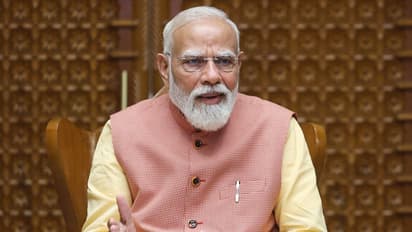
The Centre has begun preparing for the possibility of a prolonged weak monsoon after India recorded one of its driest Junes in more than a century. With rainfall remaining well below normal and forecasts suggesting July may also be drier than usual, Prime Minister Narendra Modi has directed several ministries to prepare contingency plans to reduce the impact on farming, water supply, electricity generation and rural livelihoods.

The move comes as concerns grow over the slow progress of the southwest monsoon, which is vital for India's agriculture and economy. Nearly half of India's farmland depends on seasonal rains, making the monsoon one of the country's most important weather events each year.

26
How much rainfall has India received?

According to the India Meteorological Department (IMD), the country received only 111.8 mm of rainfall between June 4 and July 2, against the normal 172.4 mm. This represents a nationwide rainfall deficit of 35 per cent.

June itself was particularly dry. The country recorded only 99.5 mm of rainfall compared with the normal 165.3 mm, making it the fifth-lowest June rainfall since records began in 1901. Across India's 36 meteorological subdivisions, 24 recorded deficient rainfall, while three reported large rainfall deficits.

Although the southwest monsoon is expected to advance into Delhi, parts of Haryana, Punjab, Rajasthan and the entire Jammu and Kashmir in the coming days, weather experts believe overall rainfall during July is likely to remain below normal across much of the country.

36
Why is the monsoon weaker this year?

Meteorologists say the biggest reason is the development of El Nino conditions over the equatorial Pacific Ocean.

El Nino is a climate pattern that changes ocean temperatures and atmospheric circulation. It often weakens India's southwest monsoon by reducing the number of rain-bearing weather systems that form over the Indian Ocean.

The IMD said no low-pressure systems developed over the Indian Ocean during June, further reducing rainfall. At the same time, typhoon activity over the western Pacific remained above normal, with most storms moving away from India instead of helping create favourable conditions for rain.

The Indian Ocean Dipole (IOD), another climate factor that sometimes balances the effects of El Nino, has remained neutral this year. As a result, it has not been able to offset the weaker monsoon.

46
What has the government asked ministries to do?

Prime Minister Modi has instructed several ministries to remain ready for any situation caused by prolonged rainfall shortages.

The Ministries of Agriculture, Rural Development, Panchayati Raj, Food, Jal Shakti, Power, Animal Husbandry, Dairy, Home Affairs and Finance have all been asked to prepare response plans, according to a report by India Today.

Agriculture Minister Shivraj Singh Chouhan informed the Cabinet that 315 districts across the country are already facing difficulties because of weak monsoon conditions.

Among them, 111 districts have irrigation coverage below 25 per cent, making them especially vulnerable if rainfall does not improve soon.

These districts are spread across Madhya Pradesh, Maharashtra, Gujarat, Uttar Pradesh, Rajasthan, Karnataka, Bihar, Jharkhand, Telangana, Andhra Pradesh, Odisha and Tamil Nadu.

56
Which sectors could be affected?

Agriculture is expected to face the biggest challenge if rainfall remains below normal throughout July. Farmers are currently in the middle of the kharif sowing season, when crops such as rice, maize, pulses, cotton and soybean are planted.

Insufficient rainfall could delay sowing, reduce crop growth and lower agricultural production.

The government is also closely monitoring reservoir storage because lower water levels may affect drinking water supplies and irrigation later in the year.

Electricity generation is another area of concern. Hydropower plants depend on adequate water levels, and reduced inflows into reservoirs could lower electricity production. The Power Ministry has therefore been asked to prepare alternative arrangements to ensure uninterrupted power supply.

Support measures under consideration

Officials are also considering increasing spending under the Mahatma Gandhi National Rural Employment Guarantee Scheme (MGNREGS) if drought-like conditions become more severe.

The scheme currently has a budget allocation of ₹95,000 crore and provides paid employment to rural households. Expanding the programme could help support families whose incomes may be affected by poor agricultural activity.

66
The weeks ahead will be crucial

Weather experts say July is one of the most important months for India's monsoon season. Good rainfall during this period is essential for successful crop planting and maintaining water reserves for the rest of the year.

While rainfall patterns can still improve later in the season, the current deficit has prompted the government to prepare for every possible scenario. Over the coming weeks, both policymakers and farmers will closely watch the progress of the southwest monsoon, hoping for stronger rains that can reduce the growing rainfall shortfall and ease pressure on agriculture, water resources and rural livelihoods.

(With inputs from agencies)

Stay updated with the Breaking News Today and Latest News from across India and around the world. Get real-time updates, in-depth analysis, and comprehensive coverage of India News, World News, Indian Defence News, Kerala News, and Karnataka News. From politics to current affairs, follow every major story as it unfolds. Get real-time updates from IMD on major cities weather forecasts, including Rain alerts, Cyclone warnings, and temperature trends. Download the Asianet News Official App from the Android Play Store and iPhone App Store for accurate and timely news updates anytime, anywhere.

Read more Photos on

Recommended Stories