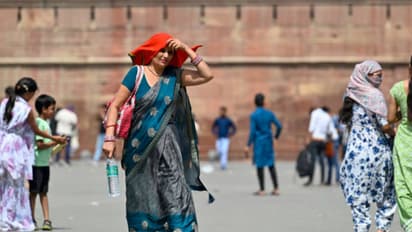
India is already facing intense heat even before the peak summer months begin. In April itself, temperatures have risen sharply across many states, and hot winds, known as “loo”, are making conditions worse.
The India Meteorological Department (IMD) has issued a warning that heatwave conditions are likely to continue for the next four to five days in several parts of the country. People in north, central and eastern India have been asked to stay alert and take precautions.
Many states are already feeling the impact of the heat.
In north India, states like Delhi, Punjab, Haryana and Rajasthan are experiencing strong heat and dry winds. In central India, Madhya Pradesh and Chhattisgarh are also facing rising temperatures. Parts of Maharashtra and eastern India are not far behind.
Punjab districts such as Ludhiana, Sangrur, Fatehgarh Sahib and Patiala are under a yellow alert till April 24. Chandigarh and nearby areas are also seeing very hot weather.
In Delhi and the NCR region, temperatures are expected to cross 43°C and may even reach 44°C on April 22.
The IMD has clearly said that the next few days will be very hot.
Next four days Punjab, Haryana, Rajasthan, Delhi, Chandigarh and Chhattisgarh will see rising temperatures Heatwave conditions will continue Next five days Uttar Pradesh, Jharkhand, West Bengal, Madhya Pradesh and Odisha may also face heatwave conditions
Maximum temperatures in north-west India may rise by up to 4°C. Night temperatures will also stay higher than normal, making it harder for people to get relief.
Usually, nights bring some cooling after a hot day. But this time, nights are also warm. This means:
This is one of the reasons why the current heatwave feels more difficult than usual.
A heatwave is a period of very high temperatures, often combined with dry winds. In India, it becomes dangerous when temperatures stay very high for several days. Hot winds called 'loo' (in Hindi) can:
Children, elderly people and those who are already ill are at higher risk.
Experts are worried because the heat has started early this year.
By mid-April:
This early rise suggests that the coming months may be even more intense.
Apart from the current heatwave, scientists are also warning about a larger global weather pattern called El Niño.
El Niño is a natural climate event where the surface water of the Pacific Ocean becomes warmer than usual. It happens every 2 to 7 years.
But this time, experts say it could become a 'mega' or 'super' El Niño.
Scientists have observed a massive heat wave in the Pacific Ocean.
This large area of warm water is making the El Niño stronger.
All these are adding to the strength of the system.
Experts say this could be one of the strongest El Niño events in more than 140 years. The last major event in 1877-78 caused:
It is believed that around 4% of the world’s population died during that period due to its effects.
Scientists now warn that a similar situation could happen again if the current El Niño becomes very strong.
A strong El Niño can change weather patterns across the world. Possible effects include:
Weather patterns may become unstable and difficult to predict.
India is among the countries most affected by El Niño.
Higher temperatures
Temperatures during summer may rise above normal levels.
Weaker monsoon
Rainfall between June and September may reduce, leading to water shortages.
Drought risk
Some regions, especially north-west India, may face dry conditions.
Impact on farming
Less rainfall can damage crops and reduce food production.
If the El Niño becomes very strong:
Scientists are closely monitoring the situation.
The heat in Delhi and nearby areas is already severe.
Some relief may come after April 25, but overall April is already much hotter than usual.
Extreme heat can affect health in many ways. Common problems include:
In serious cases, it can even become life-threatening.
Certain groups are more at risk of heatwave concerns:
These groups should avoid direct sun and stay cool.
The IMD has advised simple steps to reduce risk.
Water, coconut water, buttermilk and lemon water are helpful.
Wear suitable clothes
Light, loose and breathable clothes are best.
Watch for warning signs
If you feel dizzy, tired or sick, seek medical help quickly.
Experts say both people and authorities must prepare. Important steps include:
Farmers are being advised to grow crops that can survive dry conditions.
Why preparation is important
Extreme heat is not just a short-term problem. It affects:
Early planning can reduce damage and save lives.
India is already facing strong heat in April, and the situation may worsen in the coming weeks. The IMD has warned of continued heatwaves, while scientists are tracking a powerful El Niño that could make weather conditions even more extreme.
The coming months will be challenging. Staying informed, taking precautions and preparing in advance will be key to handling the heat safely.
Stay updated with the Breaking News Today and Latest News from across India and around the world. Get real-time updates, in-depth analysis, and comprehensive coverage of India News, World News, Indian Defence News, Kerala News, and Karnataka News. From politics to current affairs, follow every major story as it unfolds. IMD cities weather forecastsRain Cyclone Asianet News Official App