Tata Nexon to Skoda Kylaq: Check top 5 safest cars under Rs 10 lakh
Safety features are no longer a luxury in affordable cars. Vehicles under Rs 10 lakh now boast features like six airbags and electronic stability control, with many achieving five-star ratings in the Bharat NCAP crash tests.
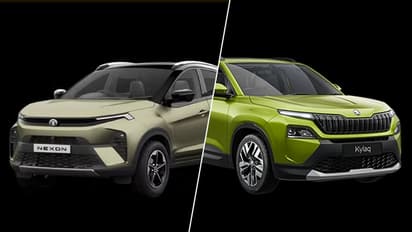
There was a time when safety features in Indian cars came at a premium. The majority of the safety measures were found in more costly versions. Regulations, however, evolved throughout time. The safety regulations also changed. Even reasonably priced automobiles now come equipped with a plethora of safety measures. Relatively inexpensive automobiles are those that cost less than Rs 10,00,000 (ex-showroom).
Safety equipment including six airbags, electronic stability control, brakeforce assist system, vehicle stability management, hill-start assist control, and emergency stop signal are now standard on many automobiles that cost less than Rs 10,00,000 (ex-showroom).
India now has its own rating-based vehicle safety evaluation system thanks to the launch of the Bharat New Car Assessment Program (Bharat NCAP). It has previously conducted crash tests on a number of vehicles and published the findings, in accordance with international benchmark testing methods.
For reference, the base variation of any particular vehicle must be tested according to Bharat NCAP. The vehicles are evaluated according to how well they perform in three crucial areas: safety assist technologies, child occupant protection, and adult occupant protection. Offset deformable barrier frontal impact test, side impact test, and pole side impact test are among the crash tests. A speed of 64 kmph is used for the frontal collision test, 50 kmph for the side impact test, and 29 kmph for the pole side impact test.