- Home
- India
- War or wisdom? Why India's response to Pahalgam attack must be smart, not explosive | Opinion
War or wisdom? Why India's response to Pahalgam attack must be smart, not explosive | Opinion
The article condemns the Pahalgam attack and advocates for India’s strategic response through precision, diplomacy, and economic strength instead of war.
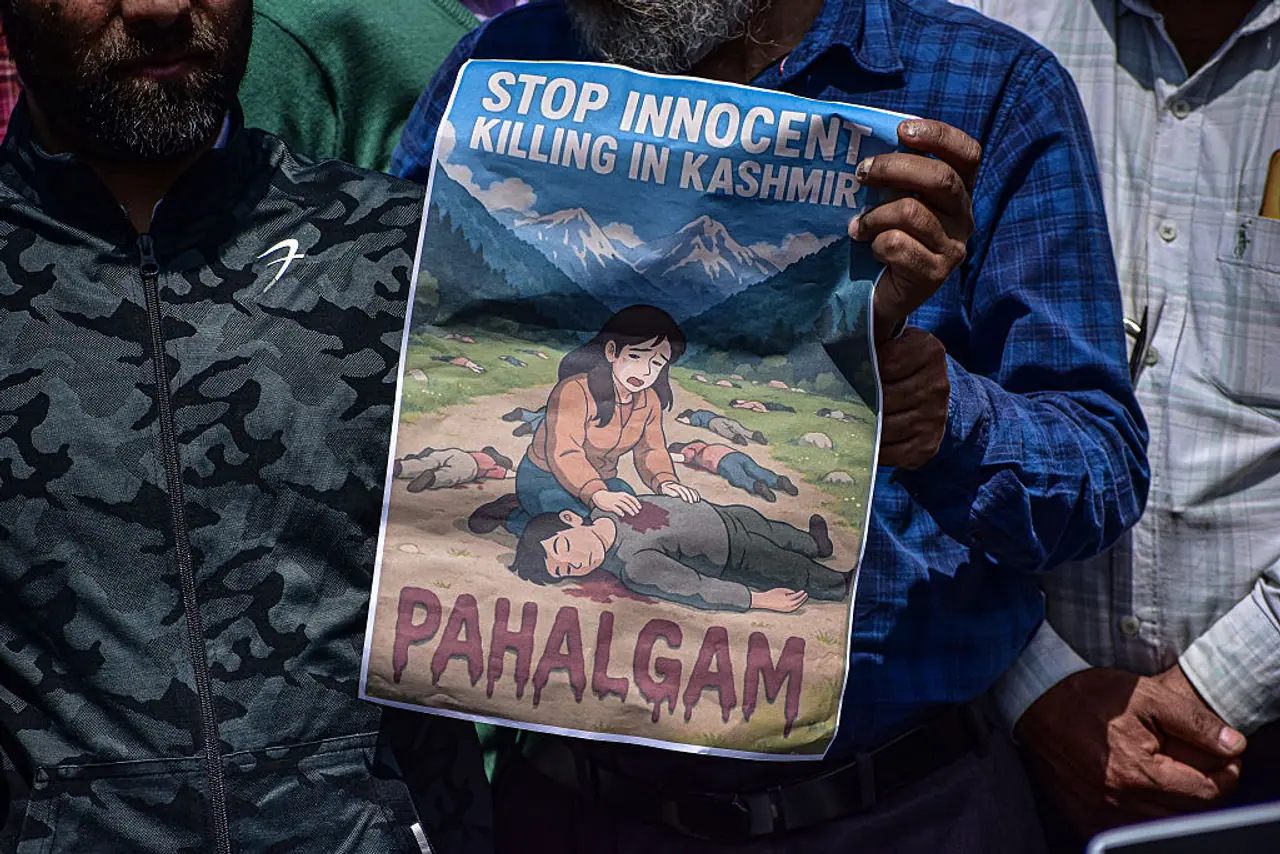
Pahalgam attack: Why India must choose strategy over war
The Pahalgam attack has shaken India to its core, leaving the nation seething with anger and sorrow. The brutal killing of innocent civilians in a place that symbolizes both the beauty and fragility of our nation has left a deep wound. Emotions are running high, and understandably so—each attack brings not just grief but a renewed sense of fear and urgency. The frustration, the pain, and the yearning for justice are palpable across the country. But as the rage builds, we must ask ourselves: is a full-blown war the real solution? The idea of going to war is emotionally charged, but it is also fraught with unimaginable consequences—not just for India, but for the region as a whole. While the pain and loss from the Pahalgam attack are undeniably real, the cost of war, especially in today’s world, is something we must carefully consider.


The Kargil War: A look back
The Kargil War of 1999, fought in the icy heights of Jammu and Kashmir, may have been limited in scope—but it came with a steep price tag. The war was orchestrated by the then Pakistan army chief General Pervez Musharraf without the knowledge of the then Pakistan Prime Minister Nawaz Sharif. Although India's 'Operation Vijay' was declared successful on July 26, celebrated as Kargil Vijay Diwas till date, it offers a stark reminder of the high cost of conflict and the urgent need for smarter solutions.
Direct Military Costs: Rs 5,000 Crore
India spent an estimated Rs 5,000 crore (approximately $1.2 billion then) to push back Pakistani intruders. Key expenses included:
- Ammunition and Weapons: The Indian Air Force conducted around 300-350 air strikes estimating around Rs 2000 crore, while army operations is said to have incurred daily costs of Rs 10-15 crore
- Fuel and Logistics: Transporting troops and supplies through the rugged Kargil terrain required enormous fuel and airlift operations.
Despite the high costs, our strong economy, supported by a $33.5 billion foreign exchange reserve and a $10 billion defence budget, could have withstood extended military expenses.
Economic Fallout: Trade and Tourism
Trade Disruption: Even the modest cross-border trade suffered. Local traders near the LoC lost business overnight.
Tourism Collapse: Kashmir’s tourism industry—already fragile—was devastated. Hotels, shikara owners, and handicraft sellers lost livelihoods. In 2000, a year after the conflict, Kargil hosted just over 300 tourists.
Investor Sentiment: Temporary dips in investor confidence and stock market fluctuations highlighted the need to protect India’s economic momentum. However, it's worth noting that during the 1999 conflict, both the Sensex and Nifty saw significant gains of around 33 percent. Over the three-month war period, the Sensex rose by 1,115 points, while the Nifty increased by 319 points.
Human and Social Toll
Loss of Lives: 527 Indian soldiers laid down their lives and 1363 were left wounded. Families were left grieving, and entire communities were scarred. As far as Pakistan is concerned, India neutralized 1,000 Pakistani fighters.
Displacement: Border villages were evacuated, but India’s swift response minimized long-term disruption.
Trust Eroded: Pakistan’s aggression deepened hostility, underscoring the need for India to remain vigilant.
Road to Reconstruction
Infrastructure Repair: India rebuilt roads, bridges, and army posts with efficiency.
Civilian Relief: Displaced citizens received housing, food, and support, reflecting India’s humanitarian strength.
Defence Upgrades: Kargil exposed gaps that India addressed with cutting-edge weapons, radars, and surveillance systems, bolstering its impregnable defence.
- Advanced tanks such as the T-90 Bhishma and Arjun Mk-1A were introduced. Modern Infantry Combat Vehicles (ICVs) like BMP-2/2K Sarath were inducted.
- C-17 Globemaster III aircraft was also acquired.
- Army inducted advanced assault rifles, light machine guns, and sniper rifles, including M777 howitzer and K-9 Vajra-T self-propelled howitzer.
- The induction of Unmanned Aerial Vehicles (UAVs) like the Heron and Searcher, combined with the deployment of RISAT-series satellites, has greatly strengthened India's surveillance and reconnaissance capabilities.
- India also bolstered its air defence and mobility with systems like Akash and SPYDER, and advanced helicopters including the Apache, Chinook, and HAL Dhruv.
- India's push for self-reliance through initiatives like "Make in India" and DRDO has led to indigenous defence platforms like Tejas, Arjun, INS Arihant, Agni, and BrahMos, boosting strategic autonomy.
- Key acquisitions like Rafale jets, S-400 systems, and P-8I aircraft, including a recent Rafale-M deal with France post-Pahalgam attack, underline India's strategic response to rising tensions with Pakistan.
India’s Strength Makes Full-Scale War Redundant
The Rs 5,000 crore spent during the Kargil War pales in comparison to the astronomical costs of a full-scale conflict today. But India no longer needs to prove its strength through war — its unmatched military and economic power speaks for itself.
Strategic Superiority: Armed with cutting-edge drones, long-range missiles, cyber warfare tools, and satellite systems, India maintains undeniable dominance. In contrast, Pakistan’s economy is too fragile to sustain even short-term conflict.
Economic Endurance: Bilateral trade, though limited, supports Indian farmers and small businesses. Any disruption would hurt Pakistan far more, while India’s diverse and resilient economy would quickly bounce back.
Tourism and Investment Unshaken: Kashmir’s growing tourism is a key pillar of local prosperity. While tensions may cause temporary dips, India’s global investment appeal remains steady and strong.
Humanitarian Preparedness: India has the systems and capacity to manage internal displacement or refugee challenges effectively — a stark contrast to Pakistan’s struggling infrastructure, which would buckle under such pressure.
Tackling Terrorism: India’s Proven Strategies
The Pahalgam attack is a stark reminder of the terrorism India faces, often linked to Pakistan-based groups. India’s track record—Uri, Balakot—proves it can neutralize threats with precision, avoiding the need for war.
Smart War: Precise, Devastating Strikes
- Surgical Strikes: Post-Uri in 2016, India’s elite forces obliterated terror camps across the LoC, showcasing surgical precision.
- Airstrikes : The 2019 Balakot strike demolished a Jaish-e-Mohammed facility, a masterclass in high-tech warfare.
- Covert Operations: India’s special forces can dismantle terror networks silently, ensuring zero escalation.
Cost Estimate: Rs 100–500 crore—pennies compared to Rs 5,000 crore for Kargil, with maximum impact.
Non-military Measures and Diplomacy Card
- Economic Sanctions: India’s global influence can choke terror financing through bodies like FATF, isolating Pakistan’s terror ecosystem.
- Cyber Warfare: India’s cyber warriors can disrupt propaganda, recruitment, and communication, delivering low-cost, high-impact results.
- Border Tech: Smart fences, drones, and sensors along the LoC, backed by India’s tech prowess, block infiltrations.
Cost Estimate : Rs 50–2,000 crore—sustainable and devastatingly effective.
- Global Leadership: India can rally allies like the US, EU, and Gulf nations to isolate Pakistan until it dismantles terror groups.
- Firm Stance: Any dialogue must hinge on Pakistan’s verifiable action against Lashkar-e-Taiba and Jaish-e-Mohammed.
- Cultural Dominance: India’s soft power—through films, sports, and trade—can project its strength and vision for stability.
Cost Estimate: Minimal. Diplomacy costs lakhs but cements India’s global stature.
India’s Path to Power Lies in Precision, Not Provocation
While every conflict carries the risk of escalation, India’s overwhelming military and economic superiority allows it to set the terms. Pakistan must understand that sheltering terrorism only accelerates its global isolation and deepens its economic crisis.
India, on the other hand, stands as a rising global power — capable of responding with precision strikes and measured diplomacy. This dual strategy protects national interests while maintaining the momentum of India’s global ascent.
Peace is not a sign of weakness; it is a cornerstone of India’s vision to become a developed nation by 2047. Every rupee spared from war is an investment in the future — in schools, hospitals, infrastructure, and innovation.
With a young, ambitious population and unmatched potential, India’s strength lies not in destructive conflict but in strategic dominance, economic resilience, and global leadership.
The Kargil War proved India’s unyielding spirit. Terror attacks like Pahalgam demand action, but India’s proven strategies—surgical strikes, cyber warfare, and global diplomacy—neutralize threats without draining resources. War leaves debt and division; India’s smarter path ensures security and prosperity.
Let us honor Kargil’s lessons. Let us choose strength over recklessness, precision over chaos, and progress over war. For India’s children and the superpower they will inherit—the choice is clear: a peaceful, powerful India.
Stay updated with the Breaking News Today and Latest News from across India and around the world. Get real-time updates, in-depth analysis, and comprehensive coverage of India News, World News, Indian Defence News, Kerala News, and Karnataka News. From politics to current affairs, follow every major story as it unfolds. Get real-time updates from IMD on major cities weather forecasts, including Rain alerts, Cyclone warnings, and temperature trends. Download the Asianet News Official App from the Android Play Store and iPhone App Store for accurate and timely news updates anytime, anywhere.