
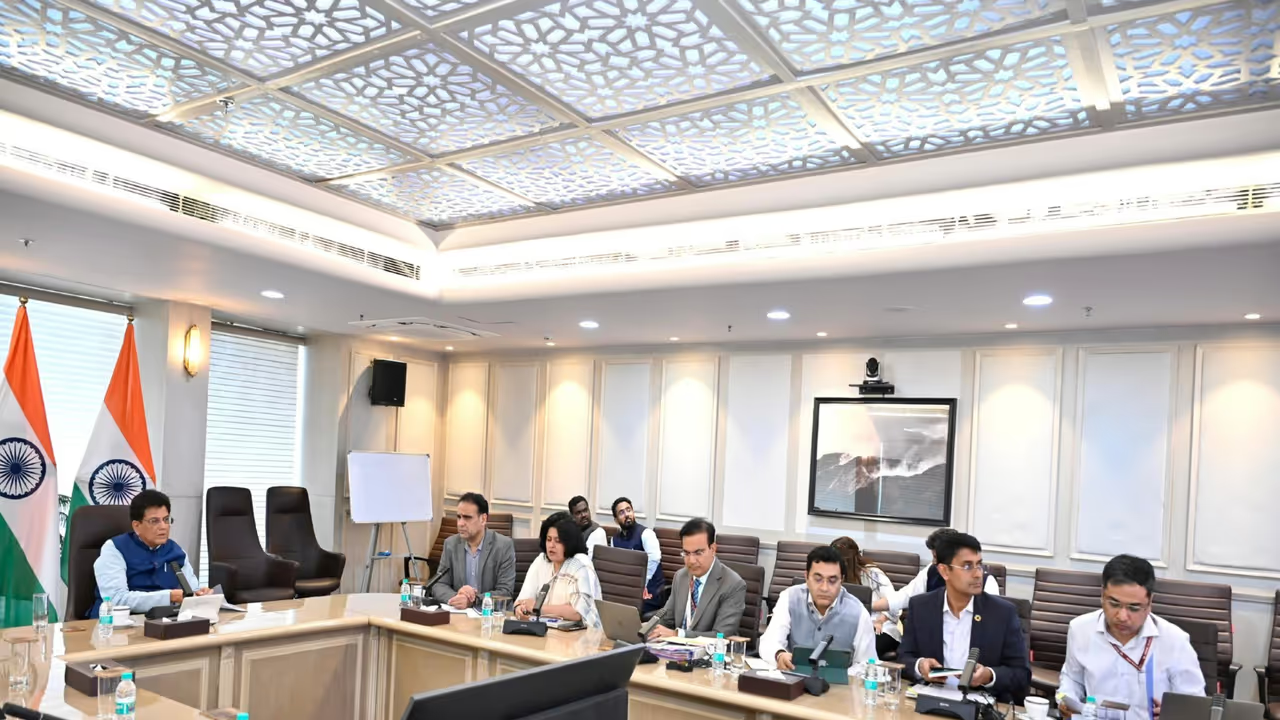
Union Minister Piyush Goyal reviewed the progress of India's Free Trade Agreements (FTAs) to boost exports and strengthen the country's position in global value chains. India has significantly expanded its network of trade agreements in recent years.
Goyal Chairs Review Meeting on FTAs
Union Minister of Commerce and Industry Piyush Goyal held a review meeting with senior officials and chief negotiators to assess the progress of India's Free Trade Agreements (FTAs), as the country continues to expand its global trade footprint.

In a social media post, the minister said that the meeting focused on evaluating ongoing work and identifying ways to further strengthen India's export potential. "Held a review meeting with key officers and chief negotiators to assess the progress of India's Free Trade Agreements. Discussed ways to encourage more businesses to export from India, further unlocking the country's potential to export world-class products. Also, explored avenues to strengthen India's position in global value chains," he said.
India's Expanding Network of Trade Agreements
According to the Ministry of Commerce and Industry, India has significantly expanded its network of trade agreements in recent years, reaching nine FTAs spanning 38 countries. The expansion began with the India-Mauritius agreement in 2021, followed by the India-UAE Comprehensive Economic Partnership Agreement in May 2022 and the India-Australia Economic and Trade Agreement in December 2022. India later signed the EFTA Trade and Economic Partnership Agreement on March 10, 2024, which came into force on October 1, 2025. Further strengthening its trade ties, India signed the India-UK Comprehensive Economic and Trade Agreement in July 2025 and the India-Oman Comprehensive Economic Partnership Agreement in December 2025. The India-New Zealand FTA was announced on December 22, 2025 and signed on April 27, 2026. The India-EU FTA was announced on January 27, 2026. With the United States, India has also delivered a framework for an interim agreement on February 7, 2026, further expanding its global engagement.
Broad-Based Benefits for Indian Stakeholders
The ministry said these agreements are designed to benefit a wide range of stakeholders, including farmers, entrepreneurs, MSMEs, and professionals. The FTAs provide access for Indian agricultural products to developed markets and support exports from sectors such as garments, leather, and handicrafts. They also create new opportunities for Indian talent, including students, IT professionals, chefs, yoga instructors, by offering mobility pathways, post-study work options, and social security relief. The agreements also support the growth of digital services, traditional wellness systems like AYUSH, and are expected to attract investments by strengthening economic partnerships.
Strategic Negotiations for Long-Term Growth
The ministry emphasised that India has negotiated these FTAs with a focus on openness and balance while protecting sensitive sectors such as dairy, agriculture, and domestic industry. It added that India is negotiating from a position of strength, aiming to drive long-term trade transformation and support the goal of becoming a developed nation by 2047. (ANI)
(Except for the headline, this story has not been edited by Asianet Newsable English staff and is published from a syndicated feed.)