Is Your Hair Fall A Warning Sign From Your Body?
Synopsis
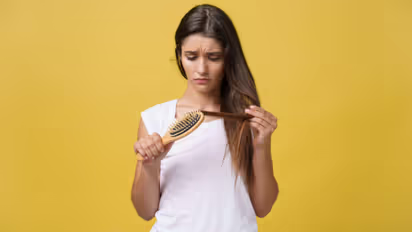
Most women first notice hair loss when they see extra strands in the shower or on their comb. But this isn't just a hair problem—it's often your body's way of sending a warning signal about your health.
It’s a scary sight. And your first reaction is probably to rush out and buy a new shampoo or hair mask. But here’s something important to remember: for women, hair loss is rarely just a hair problem. More often than not, it’s a signal that something is off inside your body.
Your hair is a mirror to your body's health
Your hair follicles are some of the most active tissues in your body. They are super sensitive to even small changes like hormonal shifts, nutritional gaps, or stress.
When your body is under pressure, it sends energy and nutrients to vital organs first. Non-essential jobs, like growing hair, are put on the back burner. That’s why hair loss is often one of the first visible signs that something isn’t right.
Think of it like a warning light on your car’s dashboard. You can’t fix the engine problem by simply covering the light. Similarly, finding the root cause of your hair loss is the first step to a real solution.
The main causes women often miss
There’s no single reason for hair loss in women; it's usually a mix of factors. That's why one-size-fits-all advice rarely works.
Here are some of the most common culprits:
* Thyroid problems: Both an underactive (Hypothyroidism) and overactive (Hyperthyroidism) thyroid can mess with your hair growth cycle.
* Iron deficiency (Anaemia): If your body’s stored iron (Ferritin) is low, your hair follicles won't function properly.
* PCOS (Polycystic Ovary Syndrome): This hormonal imbalance can increase androgen levels, which may shrink hair follicles over time.
* Post-delivery hair loss: A sudden drop in oestrogen levels after childbirth can cause temporary but heavy hair fall.
* Chronic Stress: High levels of the stress hormone, cortisol, can push a large number of hair follicles into the resting phase all at once.
* Nutritional gaps: Deficiencies in protein, zinc, or Vitamin D are very common among women.
In their early stages, many of these conditions might not show any other clear symptoms besides hair loss.
Why are hormones so important?
Hormones are basically the managers of your hair growth cycle. They decide how long your hair grows, when it rests, and when it falls out. Oestrogen helps keep your hair in the growth phase for longer. However, its levels can drop:
* During menopause
* After childbirth
* In hormonal conditions like PCOS
On the other hand, when androgens (male hormones) are high, they can shrink hair follicles, leading to thinner hair. This is why many women in their 30s and 40s, who otherwise feel healthy, start noticing their hair thinning. It might not just be age—it could be an undiagnosed hormonal imbalance.
If you have hair loss along with:
● Irregular periods
● Changes in weight
● Constant fatigue
...it’s a good idea to get your hormones tested.
What is the role of scalp health in this?
While the main problem is usually internal, your scalp’s health also plays a big role.
When you have issues like:
● Poor blood circulation
● Excess oil (sebum)
● Dandruff
● Inflammation
...it creates a bad environment for hair follicles. This makes it difficult for even healthy follicles to produce strong hair. But just treating the scalp isn’t enough. You have to fix the root cause inside your body. It’s like trying to save a dying plant by only watering its leaves while the roots are rotting.
Why do common treatments often fail?
Most hair products you see in the market only target the symptom—the hair fall itself. They don’t dig deeper to find out *why* it’s happening. That’s why so many women try product after product with no long-term results. A dermatologist might prescribe some topical medicines that can slow down hair fall to an extent. But these medicines can’t fix:
● An iron deficiency
● A thyroid problem
● A hormonal imbalance
The right approach is to first identify the root cause. For instance, holistic plans available in the market also look beyond just the scalp and hair. They consider your overall health, lifestyle, and internal factors to create a personalised treatment plan.
To sum it up, hair loss in women rarely happens for no reason. There’s almost always a clear cause tied to what’s happening inside your body. So, instead of trying one new product after another, it’s better to start by asking, “What is my body trying to tell me?” Simple steps like getting a basic blood test, checking your hormone levels, and looking at your diet can give you better results than any shampoo ever will.
Explore the latest Lifestyle NewsFood and RecipesHealth NewsAsianet News Official App