Why Goa’s Old Houses Are Actually Climate-Smart Homes Hiding in Plain Sight? Here's What You Need to Know
Synopsis
Goa’s old houses are more than colourful heritage landmarks. Their courtyards, verandas, shell windows and local materials reveal how earlier generations designed homes around heat, humidity, monsoons and everyday life.
Walking by a house in Goa, the very first thing that will surely attract you will probably be its colour. This can range from a pale blue façade, bright yellow walls or a beautiful balcony bordered by old wooden shutters. But the interesting thing about these houses is not only what the camera captures. The interesting part lies in what the house itself does.
Look carefully and you will see that the traditional houses in Goa resemble an early stage of climate-sensitive design – one that was created based on sunlight, humidity, ventilation and the need to survive through the heavy monsoon rains.
The House Could Breathe
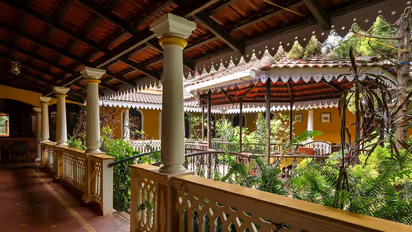
A common feature of the traditional Goan house was verandahs, courtyards and openings. It was not just an aesthetically pleasing addition but rather the means for making a shaded and airy space appropriate for a tropical climate.
The famous balcão, which is a covered sitting area found in many traditional Goan homes, was also the transitional space between the outside world and the inside. This means that the house didn’t always differentiate between the indoors and the outdoors.
When Windows Worked Differently
Perhaps the most interesting case here is the ancient use of oyster shells for making windows. These shells are translucent and provide light entering without letting someone outside see inside. Historically documented architecture of Goan homes includes the use of oyster shells as the adaptation of window instead of glass.
And that changes the perspective in which one looks at these houses. It can be not only an interesting decorative feature but also an adaptation to local conditions.
Local Materials Also Had their Functions
Goan architecture is known to use materials such as laterite, wood, terracotta, and shell-made building elements. It came into existence as a product of interaction between European ideas and local practices rather than a direct reproduction of European houses. Thus, there emerged a special style of buildings that were unique and at the same time related to the place where they stood.
Another Perspective on Heritage
Therefore, the old houses of Goa require more than a casual photo from the roadside. In fact, they resemble some old manuals that show how previous builders perceived shade, ventilation, daylight, rain, and materials before the concepts of climate-responsive architecture emerged.
Explore the latest Lifestyle NewsFood and RecipesHealth NewsAsianet News Official App