Not Just Food, But Memory: Axone To Ngari, Fermented Flavours That Tell Northeast India's Story
Synopsis
Discover Northeast India's rich fermented food culture, from Nagaland's axone and Manipur's ngari to Meghalaya's tungrymbai, Sikkim's kinema and tangy fermented bamboo shoots.
When asked about the Northeast Indian cuisine, terms like meat heavy, smoky, spicy, and pungent would certainly pop up. However, many flavors are actually created using another cooking technique, namely fermentation. Fermented soybeans, fish, bamboo shoot, and rice become special ingredients that can make any dish stand out. In other words, these foods not only preserve but also flavor Northeast Indian cuisine.
Axone: Fermented Soybeans of Nagaland
Axone or akhuni, as it is commonly known, is one of the most widely used fermented products in the cuisine of Nagaland. Being made from soybeans, this product has a strong aroma and rich umami flavor. Axone can be added to meat, vegetables, chutney and even stews, as it provides quite strong umami. This taste of axone will bring you back home once you had it.
Ngari: The Fermented Fish of Manipur
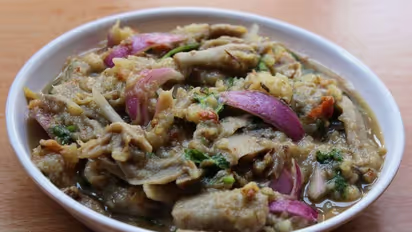
Ngari is a traditional fermented fish found in Manipur which forms part of the cuisine there. When it is used in cooking various type of dishes, its pungent smell takes on a more balanced note. The fermented fish is mainly used in preparations like eromba and singju with chillies and vegetables forming a strong combination of spiciness and umami. Other than this, it is used in kangsoi(vegetable stew), mairen thongba(Pumkin curry), sougri thongba(Roselle leaves soup or stew) and many more.
Tungrymbai: Meghalaya’s Soybean Fermentation
The people of Meghalaya have their own way of fermenting food products in the form of tungrymbai. It is a Khasi traditional fermented soybean food which is often cooked with ginger, garlic, onion, and chillies. Its pungent flavor makes it a suitable accompaniment for rice.
Kinema: The Fermented Soybean of Sikkim
Kinema, a food product made through fermentation of soybeans, is another example of traditional food found in Sikkim and Himalayan regions. Its sticky texture and pungent fermented smell make it an acquired food for some, whereas it is a delicious food for others.
Fermented Bamboo Shoots: A Northeast Favorite Through and Through
Apart from soybeans, fermented bamboo shoots also figure in the Northeastern cuisine in India. Fermented bamboo shoots could be added later on to the dish, such as curries, pork, fish and chutneys. They give a unique taste which suits especially fatty meats and spicy foods. The communities in different states of the Northeast, such as Assam, Arunachal Pradesh, Nagaland, Manipur, Mizoram and Meghalaya all make use of fermented bamboo shoots.
Hawaijar: Fermented Soyabeans of Manipur
There are many more types of fermented foods that one can encounter in the Northeastern states with differnt names and fermentation style or just the texture. In Manipur there is a food called Hawaijar which is fermented soybean food. It is same as axone of Nagaland, but the distribution make a diference. Axone comes in smashed form, while hawaijar come in a more soft, tender and sticky form. One popular dish of hawaijar in Manipur is hawaijar chagempomba, which is made with a lot of green vegetables, various herbs for flavour, small fishes and the main ingredient - hawaijar.
Overlook of fermented food in Northeast India
- Nagaland: Axone/Akhuni, fermented bamboo shoots, fermented rice drinks, fermented fruit drinks
- Manipur: Ngari, Hawaijar, Soibum, Atingba
- Meghalaya: Tungrymbai, Tungtap
- Mizoram: Bekang, Sa-um
- Tripura: Gudok, Shidol, Godhak
- Arunachal Pradesh: Pehak, Hirring/Ekung, Peruyyan
- Assam: Shidol, traditional fermented rice foods
- Sikkim: Kinema, Gundruk, Chhurpi
Why These Foods Are Important
It is the way in which fermented foods from Northeast India blend so seamlessly into daily cooking that makes them interesting. They could lend their sour, salty, fragrant, textural or umami elements without the need for complex ingredients. What is more, each food comes with a whole history of its community.
Fermentation might be the current flavor fad in the world, but fermentation as an ongoing practice has existed in Northeast India for several generations now. If you visit Northeast India, don't forget to try all these fermented dishes and take back some good memories for lifetime.
Explore the latest Lifestyle NewsFood and RecipesHealth NewsAsianet News Official App