Is ‘Natural’ Really Ayurvedic? Nat Habit’s Swagatika Das Opens Up On Wellness, Science And Consumer Trust
Synopsis
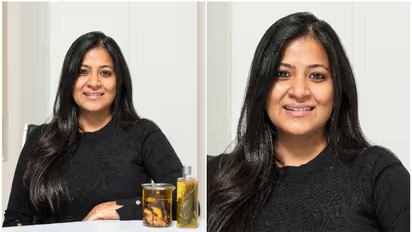
Swagatika Das, CEO and co-founder of Nat Habit, discusses how Ayurveda is evolving for modern consumers, the growing demand for transparency, Gen Z’s changing wellness choices and the need to balance tradition with science.
As Ayurveda gains renewed attention among modern consumers, terms such as natural, clean and Ayurvedic have become increasingly common in the beauty and wellness space. But according to Swagatika Das, CEO and co-founder of Nat Habit, consumers need to look beyond labels to understand what genuinely makes a product Ayurvedic.
Das believes consumers should ask what role Ayurveda actually plays in a product’s formulation, from the selection and processing of ingredients to how they are combined. Simply adding a few traditional herbs does not necessarily make a product Ayurvedic, she explained.
“Genuine Ayurveda should be rooted in Ayurvedic principles while also being supported by quality, research and a scientific understanding of why something works,” Das said.
She added that traditional wisdom and modern science do not necessarily have to be viewed as opposites. At Nat Habit, she said, naturally sourced ingredients are combined with R&D and testing to develop formulations focused on safety and intended benefits.
Consumers Are Asking Better Questions
The growing conversation around wellness has also made consumers more aware of ingredients and formulations. However, Das believes awareness should not be confused with understanding.
While social media has helped people recognise ingredients and emerging wellness trends, consumers may not always know how an ingredient works or whether it suits their individual needs. What she finds encouraging is that people are increasingly questioning claims and seeking more information.
For wellness brands, this also creates a responsibility to communicate clearly rather than overwhelm consumers with excessive information.
According to Das, trust ultimately comes from a combination of transparency and personal experience. Consumers want to know what goes into a product, why particular ingredients have been used and whether its claims have a credible basis.
She also highlighted the importance of showing consumers how products are developed. Understanding the R&D and manufacturing process, she said, can create greater transparency and confidence.
Why Gen Z Is Looking At Ayurveda Differently
Das believes Gen Z's interest in Ayurveda is not simply about preserving traditional practices. Instead, younger consumers want to understand how these practices work and how they can fit into contemporary lifestyles.
“They are questioning more and looking for evidence, relevance and convenience,” she said.
This, according to Das, presents an opportunity for Ayurveda to evolve while retaining its traditional roots. Making Ayurvedic knowledge accessible and explaining the reasoning behind traditional practices could help bridge the gap between heritage and modern wellness.
From Reactive To Preventive Wellness
Discussing the theme of Ayurveda Day 2026, “Ayurveda for a Healthier Tomorrow”, Das said she sees the future of wellness as more preventive and integrated into everyday life.
She pointed to everyday factors such as food, sleep, movement, routines and personal rituals as important parts of overall wellbeing. Rather than treating wellness as something people turn to only when a problem arises, she believes preventive practices should become easier to incorporate into daily routines.
For Das, Ayurveda's relevance lies in taking traditional knowledge forward and adapting its principles to contemporary lifestyles.
The Personal Gap That Led To Nat Habit
Das said Nat Habit began with a personal gap she experienced as a consumer. While she valued natural and Ayurvedic ways of living, she felt there was a disconnect between those preferences and the convenience offered by modern beauty and skincare products.
This led her to explore whether Ayurvedic traditions could be approached through a contemporary scientific lens while retaining their simplicity and traditional values.
“What began as a personal need eventually evolved into a larger opportunity,” Das said, adding that the brand also aims to build greater consumer understanding around formulation, R&D and manufacturing.
From distinguishing genuine Ayurveda from marketing terminology to understanding the changing expectations of Gen Z, Das' perspective reflects a broader shift in the wellness industry, one where consumers are increasingly looking not just for traditional ingredients, but also for relevance, transparency and evidence.
Explore the latest Lifestyle NewsFood and RecipesHealth NewsAsianet News Official App