Mizoram to Kerala: Six new beetle species discovered, revealing India's untapped biodiversity
Synopsis
Researchers from the Zoological Survey of India (ZSI) and Germany’s Museum A. Koenig have discovered six new species of Sericinae scarab beetles in biodiversity hotspots across India, including the Northeast and Western Ghats. Published in Zootaxa, the study also recorded 28 new regional sightings of beetles, highlighting the importance of international collaboration, ecological research, and conservation efforts.
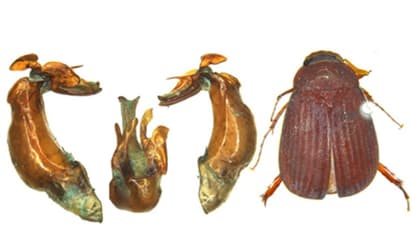
In a notable advancement for entomology and conservation science, six previously unknown species of Sericinae scarab beetles have been discovered in India, thanks to a collaborative study between the Zoological Survey of India (ZSI) and Germany’s Museum A. Koenig. The breakthrough, published in the esteemed journal Zootaxa, brings renewed attention to India's underexplored insect fauna and the pressing need for ecological preservation.
The joint research was conducted by Devanshu Gupta, Debika Bhunia, and Kailash Chandra from ZSI, alongside Dirk Ahrens from the Museum A. Koenig. Their comprehensive study of beetle specimens preserved in Kolkata and Germany led to the identification of these new species and expanded the distribution map for 28 other beetle types.
Meet the New Beetles
The newly discovered beetle species are:
- Maladera champhaiensis – Mizoram
- Neoserica churachandpurensis – Manipur
- Maladera barasingha – Named after the Indian swamp deer
- Maladera lumlaensis – Arunachal Pradesh
- Serica subansiriensis – Arunachal Pradesh
- Maladera onam – Kerala
“These discoveries highlight the critical role of international cooperation in advancing biodiversity research,” said Dhriti Banerjee, director, ZSI. “By accurately identifying and documenting species, scientists provide essential data for conservation planning and ecological management. The need for intensified sampling in underexplored regions like Northeast India is more urgent than ever.”
Biodiversity Hotspots Under the Lens
Five out of the six new species were found in Northeast India, a part of the Himalayan biodiversity hotspot recognized for its ecological sensitivity and rare species. The Western Ghats, another globally important ecological zone, is home to Maladera onam, marking yet another species unique to this UNESCO World Heritage site.
Additionally, the research documented new state-level records for two known beetle species: Maladera bengalensis in Goa and Maladera seriatoguttata in Maharashtra, expanding the known habitats of both.
Conservation, Agriculture, and Economic Impact
Devanshu Gupta, Scientist-D at ZSI and head of the Coleoptera Section, emphasized that such research serves both scientific and practical goals.
“Some Sericinae beetles are agricultural pests, while others contribute to soil health,” he explained. “Early identification can support eco-friendly pest control strategies and reduce dependence on harmful chemicals, ultimately benefiting both farmers and the environment.”
Gupta further added, “Biodiversity isn’t just about protecting rare species. It’s about understanding ecosystems, supporting sustainable agriculture, fostering ecotourism, and empowering local communities.”
Global Collaboration for a Shared Future
This discovery reinforces the urgency of mapping insect biodiversity in lesser-known regions of India. As environmental threats intensify, the role of precise scientific documentation becomes essential in shaping long-term conservation policies and promoting global biodiversity stewardship.
The findings serve as a powerful reminder that many species remain hidden in plain sight—and only through sustained research and international collaboration can we begin to uncover and protect the full breadth of India’s natural heritage.
Stay updated with the Breaking News Today and Latest News from across India and around the world. Get real-time updates, in-depth analysis, and comprehensive coverage of India News, World News, Indian Defence News, Kerala News, and Karnataka News. From politics to current affairs, follow every major story as it unfolds. IMD cities weather forecastsRain Cyclone Asianet News Official App