UNESCO removes three African sites from danger list in major conservation win

Published : Jul 11, 2025, 04:15 PM IST

UNESCO has removed three African sites—from Madagascar, Egypt, and Libya—from the List of World Heritage in Danger, marking a major success in global heritage preservation and restoration efforts

PREV
14

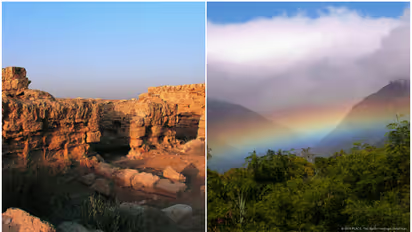
In a significant development, UNESCO has removed three heritage sites—from Madagascar, Egypt, and Libya—from its List of World Heritage in Danger. This milestone follows years of collaborative efforts between national governments, local communities, and UNESCO, aimed at restoring and preserving these culturally and environmentally significant areas. The removals underscore UNESCO’s continuing commitment to heritage conservation across the African continent and highlight the successful implementation of protective measures and restoration projects.

24

Abu Mena – Egypt

Abu Mena, situated near Alexandria, is one of the oldest Christian pilgrimage sites and was designated a World Heritage Site in 1979. It represents an important chapter in the history of Christian monasticism. However, beginning in the early 2000s, the site began to suffer due to a rising water table caused by nearby agricultural irrigation practices. This increase in groundwater led to the destabilization and partial collapse of several structures, resulting in its addition to the endangered list in 2001.

Since 2021, targeted initiatives have been undertaken to address these issues. A solar-powered drainage system was installed, which effectively brought down groundwater levels. In 2024, with UNESCO’s support through the World Heritage Fund, Egypt formulated a detailed conservation plan that included improved water management techniques, community engagement, and structural stabilization measures. These interventions not only safeguarded the physical integrity of the site but also renewed local interest and pride in its heritage. Abu Mena’s removal from the endangered list is now a testament to effective heritage preservation and adaptive environmental strategies.

34

Rainforests of the Atsinanana – Madagascar

Located on the eastern coast of Madagascar, the Rainforests of the Atsinanana were recognized as a World Heritage Site in 2007 due to their exceptional biodiversity. These rainforests are home to rare and endangered species, including a wide variety of lemurs, many of which are endemic to Madagascar. However, by 2010, the site faced significant threats including illegal logging, deforestation, and the trafficking of precious hardwoods like rosewood and ebony. These activities not only degraded the ecosystem but also endangered the survival of key species.

In response, the government of Madagascar, with support from UNESCO and international partners, launched a comprehensive action plan. This included strict monitoring systems, satellite-based forest surveillance, enhanced anti-poaching patrols, and stringent control of timber harvesting. Over time, these measures yielded substantial positive results. More than 60% of the lost forest cover was restored, illegal logging significantly decreased, and lemur populations stabilized, reaching their highest levels of safety in a decade. Thanks to this progress, the site has now been removed from the List of World Heritage in Danger, marking a major environmental success for the region.

44

Old Town of Ghadamès – Libya

The historic Old Town of Ghadamès, often referred to as the “Pearl of the Desert,” is located near Libya’s western border with Algeria and Tunisia. It earned World Heritage status in 1986 due to its unique architecture and role as a cultural hub connecting Sub-Saharan Africa and the Mediterranean. Ghadamès is famous for its traditional white-washed homes, intricate covered alleyways, and advanced urban planning suited for desert conditions.

Unfortunately, the site was placed on the endangered list in 2016 following years of internal conflict in Libya. Civil unrest, combined with natural disasters like torrential rains and fires, caused widespread damage to Ghadamès’ historic structures and infrastructure.

In recent years, peacebuilding efforts allowed restoration activities to begin. With the help of local authorities, heritage experts, and NGOs, major restoration works were carried out, including repairing buildings, restoring pipelines, and reinforcing traditional drainage systems. The project also emphasized community engagement, offering training programs to locals in restoration techniques and risk management planning. These efforts not only rehabilitated the site’s physical attributes but also strengthened local stewardship. Ghadamès' successful recovery and removal from the List of World Heritage in Danger signal a hopeful future for Libya’s cultural heritage.

About the List of World Heritage in Danger

UNESCO’s List of World Heritage in Danger serves as a critical alert mechanism. It identifies sites facing serious threats and helps direct international attention and resources to ensure their preservation. The recent removals from this list show how concerted global and local efforts can overcome adversity and protect invaluable cultural and natural treasures for future generations.
Read more Photos on

Recommended Stories