Nepal Floods: 8 Dead, 41 Security Personnel Missing; Videos Show Himalayan River Turn Into Raging Torrent

Published : Aug 26, 2026, 01:26 PM ISTUpdated : Aug 26, 2026, 02:58 PM IST

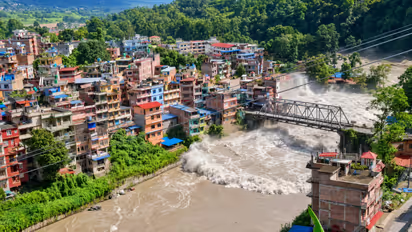
A powerful flash flood surged through Nepal’s Bhote Koshi River in Rasuwa on Wednesday, damaging settlements, bridges and infrastructure near the Tibet border. Syafrubesi and Timure were among the worst-hit areas.
PREV
17
Nepal floods: Damage reported in villages

A powerful flash flood in Nepal’s Himalayan Rasuwa district has swept through settlements and infrastructure near the Tibet border, triggering a major rescue operation and raising fresh concerns over the vulnerability of the region to sudden mountain floods. According to reports, at least 8 people have been killed and around 41 security personnel are missing as rescue efforts continue.

The flood surged through the Bhote Koshi River on Wednesday morning, affecting areas including Timure and Syafrubesi. Villages, roads, bridges and infrastructure project sites have reportedly suffered damage, while authorities warned that the full scale of destruction and any loss of life were still being assessed.

The disaster has also led to widespread speculation about its cause. A similar flood on the same river last year was eventually linked to the sudden drainage of a supraglacial lake in Tibet. However, there is no official confirmation yet that Wednesday’s flood was caused by a glacial lake outburst.

Here is what we know so far.

27
What happened in Rasuwa?

According to Nepalese officials, a huge volume of water entered the Bhote Koshi River from the direction of Tibet at around 9 am on Wednesday.

The sudden surge tore through parts of Rasuwa district, with Timure and Syafrubesi among the worst-affected locations. Authorities received reports of settlements and infrastructure project sites being washed away, but the difficult terrain and the fast-moving nature of the disaster have made an immediate damage assessment challenging.

Reports have claimed that a very large number of people may have been swept away, with some posts even mentioning around 1,000 people. However, Nepalese authorities had not officially confirmed such a figure at the time of reporting.

District administrator Narendra Pariyar told Reuters that there could be significant casualties and property losses, but said it was too early to provide confirmed numbers.

37
Which areas have been affected?

The flood has caused the most immediate concern in the mountainous Rasuwa district, which lies close to the Nepal-Tibet border.

Timure and Syafrubesi have suffered major damage, according to officials. Local reports also indicated that settlements, market areas and infrastructure along the river corridor were affected as the flood moved downstream.

The danger did not remain limited to Rasuwa. Authorities issued warnings for communities along downstream river systems and asked people in Rasuwa, Nuwakot, Dhading, Gorkha and Chitwan to remain alert.

By Wednesday afternoon, officials said the floodwater had moved beyond Rasuwa towards downstream districts, increasing concerns for communities along the Trishuli River corridor.

47
Villages, bridges and project sites damaged

The sudden flood reportedly caused widespread damage to both homes and infrastructure.

Officials said villages and infrastructure project sites had been washed away. Roads, bridges and power-related projects were also affected in the disaster zone, although a complete assessment was still underway.

Rasuwa is an important area for hydropower development, road construction and cross-border trade infrastructure. The region’s steep valleys and fast-flowing rivers make it particularly vulnerable when water levels rise suddenly.

A newly built bridge was also among the structures reported damaged or destroyed, while vehicles and goods near affected areas were swept away in the floodwaters, according to initial official and local reports.

57
What caused the sudden flood?

This remains the biggest unanswered question.

Nepal’s Department of Hydrology and Meteorology indicated that the flooding was not caused by rainfall in Rasuwa itself. Meteorological officials said satellite imagery showed significant rainfall on the Tibetan side of the border, but authorities had not established the exact trigger of the flood.

Because the flood appeared to come from the Tibet side, questions have naturally been raised about whether a glacial lake, landslide dam or another high-altitude event could have caused a sudden release of water.

However, officials have not confirmed that this was a glacial lake outburst flood, or GLOF.

That distinction is important. The fact that last year’s disaster was linked to a glacial lake does not automatically mean the same mechanism caused this week’s flood.

67
Why last year’s disaster is being compared

The Bhote Koshi River suffered a devastating flood in 2025 that killed at least nine people, while 24 others were reported missing.

That disaster also washed away the Friendship Bridge connecting Nepal and China, disrupting transport and trade for months.

A regional climate monitoring body later concluded that the 2025 flood was triggered by the sudden drainage of a previously unnoticed supraglacial lake in Tibet.

A supraglacial lake forms when meltwater collects on the surface of a glacier. If the natural barriers holding the water fail, a huge amount of water can suddenly rush downhill.

The comparison with last year has therefore intensified scrutiny of Wednesday’s disaster. But until scientists and authorities complete their assessment, it would be premature to describe the latest flood as a confirmed glacial lake outburst.

77
Army, police and helicopters deployed

Nepal has launched a major rescue and relief operation.

The Nepal Army, Armed Police Force and Nepal Police have been mobilised in Rasuwa and nearby areas. Helicopters have also been deployed to support search, rescue and medical operations in the difficult mountain terrain.

An Army helicopter carrying an Emergency Medical Rescue Team was sent towards the affected region, while additional rescue personnel were mobilised from nearby locations.

The government has also directed people living in low-lying and riverbank areas to move to safer places where necessary.

Authorities have urged residents not to rely on rumours and to follow official warnings as the flood situation continues to develop.

Why the flood could matter beyond Rasuwa

The Bhote Koshi originates in Tibet and flows through Nepal before joining the Trishuli River. The wider river system eventually connects to the Gandak basin in India.

That does not mean the current flood will automatically cause flooding in India. The impact downstream will depend on several factors, including the volume of water, its movement through Nepal’s river system and local conditions further downstream.

Still, sudden flooding in Nepal’s Himalayan rivers is closely watched because these interconnected river systems cross national borders.

Authorities in Nepal have already focused their immediate warnings on vulnerable settlements along the downstream river corridors.

The exact number of people killed, injured or missing remains unclear, and authorities are continuing to collect information from the affected areas. The exact cause of the flood is also under investigation.

What is already clear is that the disaster has once again highlighted the dangers faced by Himalayan communities living near steep, glacier-fed rivers. Heavy rainfall, changing glacial conditions, landslides and sudden releases of stored water can all produce devastating floods with very little warning.

The viral videos showing the Bhote Koshi turning into a raging torrent capture the terrifying speed of such events. But beyond the dramatic footage, the real picture is still emerging.

Until rescue teams complete their assessment, claims about the number of people swept away or the exact cause of the flood should be treated with caution. The confirmed facts are that a major flash flood has caused serious destruction in Rasuwa, rescue forces are on the ground, and communities downstream remain on alert.

(With inputs from agencies)

Read more
Read more Photos on

Recommended Stories