France's Justice Minister Gerald Darmanin has admitted to security flaws in protecting the Louvre that had led to robbers a day earlier stealing imperial jewels in broad daylight from the famed Paris museum. Let us take a look at some precedents,
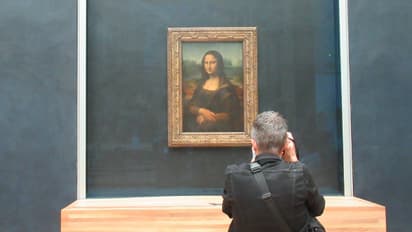
The most audacious theft in art history occurred when Leonardo da Vinci's iconic portrait vanished from the world's most visited museum. The theft shocked the art world and made international headlines for years. Vincenzo Perugia, an Italian glazier who had previously worked at the Louvre helping to frame paintings, used his intimate knowledge of the building to execute the theft. Initial suspicion fell on notable figures including poet Guillaume Apollinaire and artist Pablo Picasso before the true culprit was identified. Perugia concealed the Renaissance masterpiece in his modest Paris apartment for two full years before attempting to sell the portrait to a dealer in Florence. The risky transaction proved his downfall when the dealer alerted authorities. Perugia received a relatively lenient sentence of seven months imprisonment.
27
The Skylight Caper (Montreal Museum of Fine Arts, September 4, 1972)
Taking advantage of Canada's Labour Day holiday in the early morning hours, three armed robbers wearing masks exploited ongoing roof repairs to infiltrate the museum through a skylight. The alarm system protecting this entry point had been temporarily deactivated during the construction work, providing a perfect opportunity. 18 invaluable paintings including works attributed to Rembrandt, Brueghel the Elder, and Rubens, Paintings by French Romantic masters Corot and Delacroix, and approximately 40 pieces of jewelry and precious objects were stolen. This remains one of Canada's most significant unsolved art thefts. Of the extensive haul, only a single painting and one jewelry piece are believed to have been recovered. The value of the missing works has increased exponentially over the decades.
37
The Gardner Museum Heist (Isabella Stewart Gardner Museum, March 18, 1990)
In the early morning hours, two individuals disguised as police officers gained entry by deceiving museum staff. Once inside, they systematically removed 13 masterworks from their frames and departed with one of the most valuable art collections ever stolen. Works by Johannes Vermeer (including "The Concert"), three paintings by Rembrandt, works by Edgar Degas and Édouard Manet, and various other priceless masterpieces totaling 13 works were stolen. Despite offering a substantial $10 million reward in 2017 and conducting one of the longest-running art crime investigations in history, none of the stolen works have been recovered. The empty frames still hang in the museum as a reminder of the loss.
The Cellini Salt Cellar Theft (Museum of Fine Arts, May 12, 2003)
At dawn, a thief with specialized expertise in alarm systems scaled scaffolding erected for museum restoration work. The "Salt Cellar," a golden sculpture crafted by renowned Florentine artist Benvenuto Cellini in 1543 for French King Francis I, was his target. When the museum's alarm systems activated, security personnel dismissed the alerts as false triggers, assuming the restoration work had inadvertently set them off. This critical error allowed the thief to escape with the Renaissance masterpiece. Three years after the theft, authorities discovered the sculpture almost completely intact, concealed in a crate buried in a forest northwest of Vienna. The breakthrough came when the thief, who had unsuccessfully demanded a €10 million ransom, surrendered to police. He was subsequently sentenced to five years imprisonment.
57
The Munch Museum Robbery (Munch Museum, August 22, 2004)
In a brazen daylight operation, two armed robbers wearing balaclavas stormed into the museum and seized two of Edvard Munch's most celebrated works in a lightning-fast 50-second raid. Stunned visitors could only watch as the thieves made their escape with the masterpieces. “The Scream”, one of the most recognizable paintings in art history, and another iconic Munch masterwork "Madonna" were stolen. Two years after their disappearance, both masterpieces were located under mysterious circumstances, though they had sustained damage during their time away from the museum. Three men were convicted and imprisoned for their roles in the audacious theft.
67
The "Spiderman" Heist (Museum of Modern Art, May 20, 2010)
A single thief, later dubbed "Spiderman" for his methods, originally planned to steal only Fernand Léger's "Still Life With Candlestick." However, upon discovering a catastrophic failure in the museum's security infrastructure—including non-functioning motion detectors—he opportunistically expanded his haul. Pablo Picasso masterwork, Henri Matisse painting, Georges Braque work, Amedeo Modigliani piece, and Fernand Léger's "Still Life With Candlestick" were some of the artworks stolen. The thief was apprehended and sentenced to eight years in prison in 2017. Tragically, none of the five modern masterpieces have been recovered, representing a devastating permanent loss to the art world.
77
The Green Vault Jewel Heist (Dresden Castle Green Vault Museum, November 25, 2019)
Thieves executed an audacious nighttime raid targeting 18th-century jewels housed in the historic Green Vault museum within Dresden Castle. The sophistication and boldness of the operation shocked security experts across Europe. In 2023, five members of a notorious Berlin criminal family network were convicted for orchestrating and carrying out the elaborate heist. The case revealed the involvement of organized crime in high-value art and jewelry theft. Investigators successfully recovered a significant portion of the stolen treasure, including a spectacular diamond-encrusted sword. However, other precious jewels remain missing and are feared permanently lost, possibly destroyed or broken down for individual stone sales.