Who Is Trump's ‘Top Person’ in Iran? 5 Likely Faces Behind Secret US Talks

Published : Mar 24, 2026, 05:55 PM IST

As war reshapes Iran’s leadership, Donald Trump hints at a mysterious “top person” in talks with the US. With key figures dead, speculation grows over who really holds power in Tehran.
PREV
17
Who is the US Really Dealing With Inside Iran?

As the Israel-US war with Iran stretches into its fourth week, one question has quietly taken centre stage: who exactly is Washington talking to inside Tehran?

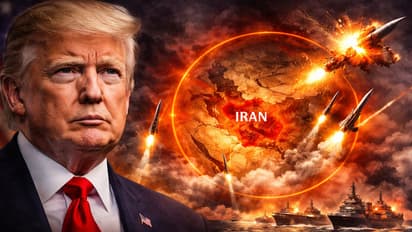
US President Donald Trump has added to the intrigue with a cryptic remark, describing the contact as a "top person" in Iran — someone "most respected" but also in an unenviable position amid a rapidly shifting power structure.

Crucially, Trump ruled out one name: Mojtaba Khamenei, who stepped into the role of supreme leader after his father Ali Khamenei was killed in the early days of the war.

“I don't want him to be killed,” Trump said, refusing to identify the individual — a comment that has only deepened speculation.

With several senior Iranian leaders eliminated in targeted strikes, the field of possible interlocutors has narrowed. Here’s a closer look at the five most likely figures.

27
Mohammad Bagher Ghalibaf: The Wartime Power Centre?

Mohammad Bagher Ghalibaf has emerged as a frontrunner in the speculation.

Following the killings of key figures, including national security chief Ali Larijani, some analysts believe Ghalibaf has effectively become Iran’s de-facto wartime leader.

His résumé spans both military and civilian leadership — from commanding the Revolutionary Guards’ aerospace forces to serving as Tehran’s police chief, mayor, and now parliament speaker.

Despite reports in Israeli media suggesting he is the US point of contact, Ghalibaf publicly dismissed the claims, stating that "no negotiations have been held with the US" and denouncing "fakenews".

Still, his survival, experience, and central role in Iran’s power structure keep him firmly in the spotlight.

Also read: Who Earned Rs 840 Crore In 20 Minutes? Mystery Trade On Trump’s Iran U-Turn Under Lens

37
Masoud Pezeshkian: The Moderate Face of Iran

Iran’s president, Masoud Pezeshkian, represents a more moderate political current within the Islamic Republic.

He assumed office in 2024 after the death of Ebrahim Raisi in a helicopter crash — an incident that also reshaped Iran’s diplomatic leadership.

Pezeshkian has tried to project himself as a leader close to the people. Earlier this month, he joined crowds at a pro-government rally supporting the Palestinian cause, taking selfies with supporters.

Yet, Iran’s political system traditionally places ultimate authority in the hands of the supreme leader. With that structure now disrupted, it remains unclear how much real power the presidency holds in wartime.

47
Abbas Araghchi: The Diplomat in the Shadows

Abbas Araghchi, a seasoned diplomat, has quietly played a key role behind the scenes.

He represented Iran in talks with US envoys — including Steve Witkoff and Jared Kushner — in Oman shortly before the conflict escalated.

While those negotiations failed to prevent war, recent reports suggest Araghchi remains in "direct communication" with US officials, engaging in what Iranian sources describe as "essentially probes on how to de-escalate the conflict".

Despite his diplomatic importance, questions remain over whether a foreign minister would be the “top person” Trump referred to.

57
Ahmad Vahidi: The Silent Commander

Ahmad Vahidi leads Iran’s powerful Revolutionary Guards — but has kept an unusually low profile during the war.

His appointment came after a string of assassinations, including predecessors killed in successive conflicts. That alone underscores the risks tied to visibility in Iran’s current leadership environment.

So far, Vahidi has made no public appearances, with just one statement issued in his name on March 19, offering condolences after another senior commander was killed in an airstrike.

His silence has only added to the mystery.

67
Esmail Ghaani: The Elusive Operator

Few figures are as enigmatic as Esmail Ghaani, head of the Quds Force — the external operations arm of Iran’s Revolutionary Guards.

He took over after Qassem Soleimani was killed in a US strike in 2020.

Ghaani himself was reportedly killed during the June 2025 conflict — only to later reappear, fuelling speculation about his role and influence.

His only message during the current war, released on March 20, predicted that Iran would "soon witness the shameful defeat" of its enemies.

Also read: Over $1 Billion a Day: Can the US Afford This Endless Iran War?

77
A Leadership Vacuum — and a Dangerous Guessing Game

The uncertainty over who the US is engaging with reflects a deeper reality: Iran’s leadership structure is under unprecedented strain.

With top figures killed, others in hiding, and power dynamics in flux, even identifying a single authoritative voice has become difficult.

Trump’s description of a "top person" who is both respected and vulnerable suggests one thing clearly — whoever is speaking to Washington is operating under extraordinary pressure.

And in a war where visibility can be a death sentence, anonymity might just be their strongest shield.

(With inputs from AFP)

Check the Breaking News Today and Latest News from across India and around the world. Stay updated with the latest World News and global developments from politics to economy and current affairs. Get in-depth coverage of China News, Europe News, Pakistan News, and South Asia News, along with top headlines from the UK and US. Follow expert analysis, international trends, and breaking updates from around the globe. Download the Asianet News Official App from the Android Play Store and iPhone App Store for accurate and timely news updates anytime, anywhere.


Read more Photos on

Recommended Stories