Boeing Under Fire As Ryanair Crashes After Air India Tragedy: What the Aviation Giant Must Do Next to Overcome Recent Setbacks
A deadly Dreamliner crash in India and a wing collision in Greece have once again put Boeing in crisis mode. As confidence in the aircraft maker hits new lows, here’s what must change.
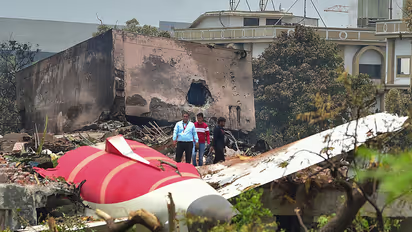
Boeing's troubles deepened this week after two high-profile aviation incidents raised serious safety questions. A Ryanair flight operating a Boeing 737 sustained heavy wing damage while moving on the runway at Kalamata International Airport in Greece. This follows the recent tragic crash involving an Air India Dreamliner as concerns increase over the aircraft manufacturer's reliability.
Flight FR6080 had landed safely in southern Greece after severe turbulence but struck a red-and-white barrier while taxiing, damaging one of its wings. Emergency crews rushed to the scene, but passengers were ordered to remain onboard despite visible damage and growing fears of a fire. One traveler recounted the announcement directing everyone to wait for the fire brigade while staying seated inside the damaged aircraft.