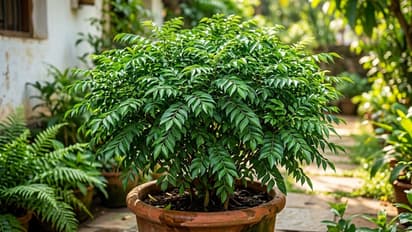
Many gardening enthusiasts struggle with their curry leaf plants. Common mistakes like insufficient sunlight, improper watering, poor soil quality, neglecting pruning, and inadequate temperature management often hinder healthy growth.
For many home gardeners, the dream of a thriving curry leaf plant often turns sour. Despite their best efforts, these beloved plants just won't grow. This common frustration – curry leaves not growing well – plagues enthusiasts trying to cultivate the essential culinary herb. Yes, these aromatic plants are a staple in Indian kitchens. But getting them to flourish demands specific care. Uncover the common errors. Then, ensure a steady supply of fresh, fragrant leaves for your cooking.
Valued for its distinct flavour in South Asian dishes, this tropical plant quickly falters without optimal conditions. Give it what it needs. Implement smart gardening tips. You'll turn a struggling plant into a vibrant, high-yielding producer.
26
Insufficient Sunlight Exposure
Six to eight hours – that’s how much direct sun curry leaf plants crave daily. Insufficient light is a top reason your plants struggle. These plants are true sun-lovers. Place them indoors or on dim balconies, and you starve them. Photosynthesis slows. Foliage production suffers. The plant grows leggy, leaves turn sparse and pale. Its flavour also diminishes. Indoors? Put them in a south-facing window. Or use a full-spectrum grow light for at least 10-12 hours. This simple step will dramatically boost health and growth. Say goodbye to curry leaves not growing well.
36
Incorrect Watering Practices
Too much water kills. Curry leaf plants hate soggy soil – a major risk. Overwatering causes root rot, then wilting, yellowing, and death. Always check soil moisture. Stick a finger an inch or two deep. Does it feel dry? Then water. Not dry? Wait. Too little water also stresses the plant. It conserves energy. It stops producing new leaves. You want growth? Water smart. Ensure proper pot drainage.
Your soil builds the plant. Poor soil structure or nutrient deficiencies cripple growth. Curry leaf plants love well-draining soil. It must be rich in organic material. Aim for a slightly acidic to neutral pH – 6.0 to 7.0 is ideal. See weak stems, stunted development, or yellow leaves? Nitrogen deficiency often turns older leaves yellow. Iron issues cause yellowing between new leaf veins. Fix it! Mix in well-rotted compost or a balanced organic fertiliser during the growing season. Never use fresh manure – it burns roots. Choose aged, balanced amendments instead.
56
Poor Soil and Nutrient Imbalance
Your soil builds the plant. Poor soil structure or nutrient deficiencies cripple growth. Curry leaf plants love well-draining soil. It must be rich in organic material. Aim for a slightly acidic to neutral pH – 6.0 to 7.0 is ideal. See weak stems, stunted development, or yellow leaves? Nitrogen deficiency often turns older leaves yellow. Iron issues cause yellowing between new leaf veins. Fix it! Mix in well-rotted compost or a balanced organic fertiliser during the growing season. Never use fresh manure – it burns roots. Choose aged, balanced amendments instead.
66
Neglecting Pruning
Gardeners often skip pruning. Big mistake. Pruning is key for lush, bushy growth and more leaves. Don't prune? Your plant gets leggy – a single stem, sparse leaves. Pinch new growth tips. This promotes branching. Need a big reset? Cut back older, woody stems by a third. Always cut above a leaf node. Regular clipping creates a compact, productive plant. It also stimulates aromatic leaf production. Neglect the scissors, and your curry leaves won't grow well.