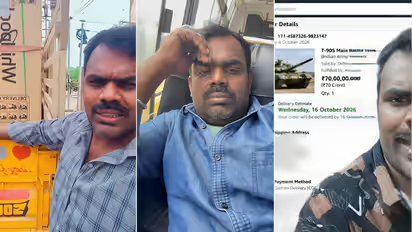
A request for a box of Deepavali sweets has left a Madurai-based social media influencer facing repeated unwanted deliveries and forced to leave his home, according to media reports. Veeramani Shanmuganathan, known online as Veeramani, shared his address hoping followers would send him festive treats. Instead, people began placing cash-on-delivery (COD) orders for expensive electronic goods in his name, turning a simple request into an ordeal.
Veeramani is a social media content creator from Madurai, Tamil Nadu. He is known for his humorous videos, use of local slang and informal style of interacting with his followers.
He posts content on Instagram under the handle @veeramani_121, where he shares reels and engages with his audience. His online presence has also brought him support from followers willing to help him with personal requests.
According to The Times of India, Veeramani had earlier appealed to followers for contributions towards a long-awaited trip to Kerala. His followers pooled together Rs 6,000, allowing him to visit the state and share travel videos online.
Encouraged by that response, he made another request ahead of Deepavali. This time, he hoped someone would send him a box of sweets for the festival. However, the response took an unexpected turn.
The trouble began when Veeramani shared his residential address in the West Anuppanadi area of Madurai, hoping followers would send him Deepavali treats.
While some people responded with sweets, others allegedly used his publicly shared details to place unwanted orders on e-commerce platforms.
Delivery agents from Amazon and Flipkart began arriving at his residence with washing machines, refrigerators, smartphones and televisions. These were cash-on-delivery orders, meaning payment was required before the goods could be accepted.
Veeramani said he had not ordered the items and could not pay for them. Delivery personnel also needed the required one-time passwords (OTPs) to complete the transactions.
One reported television order was valued at Rs 1.69 lakh. The repeated deliveries created difficulties for both Veeramani and the workers who had travelled to his address.
The prank extended beyond electronic goods. Neighbours told The Times of India that food delivery workers from Swiggy and Zomato also arrived with orders he had not requested.
As the incident gained attention online, screenshots and posts began circulating that claimed even more unusual items had been ordered in Veeramani's name.
These included a T-90 military tank allegedly worth Rs 70 crore, an ambulance, a rocket and JCB excavators.
However, these claims should be treated with caution. The extraordinary orders were described in reports as fake or imaginary online posts, and there is no verified evidence that a military tank or rocket was actually dispatched to his home.
The distinction matters because the reported deliveries of household appliances and food were different from the sensational claims circulating on social media.
As the deliveries continued, Veeramani turned to Instagram to ask people to stop.
In one video reported by India Today, he expressed concern about the delivery workers being dragged into the situation and having to make unnecessary journeys.
He also explained that he did not have the money to pay for the goods and was facing pressure because of the repeated orders.
In another emotional appeal, he pleaded with followers to end the prank, saying that he was suffering because of what had begun as a request for sweets.
Despite his public appeals, reports said the unwanted deliveries and calls continued. The incident left him struggling to manage the consequences of other people's actions, even though he had not requested the expensive products.
When TOI visited Veeramani's residence in Anuppanadi, the house was found locked. Neighbours reportedly said he had left after the repeated deliveries and harassment became difficult to deal with.
His subsequent social media videos showed him travelling on a bus, but his destination was not confirmed in the reports. Calls to his publicly shared phone number were also reportedly barred.
As of today, his exact whereabouts were not publicly established in the reports reviewed for this article.
There is no verified information confirming whether he has permanently moved out or when he might return.
Veeramani's experience highlights how sharing personal information online can expose people to unwanted attention and misuse of their details.
A cash-on-delivery order may appear harmless to the person placing it, but repeated fake orders can waste the time of delivery workers, disrupt businesses and cause distress to the person named as the recipient.
In this case, a request for a festive gift reportedly escalated into repeated deliveries of expensive goods and claims about extraordinary items that were never verified as genuine orders.
The incident also raises questions about the limits of online pranks. What some users may treat as a joke can have real consequences for another person, particularly when their address and phone number are used without their consent.
For Veeramani, the immediate concern was stopping the deliveries and regaining control over his personal space. His case serves as a reminder that online jokes can cross the line when they involve repeated unwanted contact and the misuse of someone's personal details.
(With agency inputs)
Stay updated with the Breaking News Today and Latest News from across India and around the world. Get real-time updates, in-depth analysis, and comprehensive coverage of India News, World News, Indian Defence News, Kerala News, and Karnataka News. From politics to current affairs, follow every major story as it unfolds. IMD cities weather forecastsRain Cyclone Asianet News Official App