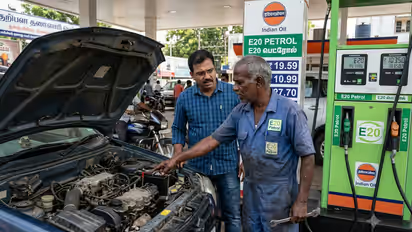
Worried about using E20 petrol in your pre-2023 car or bike? We break down the facts. While the government says there's no proof of major damage, it's still smart to keep an eye on your vehicle's fuel system.
With E20 petrol becoming common across India, a big question is on every old car and bike owner's mind. Can you safely use it in vehicles made before 2023? E20 is a mix of 20% ethanol and 80% petrol. Since April 2023, all new petrol vehicles are built with materials compatible with E20. From April 2025, they will even have E20-compliant engine systems.
25
Ethanol-blended petrol
So, will your old car or bike face immediate problems with E20? There's no simple 'yes' or 'no'. It really depends on your vehicle's model, its manufacturing year, and the company's fuel advice. The central government recently clarified that there is no evidence of major damage in old vehicles due to E20. A large service network also reported no significant E20-related damage during their services.
35
Is E20 petrol safe?
But, you shouldn't ignore your old vehicle's fuel system. As ethanol-blended fuel use grows, it's a good idea to check parts like fuel lines, rubber components, seals, the fuel pump, and the fuel injector. If you notice any starting trouble, engine sputtering, a sudden drop in performance, or fuel supply issues, get it checked by a mechanic immediately. Always check the manufacturer's guidelines for your specific model.
Owners who park their vehicles for long periods must be extra careful with the fuel system. An old, dirty fuel filter can easily get clogged and block fuel flow. So, checking the fuel filter, pump, and injector at the intervals your manufacturer suggests is a safe bet. You don't need to rush and replace parts just because you're using E20, as long as you follow your regular maintenance schedule.
55
E20 petrol vehicle damage
Bottom line: owners of old cars and bikes don't need to panic about E20 petrol. At the same time, we can't say that all pre-2023 vehicles are 100% compatible without any conditions. Your vehicle's model and manufacturing year guidelines from the company are the most important thing. As E20 use continues, timely maintenance, monitoring your fuel system, and getting any changes checked immediately is the best way forward for old vehicle owners.