Is Pakistan's Stubble Burning Adding To Delhi's Air Pollution? What Satellite Data Reveals

Published : Nov 03, 2026, 01:23 PM ISTUpdated : Nov 03, 2026, 01:37 PM IST

Delhi's AQI has entered the 'very poor' category days before Diwali, raising concerns about an early pollution spike. Satellite data shows Pakistan's Punjab recorded 13,241 crop-fire detections in October, around 4.2 times India's Punjab count.
PREV
17
Is Pakistan contributing to Delhi's air pollution

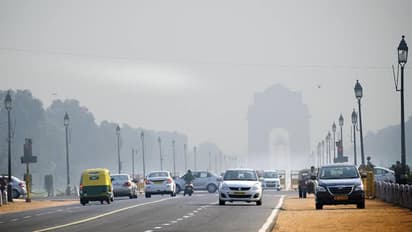
Delhi's air pollution has worsened sharply days before Diwali, with the Air Quality Index (AQI) entering the 'very poor' category earlier than usual. While stubble burning in Punjab and Haryana remains a major concern, an unusually high number of crop fires in Pakistan's Punjab has raised questions about a possible cross-border pollution link.

Satellite data shows that Pakistan recorded more than four times as many crop-fire detections as Indian Punjab during October. However, does this mean Pakistan is responsible for Delhi's worsening air quality? The answer is more complicated.

27
Delhi's AQI worsens days before Diwali

Delhi's annual pollution season appears to have arrived early this year. The city's AQI entered the 'very poor' category for the first time on November 2, nearly a week before Diwali. On November 3, the average AQI hovered around 330, while at least three monitoring stations recorded readings above 400, placing them in the 'severe' category.

The sudden deterioration came just days after rainfall brought temporary relief. On October 30, Delhi's AQI dropped to 60, while the city recorded its cleanest October air quality in more than eight years, with a monthly average of 167.

The worsening situation prompted authorities to implement Stage II of the Graded Response Action Plan (GRAP), bringing stricter pollution-control measures, including water sprinkling, anti-smog guns and closer monitoring of construction sites.

37
Pakistan records four times more crop fires than Indian Punjab

One of the factors drawing attention is the unusually high number of stubble-burning incidents reported in Pakistan's Punjab province.

According to satellite data from NASA's Fire Information for Resource Management System (FIRMS), Pakistan's Punjab recorded 13,241 active fire detections between October 1 and 29. During the same period, Indian Punjab recorded 3,158 detections.

This means Pakistan's Punjab had around 4.2 times more satellite-detected fires than its Indian counterpart.

The situation became particularly concerning towards the end of October. As many as 6,655 fire detections were recorded in Pakistan's Punjab during the last seven days of the month alone, accounting for nearly half of its total detections.

Much of this activity was concentrated in the rice-growing belt around Lahore. The city's pollution levels also soared, with Lahore reportedly becoming the world's most polluted city on November 2. Its AQI crossed 500 in several areas.

47
Can smoke from Pakistan reach Delhi?

Meteorological conditions could allow smoke from agricultural fires in Pakistan to travel towards parts of northern India.

Northwesterly winds are currently blowing across the region. These winds can carry smoke from Pakistan's Punjab towards Indian Punjab, Haryana and Delhi-NCR.

Low wind speeds are making the situation worse by slowing the dispersal of pollutants. As a result, smoke and other emissions can remain trapped closer to the ground.

The geography of the northern plains also plays a role. Since the region is landlocked, pollutants often accumulate instead of dispersing quickly.

Meteorological expert Navdeep Dahiya highlighted the growing number of agricultural fires across Pakistan and Punjab in a post on X. He warned that continued crop burning, combined with local pollution sources and unfavourable weather, could further deteriorate air quality across the region.

57
Is Pakistan responsible for Delhi's worsening air quality?

The higher number of crop fires in Pakistan raises concerns about a possible cross-border contribution to Delhi's pollution. However, satellite fire counts alone cannot establish how much smoke from Pakistan has reached the national capital or how much it has contributed to the AQI spike.

Delhi's air pollution is the result of several factors operating together. Stubble burning in Indian Punjab and Haryana continues to add smoke to the atmosphere. Vehicular emissions, construction dust and other local pollution sources further increase the pollutant load.

Falling temperatures and sluggish winds also make it difficult for pollutants to disperse. These conditions allow pollution from different sources to accumulate over the northern plains.

Therefore, while Pakistan's agricultural fires could be adding to the regional pollution burden, it would be incorrect to blame the country's crop burning alone for Delhi's deteriorating air quality.

67
Why are crop fires increasing across the border?

The latest satellite observations also reveal a significant change in the pattern of stubble burning between India and Pakistan.

According to a report by Pakistan's Dawn, satellite-detected crop fires in Indian Punjab fell by 95% between 2021 and 2025. In contrast, Pakistan recorded a 33% increase in such fires between 2019 and 2025.

The figures mark a reversal of the situation in 2019, when Indian Punjab recorded almost five times as many crop-fire detections as Pakistan's Punjab.

Meanwhile, untimely rainfall in northern India during October disrupted harvesting schedules in several areas. The rainfall was linked to Cyclone Arnab. A senior Central Pollution Control Board (CPCB) official told The Print that many farmers were unable to harvest their fields on time and could now rush to clear the remaining crop residue.

This could lead to more stubble-burning incidents in the coming days, adding to the existing pollution burden.

77
Delhi's AQI Turns 'Very Poor' Before Diwali: Is Smoke From Pakistan Adding To The Crisis?

The next few days could prove crucial for Delhi-NCR. The India Meteorological Department's forecast indicates that northwesterly winds are likely to continue for the next four days, potentially carrying smoke from agricultural fires across the region.

Navdeep Dahiya has warned that Delhi-NCR could witness its first day of severe air quality within the next three days if the situation continues to worsen.

The possibility of additional pollution from Diwali firecrackers is another concern.

Meanwhile, authorities have intensified vehicle checks under GRAP measures. Delhi Traffic Police issued 433 challans for no-entry violations and checked 7,657 vehicles between midnight on October 31 and noon on November 2. As many as 609 vehicles that failed to meet prescribed emission standards were turned back.

Traffic police have also initiated action to suspend permits of 76 commercial vehicles for violating no-entry restrictions. Vehicles registered outside Delhi that do not meet BS-VI emission standards are barred from entering the capital, while electric, CNG and BS-VI-compliant vehicles are exempt.

The enforcement measures aim to reduce vehicular emissions as the city prepares for the annual winter pollution season.

(With inputs from agencies)

Stay updated with the Breaking News Today and Latest News from across India and around the world. Get real-time updates, in-depth analysis, and comprehensive coverage of India News, World News, Indian Defence News, Kerala News, and Karnataka News. From politics to current affairs, follow every major story as it unfolds. IMD cities weather forecastsRain Cyclone Asianet News Official App

Read more
Read more Photos on

Recommended Stories