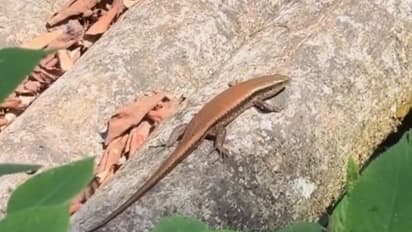
Indian Skink: Does It Bite? Is It Poisonous? All Your Questions Answered!

Published : May 19, 2026, 02:04 PM IST

Many believe the Haavurani is poisonous, but it is just a myth. This harmless skink eats pests like cockroaches and grasshoppers, helping keep homes and gardens clean. It plays a useful role in nature and is truly a farmer’s friend.    

PREV
15
Does the Haavurani bite? Is it poisonous?
We've all seen this shiny creature zipping across our gardens, on rocks, or among green plants. We call it 'Haavurani'. In English, its name is Common Indian Skink (Eutropis carinata). It might look like a baby snake, but it's actually a very helpful lizard.
25
Myth and Reality: Does the Haavurani have venom?

In many villages, there's a big superstition about the Haavurani. Because its name has 'haavu' (snake), people fear it's a type of snake or is highly venomous. This is completely false. The Haavurani has no venom at all. It doesn't even bite humans. Reptile expert Gauri Kalinga shares this important info, confirming it's a totally non-violent creature. It won't bother you unless you provoke it.

ALSO READ: Telangana: Man arrested for illegal trading of two Red Sand Boa snakes

35
Why do we need them in our garden?
The Haavurani isn't just a beautiful creature; it's also our garden's 'natural pesticide'. These skinks eat cockroaches, grasshoppers, termites, and other small insects that harm plants. Without us even knowing, they help keep our yards and kitchens cockroach-free, without any chemicals. So, it's no mistake to call them a farmer's friend. They love the sun and you can often spot them basking on rocks or dry leaves in the morning. They usually live under piles of dry leaves or logs.
45
Escapes by cutting off its tail

This skink has a fascinating defence trick. If an animal or human tries to catch it, the skink immediately cuts off its own tail to escape! The predator gets distracted by the detached tail, and the Haavurani runs away. The amazing part is, the tail grows back after a few days.

ALSO READ: Kalaburagi Zoo Becomes New Tourist Hotspot with Wildlife, Green Spaces, and Family Attractions

55
Reproduction and Habitat
These creatures lay eggs to reproduce. A female skink lays about 2 to 20 eggs in a safe spot. They are found in large numbers along the edges of the Western Ghats and in gardens in the plains. Here's our request: these small creatures play a big role in balancing our environment. If you see one near your house, please don't be scared or kill it because of superstitions. They are not poisonous and are very helpful to us. Let's respect these amazing guests of the green world and enjoy their presence. To watch the video, click here.

Stay updated with the Breaking News Today and Latest News from across India and around the world. Get real-time updates, in-depth analysis, and comprehensive coverage of India News, World News, Indian Defence News, Kerala News, and Karnataka News. From politics to current affairs, follow every major story as it unfolds. Get real-time updates from IMD on major cities weather forecasts, including Rain alerts, Cyclone warnings, and temperature trends. Download the Asianet News Official App from the Android Play Store and iPhone App Store for accurate and timely news updates anytime, anywhere.

Read more Photos on

Recommended Stories