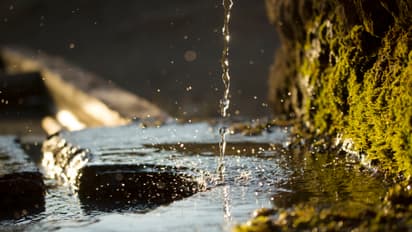
India's annual groundwater recharge slightly increased in 2025 due to a better monsoon, though it hasn't reached 2023 levels. According to the 2025 CGWB report, nearly a quarter of the country continues to face dangerously depleted groundwater.
India's groundwater situation, long a concern for planners and environmental experts, has shown a slight improvement this year. But despite better rainfall and increased recharge, nearly a quarter of the country continues to struggle with dangerously depleted groundwater levels.
This comes from the Dynamic Ground Water Resources of India, 2025 report released by the Central Ground Water Board (CGWB).
26
Recharge Improves But Still Below 2023 Levels
The latest report shows that India's annual groundwater recharge rose to 448.52 BCM in 2025, up from 446.9 BCM last year.
However, it still hasn't recovered to the 2023 level of 449.08 BCM, indicating that long-term pressure on aquifers continues.
Officials say this increase is mainly due to a stronger monsoon in 2025, which helped renew groundwater faster and reduce dependence on pumping for agricultural needs.
36
States Showing Decline Despite Overall Growth
While the national average improved, several states actually saw groundwater decline this year. These include:
Andhra Pradesh
Arunachal Pradesh
Assam
Jharkhand
Kerala
Punjab
Jammu & Kashmir
These declines kept many districts in the semi-critical, critical, and over-exploited categories.
India assessed 6,762 groundwater units in 2025. Of these:
730 units (10.8%) are over-exploited
Over 25% fall into semi-critical, critical, and over-exploited combined
Over-extraction is most severe in:
Punjab
Haryana
Delhi
Western Uttar Pradesh
Rajasthan
Gujarat
Karnataka
Tamil Nadu
Telangana
Andhra Pradesh
Here, groundwater extraction exceeds annual recharge, driven by indiscriminate pumping, urban expansion, and climatic pressures.
Area-wise, around:
16% of India's recharge-worthy land is over-exploited
12% is semi-critical
3% is critical
56
Where Groundwater Has Improved
Some states reported notable increases in groundwater recharge thanks to better rainfall and conservation efforts:
Bihar
Chhattisgarh
Madhya Pradesh
Karnataka
Maharashtra
Rajasthan
Tamil Nadu
Telangana
Uttar Pradesh
CGWB credits the improvement to rainfall patterns and government-led groundwater augmentation projects, including watershed management and check-dam construction.
66
What's Driving the Change?
Rainfall remains India's biggest source of groundwater recharge, nearly 60% of all recharge.
A CGWB official noted:
"Better monsoon rainfall this year meant less extraction of groundwater for irrigation and contributed significantly to the rise in recharge."
Additionally, new assessments were added from Himachal Pradesh, where evaluations expanded from valleys to block-level units.