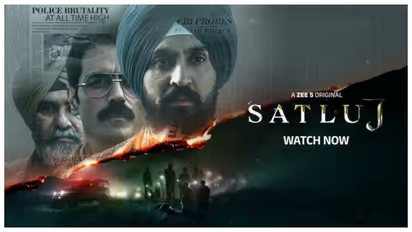
Diljit Dosanjh's Satluj may have disappeared from ZEE5, but its journey continues. Gurudwaras across North India are now organising community screenings to ensure Jaswant Singh Khalra's story reaches audiences despite the OTT removal.
Gurudwaras step in to screen Diljit Dosanjh's Satluj
Although Diljit Dosanjh's Satluj has been removed from ZEE5, the film is finding a new audience through community screenings at gurudwaras across North India. The initiative aims to ensure that the story of human rights activist Jaswant Singh Khalra continues to reach people despite its absence from the streaming platform.
24
Community screenings begin across North India
According to reports, gurudwara committees, with support from the Shiromani Gurdwara Parbandhak Committee (SGPC), have organised public screenings in Punjab, Haryana, Rajasthan, Delhi, and Jammu. In Jammu, the film will reportedly be screened at four gurudwaras between July 10 and July 13. A screening has also been planned at Jaipur's Baba Fateh Singh Auditorium in Chandi Ki Taksal Gurudwara. The Delhi Sikh Gurdwara Management Committee (DSGMC) has also extended its support, with president Harmeet Singh Kalka urging ZEE5 to restore the film on its platform. An SGPC source said the community wants Khalra's story to remain accessible even if it is unavailable online.
34
Why was Satluj removed?
Based on the life of Jaswant Singh Khalra, Satluj premiered on ZEE5 in India on July 3 but was removed within 48 hours. Reports claimed the Centre directed the platform to take down the film under the Information Technology (IT) Rules, citing security concerns. Authorities reportedly feared the film could trigger pro-Khalistan sentiment or public unrest, though no official statement has confirmed these claims.
The journey of Satluj has been far from smooth. Completed nearly four years ago, the film remained stuck in the certification process for years. Originally titled Ghallughara, it was later renamed Punjab '95' after the CBFC reportedly cleared it with 21 cuts. The filmmakers challenged the decision, sending the matter to the CBFC's revising committee before the film eventually reached audiences.