Ring of Fire Rumbles: Kamchatka Earthquake Among World's 10 Strongest Quakes in History | Explained
Synopsis
A massive 8.8 magnitude earthquake hit off Russia’s Kamchatka coast on July 30. The quake triggered tsunami alerts and global concern, as experts warn of rising risks along the entire Ring of Fire.
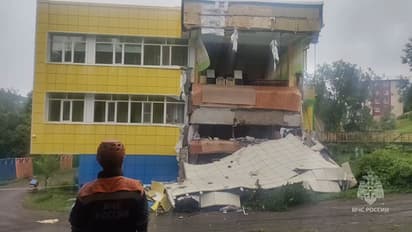
On July 30, a powerful magnitude 8.8 earthquake struck near Russia's Kamchatka Peninsula, about 119 km from the city of Petropavlovsk-Kamchatsky. The quake happened deep under the earth at about 20 kilometres below the surface. This was one of the ten strongest earthquakes ever recorded in modern history and the most powerful globally since 2011, according to a report published in The Conversation. Buildings cracked, people were injured and fear spread quickly.
Tsunami warnings across countries
Tsunami alerts were issued quickly in Russia, Japan and Hawaii, with advisories sent to Indonesia, the Philippines, New Zealand and even Peru. Coastal areas were evacuated as large waves were expected.
Experts say this happened because the region is part of the Ring of Fire, a horseshoe-shaped zone around the Pacific Ocean with lots of earthquakes and volcanic eruptions. According to the report in The Conversation, all ten of the most powerful quakes in modern history happened within this dangerous zone.
Why Kamchatka gets big earthquakes
The Kamchatka Peninsula lies close to a major geological fault line called the Kuril-Kamchatka Trench. Here, one tectonic plate (the Pacific Plate) pushes under another (the Okhotsk Plate). This is called a subduction zone.
These plates do not move smoothly. Often, they get 'stuck' and pressure builds up. When the pressure becomes too much, it is released in the form of a massive earthquake.
“The Pacific Plate here moves about 75 mm every year,” scientists explained. “This is very fast compared to other areas, which is why Kamchatka gets big quakes more often.”
This isn’t the first time this area has seen a strong quake. In 1952, a magnitude 9.0 earthquake happened just 30 km from this one’s epicentre.
How this quake compares to others
This event is similar to past deadly earthquakes like:
- The 2011 Tohoku-Oki quake in Japan (magnitude 9.1)
- The 2004 Boxing Day quake near Indonesia (magnitude 9.3)
These earlier quakes caused massive tsunamis because they shifted large portions of the sea floor. For example, the Boxing Day quake moved the sea floor over 1,400 km, leading to huge waves and loss of life in many countries.
Kamchatka earthquake and the aftershocks
Within six hours after the quake, the US Geological Survey recorded over 35 aftershocks above magnitude 5.0. Some of these could be as strong as magnitude 7.5, and they might continue for weeks or months, scientists said.
Coastal areas in Kamchatka, Japan and the Kuril Islands have already seen small tsunami waves. Bigger waves could still arrive in places as far as Hawaii, Chile, and Peru in the coming hours.
Scientists around the world are watching closely and updating tsunami models as more data comes in. Local civil defence teams are giving warnings and helping people stay safe.
Lessons from Kamchatka earthquake
The massive Russia earthquake is a reminder of the hidden risks many countries face. Even though such huge quakes are rare, their effects are serious and global.
Interestingly, just 10 days earlier, on July 20, a magnitude 7.4 earthquake struck the same region. Scientists are now studying whether that quake played a role in triggering this massive one.
The article in The Conversation warns that other places with subduction zones should also prepare. For example, New Zealand sits on two subduction zones, including the Hikurangi Trench. Though it hasn't caused a major quake in recent memory, experts say it can produce a magnitude 9 earthquake and tsunami in the future.