US-Iran Talks Fallout: Was JD Vance ‘Thrown Under the Bus’?
Synopsis
High-stakes US-Iran negotiations in Islamabad, led by Vice President JD Vance, collapsed after 21 hours. The talks aimed to stabilize a ceasefire and address Iran’s nuclear program, but ended without a deal. President Trump’s heavy involvement reportedly complicated discussions.
Trump’s Shadow Over High-Stakes Talks
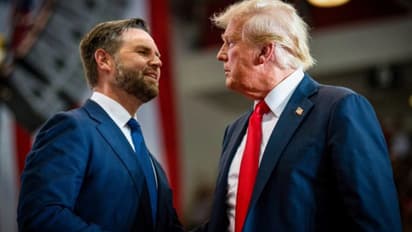
The high-stakes negotiations between the United States and Iran in Islamabad were meant to stabilise a fragile ceasefire, but instead exposed deep divisions—not just between the two nations, but also within Washington’s own leadership structure. At the centre of the controversy is US Vice President JD Vance, who led the American delegation, and President Donald Trump, whose repeated interventions reportedly influenced the course of discussions.
According to multiple reports, Trump remained closely involved throughout the 21-hour marathon talks, speaking to Vance numerous times. Vance himself confirmed he was in constant communication with the President, revealing Trump called “a dozen times” during the negotiations.
This level of direct involvement highlighted the importance Washington placed on the outcome—but also raised questions about whether it complicated the negotiation process at a critical stage.
Talks Collapse After 21-Hour Marathon
The Islamabad talks, held on April 11–12, marked one of the most significant direct engagements between the US and Iran in decades. The goal was to preserve a fragile ceasefire following weeks of conflict and to address contentious issues like Iran’s nuclear programme and the Strait of Hormuz.
Despite intensive discussions, the talks ended without an agreement. US officials blamed Iran’s refusal to commit to abandoning nuclear ambitions, with Vance stating the US needed a firm guarantee that Iran would not pursue nuclear weapons.
Iran, however, pushed back, accusing Washington of making unrealistic demands and failing to build trust. The divide proved too wide to bridge, and both delegations left Islamabad without a deal, casting uncertainty over the ceasefire’s future.
Also Read: ‘Not a Failure’: US-Iran Talks to Resume After Islamabad Meet
Was JD Vance ‘Thrown Under the Bus’?
Amid the collapse, attention quickly turned to Vance’s role and whether he was being positioned as the fall guy for the failed negotiations. Reports suggested that Trump had tasked Vance with securing a breakthrough but maintained tight control over the process from afar.
The phrase “thrown under the bus” emerged in political discourse, reflecting speculation that Vance could bear the brunt of criticism for not delivering results. While there has been no official confirmation of internal blame, the optics of the situation—Trump’s heavy involvement combined with the lack of a deal—have fuelled this narrative.
The pressure on Vance was immense. Leading a nearly 300-member delegation, he faced one of the most complex diplomatic challenges of his tenure, navigating demands that included curbing Iran’s nuclear programme while addressing Tehran’s insistence on sanctions relief and regional concessions.
Analysts note that such high-level negotiations often involve internal tensions, especially when political stakes are high. In this case, Trump’s active oversight may have both strengthened the US position and constrained flexibility during critical moments.
Fragile Ceasefire, Rising Stakes
The failure of the Islamabad talks has left the future of the ceasefire in doubt. The negotiations were seen as a crucial step toward de-escalation, but their collapse has heightened fears of renewed conflict in an already volatile region.
The broader context adds to the urgency. The conflict between the US, Iran, and regional actors has already caused significant damage and instability, with the Strait of Hormuz emerging as a key flashpoint due to its importance for global oil supply.
With no agreement in place, tensions remain high, and both sides appear entrenched in their positions. The US continues to push for strict limits on Iran’s nuclear capabilities, while Iran insists on safeguarding its strategic interests and sovereignty.
Also Read: “Everything Shifted”: How Netanyahu’s Call Derailed US-Iran Talks
What Comes Next?
Despite the setback, diplomatic channels are not entirely closed. Experts believe further rounds of talks are likely, given the high stakes involved and the risks of escalation. However, rebuilding trust will be a major challenge.
The Islamabad talks have underscored the complexity of US-Iran relations, where diplomacy is shaped not only by international demands but also by internal political dynamics. The question of whether Vance was “thrown under the bus” reflects a broader issue: how leadership decisions and communication styles can influence outcomes in high-pressure negotiations.
For now, the collapse serves as a reminder of how fragile peace efforts can be—and how quickly they can unravel. With tensions simmering and no clear path forward, the spotlight remains on both Washington and Tehran as the world watches for the next move in this high-stakes geopolitical standoff.