US and India Collaborate to Boost Strategic Trade and Energy Ties
Synopsis
India and the US are strengthening ties in energy, pharma, and technology. Officials emphasize fair trade, supply chain resilience, and mutual investment to drive economic growth during the 23rd Indo-US Economic Summit in New Delhi.
US and India Collaborate to Boost Strategic Trade and Energy Ties
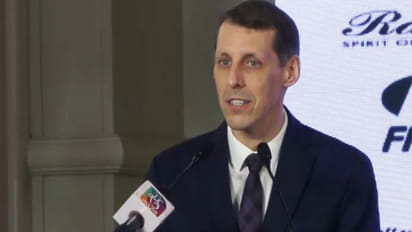
India and the United States are working closely to build a trade relationship that is "fair, reciprocal, and mutually beneficial", with cooperation reaching well beyond the trade of goods, said US Embassy Deputy Chief of Mission Jason Meeks on Thursday as both nations look to expand partnership across energy, pharma, and critical minerals.
Speaking at the 23rd Indo-US Economic Summit, organised by the Indo American Chamber of Commerce, Meeks said, "We've made real progress, and our progress reaches well beyond trading goods. Our two nations are partnering on energy, on pharmaceuticals, on critical minerals, on advanced technology, and on manufacturing."
Recalling that New Delhi and Washington signed the Pax Silica Declaration earlier this year, he described it as "a landmark agreement that makes it easier for American and Indian companies to work together across borders." He said the pact would also empower the next generation of entrepreneurs and builders in both countries to bring new ideas to market. He added that the United States, India and other countries signed the "San Francisco Declaration" just a few days ago to strengthen the Paxilica framework.
Underlining the importance of resilient supply chains, Meeks said, "Supply chain resilience is not just an abstract policy goal, although it sometimes sounds like one. When disruption hits, whether from a pandemic, whether from a conflict or from a natural disaster, American and Indian industries must be able to adapt together, diversify together, and keep production moving forward."
Hailing Indian industry, he said Indian manufacturers are "already proving themselves reliable and sophisticated partners" in that effort. "From automotive components to pharmaceuticals to electronics, Indian firms are becoming an essential link in our global supply chains," he said, adding that American companies are bringing "the technology, the capital, and the know-how" that help those chains grow stronger.
On trade, Meeks stressed that "fair market access helps both ways." He said the two governments should create an environment where American suppliers and technology can "freely reach Indian manufacturers and consumers", and where Indian firms can "compete fairly in US markets." "When trade is fair and reciprocal, workers and companies on both sides win," he said.
Pointing to the scope for deeper engagement, he said, "There's still a lot of potential to unlock. As we keep reducing barriers to trade and working together in every field, we will build a future that is free, open, resilient, and prosperous for us all."
Inviting Indian businesses to expand in the US, Meeks offered "one concrete suggestion for turning a vision into growth: bring your operations to the United States." He said the message would be repeated louder as the day went on. "Whether you are looking at manufacturing, whether you're looking at research and development centres or distribution networks, the United States is open for business," he said.
Concluding his address, he said, "As America celebrates its 250 years, and India advances toward Viksit Bharat, we have a rare chance to help shape that next chapter together."
Lok Sabha Speaker Om Birla, who was the Chief Guest at the Summit, said India was making consistent progress in the defence sector under the leadership of Prime Minister Narendra Modi. "We are not only moving toward self-reliance (atmanirbharta) but are also emerging as a major global export hub. The fact that our exports have grown by more than 50 per cent is a testament to India's policies," he said.
Citing the inflow of global investment, he said it was driven by "stable policies, a sound tax framework, and a robust democracy." Noting that the US representative had also spoken about greater collaboration in technology, Birla said India possesses "a young workforce, immense potential, fresh thinking, and innovative perspectives." "It is for this reason that the Prime Minister has consistently focused on leveraging the capabilities of our youth to drive India's progress forward," he said.
The remarks of the two leaders reflected the growing synergy between India and the US across critical fronts- trade, investment, technology and manufacturing, with both sides emphasising the need to build a resilient economic partnership that creates opportunities for businesses, strengthens supply chains and drives growth in the years ahead.