Russia Invites Ukraine’s Zelenskyy to Moscow for Peace Talks, Offers Security Guarantees
Synopsis
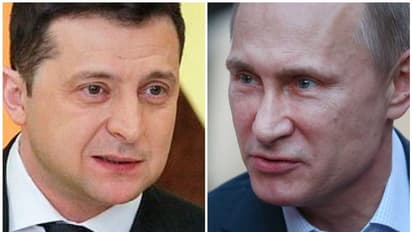
Russia has renewed its invitation for President Volodymyr Zelenskyy to hold peace talks in Moscow, offering security guarantees, but Kyiv has yet to respond after rejecting a similar proposal earlier.
Russia has once again extended an invitation to Ukrainian President Volodymyr Zelenskyy to visit Moscow for peace negotiations, as global diplomatic efforts seek to end the nearly four-year conflict triggered by Russia’s large-scale invasion of Ukraine in 2022. The Kremlin reiterated the offer on January 29, stating that it remains open to face-to-face discussions aimed at a durable peace between the two nations.
According to a TASS state news agency report, Kremlin spokesman Dmitry Peskov confirmed that Moscow remains the only venue under consideration for any meeting between Zelenskyy and Russian President Vladimir Putin.
Peskov emphasized that alternative locations are “moot” and reaffirmed that Moscow would guarantee Zelenskyy’s security and working conditions should he accept the invitation.
"We are talking about Moscow at this point," Peskov was quoted as saying by TASS. "In diplomatic language, any other speculations are moot."
Russian state broadcaster Russia Today (RT) has highlighted that Russian presidential aide Yury Ushakov repeatedly stated that the door remains open for dialogue if Zelenskyy chooses to travel to the Russian capital. Ushakov noted that talks have been discussed several times in phone conversations between Putin and US President Donald Trump, and that Russia is not opposed to engagement.
"In that case, we will guarantee his safety and the necessary conditions for his work," Russia Today quoted Ushakov as saying.
Despite the renewed invitation, Kyiv has not yet formally responded to Russia’s offer, and Ukrainian officials have historically been cautious about negotiating directly in Moscow. Last year, Zelenskyy declined a similar invitation, saying he could not go to a capital belonging to “a nation that was firing missiles at his country every day,” and suggested that Putin instead travel to Kyiv.
The peace talks push unfolds against the backdrop of ongoing US-mediated negotiations in Abu Dhabi, where delegations from Ukraine, Russia and the United States have been working to bridge gaps on territorial control, international peacekeepers, and the fate of the Zaporizhzhia nuclear power plant.
However, these negotiations have made limited progress, with deep disagreements over territorial concessions and security guarantees continuing to hinder a breakthrough.
International responses to the invitation have been mixed. While some see the move as a potential step toward de-escalation, hardline voices within Russia argue for continued military pressure. The outcome of the peace proposal remains uncertain as both sides weigh the risks and potential benefits of direct dialogue.