Power Vacuum In Iran After Khamenei's Death? Who Are His Potential Successors?
Synopsis
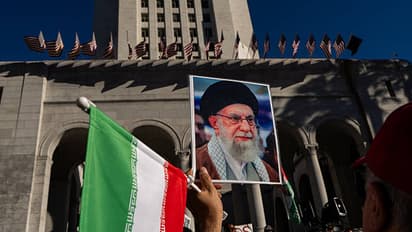
Iranian President Masoud Pezeshkian and two top other officials will lead Iran in the transitional period following the death of supreme leader Ali Khamenei, state television reported on Sunday.
US President Donald Trump announced on Sunday that Iran's supreme leader Ayatollah Khamenei was killed in the US-Israel strike, calling his death “the single greatest chance for the Iranian people to take back their Country”. Trump called Khamenei “one of the most evil men in history” and asserted that the cleric “was unable to avoid our Intelligence and Highly Sophisticated Tracking Systems”. He further warned that “heavy and pinpoint bombing” would continue “uninterrupted”, signaling a potentially prolonged and aggressive military campaign.
Israel launched a daylight strike on Saturday targeting Tehran, the capital of Iran, with plumes of smoke seen rising from the city’s downtown area.
Khamenei killed: Who will lead Iran in the transitional period?
Iranian President Masoud Pezeshkian and two top other officials will lead Iran in the transitional period following the death of supreme leader Ali Khamenei, state television reported on Sunday.
Judiciary chief Gholamhossein Mohseni Ejei and another official from the country's legal council will be part of the trio overseeing the transition, according to state television which cited Mohammad Mokhber, one of Khamenei's advisors.
Who Was Khamenei?
At 86, Khamenei had ruled since 1989, making him the Middle East’s longest-serving head of state. His death would mark only the second leadership transition since the 1979 Islamic Revolution led by Ruhollah Khomeini, who established the Islamic Republic. In 1989, Khamenei himself was elevated from the presidency to the supreme leadership after Khomeini’s death, consolidating power over decades through tight institutional control.

Under Iran’s constitution, the 88-member Assembly of Experts is responsible for selecting and overseeing the supreme leader. Yet the process remains tightly controlled. Candidates for the body are vetted by the Guardian Council, whose members are appointed directly or indirectly by the supreme leader himself.
Succession planning has long been confined to the regime’s inner sanctum, shielded from public scrutiny.
Who are Khamenei's potential successors?
The US-based Council on Foreign Relations has identified several clerics as potential successors. Among them is Ayatollah Alireza Arafi, who leads Iran’s nationwide seminary system and sits on both the Guardian Council and the Assembly of Experts.
Hojjat-ol-Eslam Mohsen Qomi, a trusted adviser within Khamenei’s office, is regarded as a loyal insider with deep proximity to the late leader. Ayatollah Mohsen Araki, a long-serving member of the Assembly of Experts, also holds the religious credentials and bureaucratic experience often deemed essential for the role.
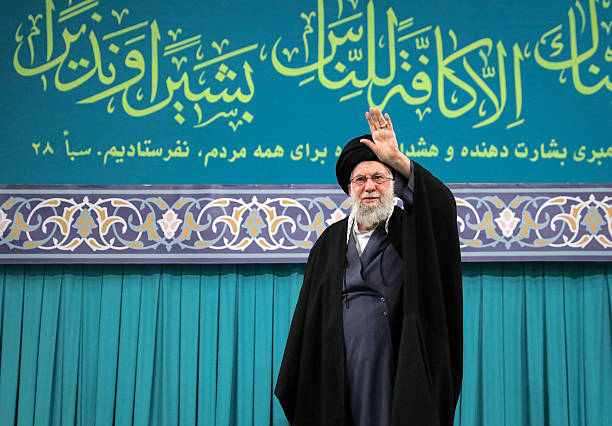
Ayatollah Gholam Hossein Mohseni Ejei, Iran’s judiciary chief, stands apart with his strong national security background and senior state positions, making him a potential stabilising figure in turbulent times.
Ayatollah Hashem Hosseini Bushehri, the Friday prayer leader in Qom and an Assembly member, is another senior cleric frequently mentioned in succession discussions.
However, most of the leading contenders are in their mid-to-late sixties and lack Khamenei’s decades-long consolidation of authority. Analysts caution that elevating a favoured insider might preserve the regime’s power structure in the short term, but could simultaneously intensify underlying rivalries within Iran’s political, clerical, and security elite.
The timing could not be more volatile. Iran is already exchanging missile and drone fire with Israel and targeting US bases in the Gulf. Any leadership transition under such combustible circumstances carries enormous geopolitical stakes. The succession struggle may not only determine Iran’s internal stability, but also reshape its regional posture and nuclear trajectory in ways that could reverberate far beyond the Middle East.
Khamenei killed: Iran observes 40 days of public mourning
Iran is observing 40 days of public mourning following the death of Ayatollah Ali Khamenei, Reuters reported, citing Iranian state media. In Shia Islam, the 40th day after death (Arba'een) holds immense spiritual weight.
The death occurred following strikes by the US and Israel (Operation Epic Fury/Lion's Roar) on Saturday.
The country's Supreme Leader's office has declared a period of national mourning, with flags flying at half-mast and public gatherings planned to pay respects, marking the closing of a 37-year chapter in the Islamic Republic's history.