Peru Airport Finds 3,000 Tarantulas Hidden In Dirty Socks Inside Suitcases
Synopsis
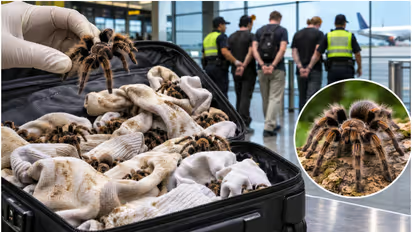
Peruvian airport authorities have uncovered a bizarre wildlife smuggling attempt after finding over 3,000 tarantulas stuffed inside dirty socks in three suitcases. The spiders were allegedly being transported to Germany
Airport security officials in Lima, Peru, intercepted a suspected wildlife trafficking operation after discovering more than 3,000 tarantulas hidden inside three suitcases. According to the National Forestry and Wildlife Service (SERFOR), the unusual consignment was being carried by two German nationals and a Polish citizen.
The spiders had been concealed inside dirty socks packed into the luggage. The unusual discovery came during a routine customs inspection when officials noticed movement inside the suitcases.
The authorities reportedly became suspicious after spotting something wriggling inside the luggage. Upon closer inspection, they discovered hundreds of spiders packed away in the bags.
Tarantulas Worth Nearly 1.5 Million Euros In European Market
The seized tarantulas were reportedly intended to be smuggled into Germany from Peru. Cora Suarez, a wildlife control technician with SERFOR, said the recovered spiders included specimens of different sizes, ranging from smaller ones to larger adults.
According to Suarez, a single tarantula can fetch approximately 500 euros in the European market. Based on that valuation, the seized consignment could potentially have been worth around 1.5 million euros.
Authorities also found tarantulas at different stages of development, including eggs, hatchlings and fully grown spiders. The specimens had reportedly been collected from several regions across Peru.
The discovery has once again drawn attention to the lucrative illegal wildlife trade, in which exotic animals are captured and transported across international borders for profit.
Suspects Detained As Wildlife Trafficking Raises Global Concerns
The three European nationals suspected of being involved in the operation were detained by police officers specialising in environmental crimes. SERFOR confirmed that they would face criminal proceedings over the alleged smuggling attempt.
Illegal wildlife trafficking remains a major international concern. According to Interpol, the criminal trade generates approximately $20 billion annually across the world.
Apart from threatening individual animal populations, the illegal trade also contributes to biodiversity loss. The seizure in Lima highlights how traffickers use unconventional methods to conceal protected wildlife and move them across borders.