Pakistan's blasphemy laws under scrutiny at UN Human Rights Council
Synopsis
At the UN Human Rights Council, Global Human Rights Defence (GHRD) raised alarms over the misuse of Pakistan's blasphemy laws, citing a surge in accusations, mob violence, and persecution targeting the country's religious minorities.
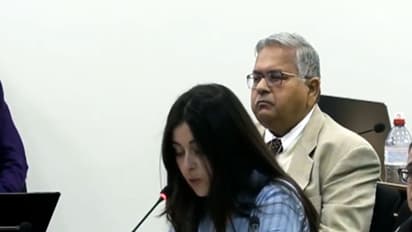
At the 61st session of the United Nations Human Rights Council, the organisation Global Human Rights Defence (GHRD) raised concerns over the continued misuse of blasphemy laws in Pakistan and their impact on religious minorities.
The intervention followed the presentation of thematic reports by Marcelo Vazquez-Bermudez, Chair-Rapporteur of the Open-ended Intergovernmental Working Group on Transnational Corporations and Other Business Enterprises with respect to Human Rights, and Peggy Hicks, Director of the Thematic Engagement, Special Procedures and Right to Development Division at the Office of the United Nations High Commissioner for Human Rights. The session addressed a range of global human rights concerns, including the implementation of the 2030 Agenda for Sustainable Development, protection of migrants, disability-inclusive infrastructure, minority rights, the work of regional human rights organisations, and accountability mechanisms related to torture and business and human rights.
Misuse of Blasphemy Laws Against Minorities
In its press statement, GHRD highlighted the ongoing application of blasphemy provisions under Sections 295 and 298 of the Pakistan Penal Code. While the laws are officially intended to safeguard religious harmony, the organisation said they have increasingly been used against vulnerable communities, including Christians, Hindus, Ahmadis, and Shia Muslims.
According to documented cases cited by GHRD, nearly 2,800 individuals have been accused under these provisions since 1987, with allegations rising significantly in recent years. Many accusations, the organisation noted, are made without credible evidence and have led to arbitrary detention, prolonged imprisonment, mob violence, extrajudicial killings, and the forced displacement of individuals and families.
Digital Platforms Amplify Persecution
GHRD also raised concerns about the growing role of digital platforms in spreading fabricated accusations and inciting violence, which it said has intensified the persecution of religious minorities.
Call for Legal Reforms and International Oversight
The organisation stressed that blasphemy laws in their current form are inconsistent with international human rights standards, particularly the rights to freedom of religion or belief and freedom of expression protected under the International Covenant on Civil and Political Rights. It also noted that the imposition of the death penalty for blasphemy is incompatible with international legal standards that restrict capital punishment to the most serious crimes.
Calling for greater international attention, GHRD urged the Human Rights Council to continue monitoring the issue and encouraged Pakistan to align its laws and practices with its international human rights obligations.
The statement was delivered during the Item 3 general debate, which focuses on the promotion and protection of all human rights and the work of special procedures, as well as the Office of the High Commissioner for Human Rights.